
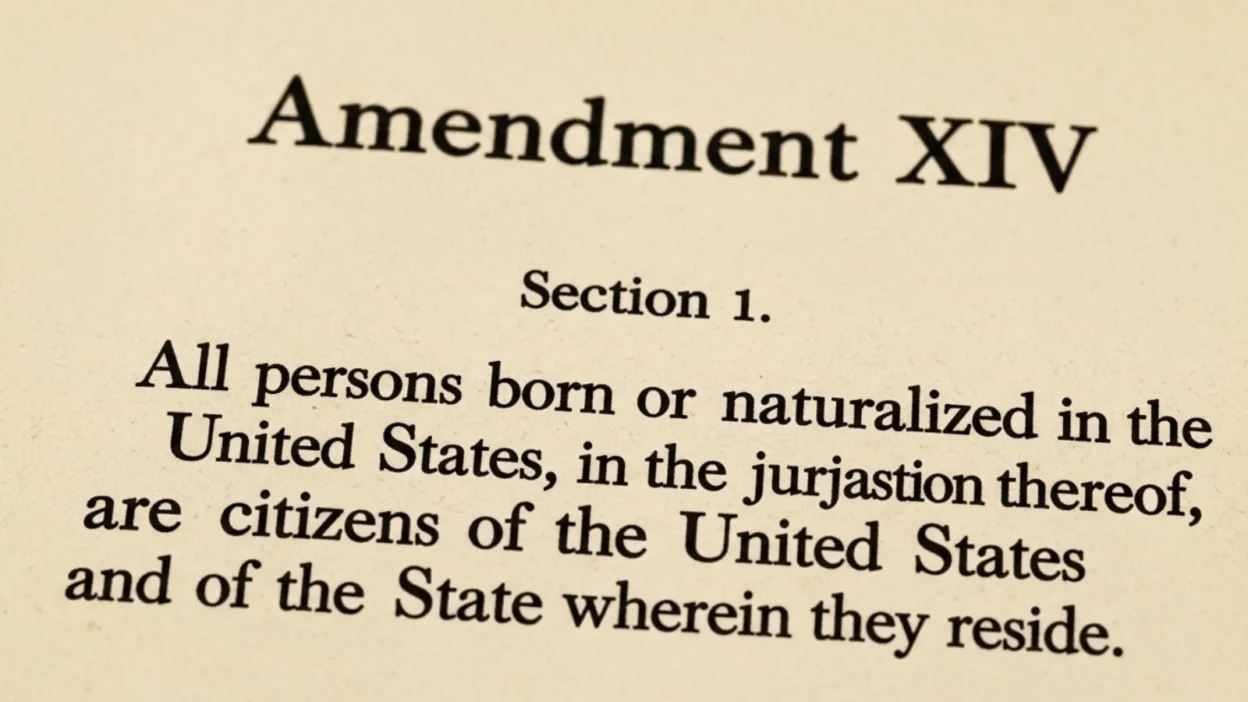
The 14th Amendment is one of the most important amendments in the U.S. Constitution, playing a key role in defining citizenship and protecting civil rights.
Ratified in 1868 after the Civil War, it was designed to ensure that all people born or naturalized in the United States are recognized as citizens and granted equal protection under the law.
The amendment contains several critical sections, including the Citizenship Clause, Privileges or Immunities Clause, Due Process Clause, and Equal Protection Clause, each with its own significance.
Understanding what the 14th Amendment says is essential not only for students and law enthusiasts but also for anyone interested in civil rights and modern legal debates.
Today, it continues to influence Supreme Court decisions, civil rights laws, and discussions about birthright citizenship and equality, making it a cornerstone of American law and justice.
Historical Background of the 14th Amendment
The 14th Amendment was ratified on July 9, 1868, during the Reconstruction Era, a critical period following the Civil War. Its creation was driven by the urgent need to protect the rights of newly freed African Americans and to establish a legal framework that would guarantee equality under the law. Before the amendment, formerly enslaved people faced significant discrimination, and many states implemented laws that restricted their freedom and civil rights.
The amendment was part of a series of Civil Rights Amendments, including the 13th Amendment, which abolished slavery, and the 15th Amendment, which sought to protect voting rights. Lawmakers intended the 14th Amendment to address gaps in civil liberties and ensure that states could not infringe upon the rights of citizens.
Key political figures, including members of Congress and civil rights advocates, played a vital role in drafting its clauses. They focused on guaranteeing citizenship, due process, and equal protection under the law.
Understanding the historical context of the 14th Amendment is crucial to grasping its significance today. It was not just a legal change but a social and political statement, affirming that equality and justice should be central to American law and governance.
The Text of the 14th Amendment
To fully understand what the 14th Amendment says, it helps to examine its text and structure. The amendment is divided into several key clauses, each designed to protect citizens’ rights and ensure equality under the law. Its main components are the Citizenship Clause, Privileges or Immunities Clause, Due Process Clause, and Equal Protection Clause.
The Citizenship Clause establishes that anyone born or naturalized in the United States is automatically a citizen. This provision was especially important after the Civil War to guarantee that formerly enslaved people were recognized as full citizens.
The Privileges or Immunities Clause was intended to protect certain fundamental rights of citizens from state interference. Although its interpretation has been limited over time, it played a role in shaping legal debates about citizens’ rights.
The Due Process Clause ensures that no person is deprived of life, liberty, or property without fair legal procedures. It safeguards individuals against arbitrary government action, applying to both federal and state governments.
The Equal Protection Clause requires states to treat all citizens equally under the law, forming the basis for landmark civil rights rulings. Over time, this clause has been central to addressing discrimination based on race, gender, and other characteristics.
By understanding the text of the 14th Amendment, readers can see how it protects citizenship, legal rights, and equality. Its wording, though concise, has had a profound impact on American law and society.
Citizenship Clause Explained
One of the most important parts of the 14th Amendment is the Citizenship Clause, which defines who is legally recognized as a U.S. citizen. It states that anyone born or naturalized in the United States is automatically a citizen, regardless of race, ethnicity, or parentage. This clause was revolutionary in 1868, as it guaranteed citizenship to formerly enslaved people and prevented states from denying basic rights based on ancestry.
The Citizenship Clause also forms the foundation for birthright citizenship, meaning that children born on U.S. soil automatically receive citizenship, even if their parents are not citizens. This principle has been central to debates about immigration and legal rights for children of non-citizens.
In addition to establishing citizenship, the clause ensures that all citizens are entitled to the protections of the Constitution. For example, citizenship confers the right to vote, the right to access legal protections, and eligibility for certain public benefits.
Landmark court cases have reinforced the Citizenship Clause, including United States v. Wong Kim Ark (1898), which confirmed that children born in the U.S. to non-citizen parents are still citizens under the amendment.
Overall, the Citizenship Clause ensures that everyone born or naturalized in the United States is legally recognized as a citizen, forming a critical part of American democracy and civil rights. Its clear definition of citizenship continues to influence debates on equality, immigration, and civil liberties.
Privileges or Immunities Clause
The Privileges or Immunities Clause is one of the lesser-known but significant parts of the 14th Amendment. It was intended to protect the basic rights of U.S. citizens from interference by state governments. The clause states that no state shall make or enforce laws that abridge the privileges or immunities of citizens of the United States. Essentially, it aimed to ensure that all citizens, regardless of race or status, could enjoy certain fundamental rights.
Originally, lawmakers envisioned this clause as a strong safeguard against state actions that might infringe on civil liberties. It was meant to protect rights such as the ability to travel freely between states, access the courts, and participate fully in civic life. However, in the Slaughterhouse Cases (1873), the Supreme Court interpreted the clause narrowly, limiting its impact. As a result, the clause has rarely been directly applied in modern legal decisions.
Despite its limited use, the Privileges or Immunities Clause laid the groundwork for other protections in the 14th Amendment, particularly the Due Process Clause and Equal Protection Clause. Legal scholars often study it to understand the framers’ original intent and its potential role in expanding civil liberties.
Today, while the clause is less cited in court rulings, it remains an important part of constitutional history, illustrating the ambition of the 14th Amendment to secure rights and equality for all U.S. citizens.
Due Process Clause
The Due Process Clause is a central part of the 14th Amendment, protecting individuals from unfair treatment by state governments. It guarantees that no person shall be “deprived of life, liberty, or property, without due process of law.” This means that states must follow fair legal procedures before restricting anyone’s rights, ensuring justice and preventing arbitrary government action.
The Due Process Clause is divided into two main concepts: procedural due process and substantive due process. Procedural due process ensures that legal proceedings are fair, including the right to a fair trial, legal representation, and an opportunity to be heard. Substantive due process, on the other hand, protects fundamental rights from government interference, even if the procedures are technically fair. These rights include privacy, family decisions, and personal freedoms.
Over time, the Due Process Clause has played a key role in major Supreme Court cases. For example, it was central to Roe v. Wade regarding reproductive rights and Obergefell v. Hodges regarding same-sex marriage. By applying the clause, courts ensure that state laws respect individual liberties and constitutional protections.
In essence, the Due Process Clause of the 14th Amendment serves as a legal shield, safeguarding citizens from unfair treatment and upholding justice. It reinforces the principle that all Americans, regardless of status, deserve protection under the law and equal access to justice.
Equal Protection Clause
The Equal Protection Clause is one of the most influential sections of the 14th Amendment, ensuring that no state shall “deny to any person within its jurisdiction the equal protection of the laws.” This clause was designed to prevent discrimination and ensure that all U.S. citizens are treated equally, regardless of race, gender, or social status.
Historically, the clause played a pivotal role in ending legalized racial segregation. In the landmark case Brown v. Board of Education (1954), the Supreme Court used the Equal Protection Clause to declare that state-sponsored school segregation was unconstitutional, setting a major precedent for civil rights in America.
The clause also extends to gender, religion, and other forms of discrimination. Courts apply different levels of scrutiny depending on the case, with strict scrutiny for racial discrimination, intermediate scrutiny for gender-based laws, and rational basis review for other types of laws.
Today, the Equal Protection Clause continues to influence civil rights cases, including issues like voting rights, LGBTQ+ protections, and disability rights. It provides a legal foundation for challenging laws or policies that unfairly target specific groups of people.
In essence, the Equal Protection Clause embodies the principle that all citizens deserve fairness under the law. Its interpretation and application by courts have shaped the nation’s legal and social landscape, reinforcing equality as a core value of the 14th Amendment and American democracy.
Modern Applications of the 14th Amendment
The 14th Amendment continues to play a vital role in modern American law, shaping how citizens’ rights are protected and applied today. Its clauses—especially the Due Process Clause and Equal Protection Clause—have been central to numerous landmark Supreme Court decisions and legislative reforms.
One key area of modern application is civil rights protections. The amendment has been used to challenge laws that discriminate based on race, gender, religion, or sexual orientation. For instance, Obergefell v. Hodges (2015) relied on the 14th Amendment to guarantee marriage equality for same-sex couples, while cases involving voting rights and education continue to reference its clauses to ensure fair treatment.
The amendment also affects immigration and citizenship laws, particularly the Citizenship Clause, which establishes birthright citizenship. Debates over immigration policies often cite the 14th Amendment as a constitutional basis for protecting children born in the United States.
In addition, the Due Process Clause protects individual liberties in areas like healthcare, family decisions, and criminal justice. Courts frequently rely on the 14th Amendment to evaluate whether state laws or policies violate citizens’ constitutional rights.
Overall, the 14th Amendment is not just a historical document; it is a living part of the Constitution that continues to influence civil liberties, equality, and justice in contemporary society. Its application ensures that all U.S. citizens receive fair treatment under the law, making it a cornerstone of modern American democracy.
Controversies and Misinterpretations
Despite its importance, the 14th Amendment has been the subject of numerous controversies and misinterpretations over the years. One common debate centers on birthright citizenship. Some argue that the Citizenship Clause should not apply to children of non-citizens, while legal scholars emphasize that the amendment clearly grants citizenship to anyone born in the United States, as reinforced by United States v. Wong Kim Ark (1898).
Another controversy involves the Equal Protection Clause. Critics sometimes claim that it guarantees “absolute equality” in all circumstances, but courts have clarified that it prohibits unjustified discrimination rather than mandating identical outcomes for everyone. Different standards of judicial review—strict scrutiny, intermediate scrutiny, and rational basis—allow flexibility in evaluating laws while still protecting civil rights.
The Privileges or Immunities Clause has also been widely misunderstood. Although originally intended to protect fundamental rights from state interference, the Slaughterhouse Cases (1873) limited its application, leading some to question its current relevance.
Political and legal debates continue over how far the 14th Amendment should extend protections, especially regarding modern issues like immigration, affirmative action, and LGBTQ+ rights. Misinterpretations often arise from incomplete readings of its text or historical context.
Understanding these controversies highlights the need for careful interpretation. The 14th Amendment is a powerful legal tool, but its effectiveness depends on judicial decisions, historical awareness, and public understanding of its purpose in promoting citizenship, due process, and equality.
FAQs
1. What is the main purpose of the 14th Amendment?
The 14th Amendment was designed to protect the rights of all U.S. citizens, particularly after the Civil War. Its main purpose is to guarantee citizenship, due process, and equal protection under the law, preventing states from infringing on individual rights.
2. Who is considered a U.S. citizen under the 14th Amendment?
Anyone born or naturalized in the United States is automatically a citizen, according to the Citizenship Clause. This includes children of immigrants, ensuring birthright citizenship.
3. What is the Due Process Clause?
The Due Process Clause ensures that no state can deprive an individual of life, liberty, or property without fair legal procedures. It protects both procedural rights, like a fair trial, and substantive rights, like personal freedoms.
4. What is the Equal Protection Clause?
The Equal Protection Clause requires states to treat all citizens fairly under the law. It has been the foundation for civil rights movements, including rulings on school desegregation, gender equality, and marriage equality.
5. What is the Privileges or Immunities Clause?
This clause protects fundamental rights of U.S. citizens from state interference. Although rarely applied today, it influenced later interpretations of civil liberties and due process.
6. How does the 14th Amendment impact modern laws?
The amendment affects laws related to civil rights, immigration, education, and healthcare, serving as a constitutional basis for protecting equality and individual freedoms in the U.S.
7. Are there controversies about the 14th Amendment?
Yes. Debates focus on birthright citizenship, interpretations of equal protection, and state versus federal powers, highlighting its ongoing relevance in legal and political discussions.
Conclusion
The 14th Amendment remains one of the most important parts of the U.S. Constitution, shaping the nation’s approach to citizenship, equality, and civil rights.
Its key clauses the Citizenship Clause, Privileges or Immunities Clause, Due Process Clause, and Equal Protection Clause establish protections that continue to influence American law and society.
From guaranteeing birthright citizenship to ensuring equal protection under the law, the amendment has been central to landmark Supreme Court decisions and modern legal debates.
It safeguards individuals against unfair treatment by state governments and reinforces the principle that all U.S. citizens deserve justice, freedom, and equality.
Understanding what the 14th Amendment says and its historical context helps citizens appreciate the rights they hold and the responsibilities of government.
As society evolves, the amendment’s relevance endures, serving as a cornerstone of American democracy and a guide for protecting civil liberties and promoting fairness in law and governance.

I’m the mind behind Jokesattack.com, your go-to place for daily laughs, clever puns, and hilarious memes. Spreading smiles one joke at a time!