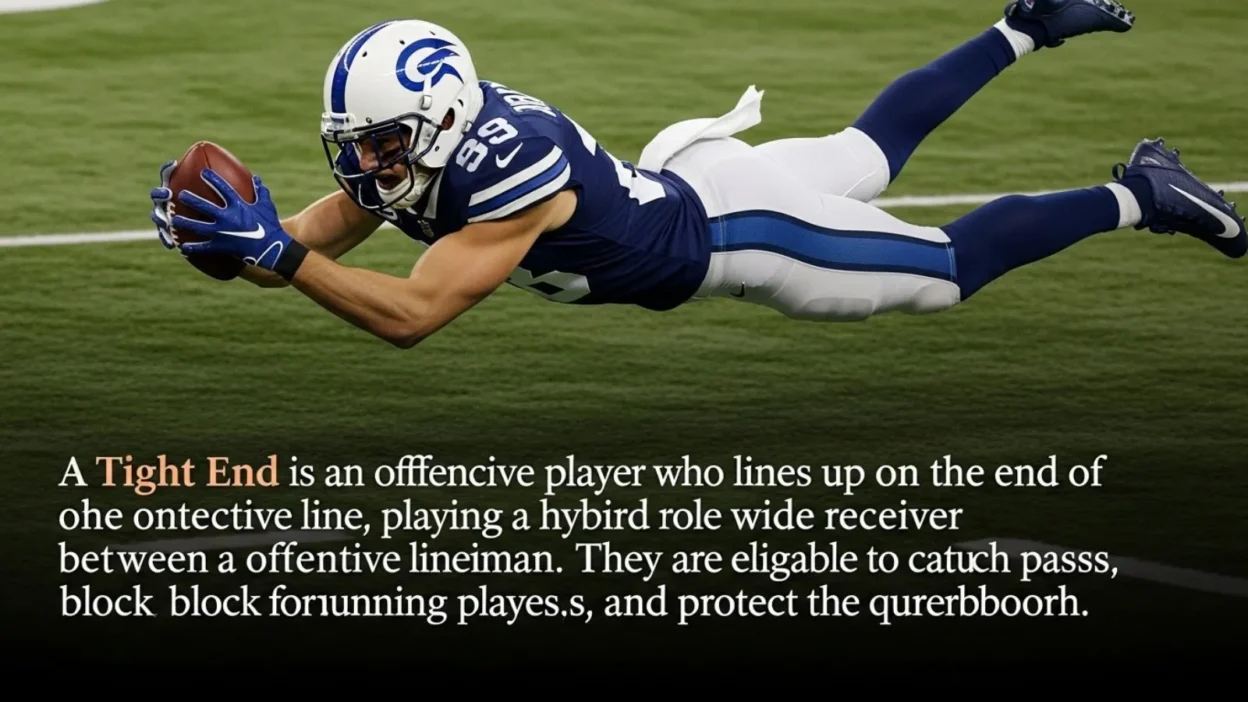
In football, the tight end is one of the most versatile and important positions on the field. A tight end combines the skills of a wide receiver and an offensive lineman, making them a key player in both passing and running plays.
Whether blocking to protect the quarterback or creating openings for the running back, tight ends are crucial for a team’s offensive success.
They also serve as reliable receiving targets, often running short, intermediate, and even deep routes to gain yards and score touchdowns.
Understanding the tight end position in football can help fans, beginners, and fantasy football players appreciate the strategy behind every play. From their responsibilities on the line to their role in passing schemes, tight ends bring a unique combination of strength, agility, and football IQ.
This article will break down exactly what a tight end does and why they are so valuable in modern football.
The Main Responsibilities of a Tight End
The tight end position in football is unique because it blends the responsibilities of both a receiver and a blocker. One of the primary duties of a tight end is blocking. On running plays, tight ends help create openings for running backs by blocking defensive linemen or linebackers. They may also assist in pass protection, giving the quarterback extra time to make throws. A strong and agile tight end can significantly improve a team’s offensive performance by effectively controlling defenders at the line of scrimmage.
In addition to blocking, tight ends are also key receiving targets. They run precise routes, often catching passes in short, intermediate, and red-zone situations. Because of their size and strength, tight ends can create mismatches against smaller linebackers or slower defensive backs, making them crucial in scoring opportunities. Their ability to gain yards after the catch adds another layer of offensive advantage.
Tight ends must also possess a high football IQ to read defenses, adjust routes, and understand when to switch from blocking to receiving. Modern NFL offenses often rely on versatile tight ends who can seamlessly transition between these roles, making the position vital to both traditional and innovative play strategies.
Tight End in Passing Plays
Tight ends play a critical role in passing plays, serving as versatile targets who can stretch the field or secure short-yardage completions. Unlike wide receivers, tight ends often line up closer to the offensive line, allowing them to provide both a blocking presence and a receiving option in the same play. This dual capability makes them especially valuable in modern football offenses, where flexibility is key.
In passing situations, tight ends run a variety of routes, including slants, outs, seams, and crosses. Their size and strength allow them to gain an advantage over smaller defenders, often creating mismatches against linebackers or safeties. Tight ends are particularly effective in the red zone, where their ability to catch contested passes can lead to touchdowns.
Quarterbacks often rely on tight ends for reliable short-to-intermediate completions, helping maintain possession and move the chains. The tight end’s role requires excellent hands, route-running skills, and awareness of defensive coverage. They must quickly adjust their routes based on defensive alignment and maintain focus under pressure.
Overall, tight ends in passing plays serve as a bridge between traditional receivers and offensive linemen. Their unique combination of receiving skill, blocking ability, and football IQ allows them to contribute in multiple ways, making them indispensable in executing both strategic and high-pressure passing situations.
Tight End in Running Plays
While tight ends are often recognized for their role in passing plays, they are equally important in running plays. In fact, their blocking abilities can make or break a running play’s success. Tight ends often line up next to the offensive line and serve as lead blockers, helping running backs find open lanes. Their size, strength, and technique allow them to engage defensive linemen and linebackers, creating the space needed for a running back to gain yards.
Tight ends may also seal the edge, pushing defenders away from the intended running path. In some plays, they “pull” across the formation, leading the running back through the gap and providing extra protection from pursuing defenders. Their agility allows them to move quickly while maintaining leverage against defenders, a skill that separates elite tight ends from average players.
Additionally, tight ends are vital in screen plays and draw plays, where timing and positioning are critical. They must read the defensive alignment and adjust their blocking assignments on the fly, showing both physical skill and football intelligence.
Even in a primarily pass-oriented offense, tight ends contribute to the running game by keeping defenses honest. Defensive teams cannot ignore a tight end’s blocking potential, which opens up opportunities for running backs and ensures a balanced offensive attack.
In short, a tight end in running plays is more than just a blocker—they are a strategic force, combining strength, speed, and awareness to support the offense and make every running play more effective.
Essential Skills and Physical Attributes of a Tight End
Tight ends are one of the most versatile positions in football, requiring a combination of physical ability, technical skill, and mental sharpness. To excel, a tight end must have the size and strength to block defensive linemen and linebackers effectively. This includes maintaining leverage at the line of scrimmage and using their body to create running lanes or protect the quarterback during passing plays.
Speed and agility are also critical. Tight ends often need to quickly transition from blocking to running precise routes in the passing game. They must accelerate fast, change direction, and maintain balance, all while tracking defenders and catching the ball. Good footwork allows tight ends to stay in position and execute both run and pass plays efficiently.
Another vital skill is hands and catching ability. Tight ends often face tight coverage and must secure the football under pressure. This requires concentration, timing, and reliable catching skills.
Equally important is football intelligence. A great tight end can read defenses, adjust routes, and make quick decisions during plays. They must understand both the offensive strategy and the tendencies of opposing defenders.
Versatility is the hallmark of a top-tier tight end. They must seamlessly switch between blocking, receiving, and running, making them invaluable in any offensive scheme. In modern football, tight ends who combine strength, agility, hands, and football IQ are often game-changers for their teams.
Famous Tight Ends and Their Impact
Tight ends have become some of the most exciting and influential players in modern football, with a few elite athletes redefining the position. Players like Travis Kelce, George Kittle, and Rob Gronkowski are widely recognized for their ability to dominate both as receivers and blockers, showing just how versatile the tight end role can be.
Travis Kelce, for example, has consistently been one of the top receiving tight ends in the NFL. His speed, route-running, and reliable hands make him a favorite target for his quarterback, especially in crucial red-zone situations. Similarly, George Kittle combines elite blocking skills with explosive receiving ability, making him equally dangerous in both the passing and running game. Rob Gronkowski, during his prime, was known for his size, strength, and ability to catch contested passes, changing the way teams view tight ends in offensive schemes.
These players demonstrate the strategic importance of the tight end position. Their success on the field forces defenses to adjust, often creating mismatches that the offense can exploit. Beyond statistics, famous tight ends influence game plans, fantasy football strategies, and even the evolution of offensive schemes in the NFL.
In short, the impact of top-tier tight ends goes beyond just catching passes or blocking defenders. They are game-changers, blending physical ability, skill, and football intelligence to influence the outcome of games and inspire the next generation of athletes at the tight end position.
Tight End vs Other Positions
The tight end position is unique in football because it blends elements of both wide receivers and offensive linemen, making it a hybrid role. Unlike wide receivers, who primarily focus on running routes and catching passes, tight ends are also heavily involved in blocking for both passing and running plays. Their size and strength allow them to engage defensive linemen and linebackers, tasks that a wide receiver typically wouldn’t perform.
Compared to offensive linemen, tight ends must possess more agility and speed. While offensive linemen focus almost entirely on blocking, tight ends must quickly shift between protecting the quarterback, opening running lanes, and running routes to become active receiving threats. This hybrid skill set makes tight ends extremely versatile and difficult for defenses to predict.
Tight ends can create mismatches in the offense by drawing coverage from smaller defenders like linebackers or slower safeties. This advantage allows quarterbacks to exploit these mismatches for short-yardage gains, red-zone completions, or explosive plays downfield.
In modern football, the distinction between positions is becoming more fluid, but tight ends remain essential because of their dual role. They bridge the gap between linemen and receivers, offering both physical presence and strategic options. Understanding the differences between tight ends, wide receivers, and offensive linemen helps fans appreciate the complexity and importance of this position in both traditional and innovative offensive schemes.
Tight Ends in Fantasy Football
Tight ends play a crucial role in fantasy football, often making the difference between a strong team and an underperforming one. Because the position combines receiving and blocking, tight ends can contribute in multiple ways, but their scoring opportunities are typically tied to receptions, yards gained, and touchdowns. Elite tight ends can provide consistent points, giving fantasy managers a strategic advantage.
When drafting a tight end, it’s important to consider both top-tier and sleeper options. Players like Travis Kelce or George Kittle consistently produce high fantasy points because of their volume of targets and red-zone opportunities. However, selecting a less obvious tight end with breakout potential can also pay off if they are heavily involved in their team’s offensive schemes.
Tight ends often face coverage from linebackers or safeties, which can create mismatches that increase their fantasy value. Red-zone usage is particularly important, as touchdowns significantly boost scoring. Fantasy managers should monitor key stats, including targets, receptions, yards after catch, and touchdown frequency, to evaluate tight end performance.
In addition, understanding the tight end’s role in their team’s offense helps predict weekly production. A tight end in a pass-heavy offense may see more targets, while one in a run-focused scheme might score fewer fantasy points but still provide essential blocking support.
Common Misconceptions About Tight Ends
Despite their importance, tight ends are often misunderstood by casual football fans. One common misconception is that tight ends are only big, slow players whose main role is blocking. While size and strength are essential, modern tight ends combine these traits with speed, agility, and excellent hands, making them dynamic threats in both the passing and running game.
Another misconception is that tight ends are primarily blockers with minimal receiving responsibilities. In reality, many tight ends are key targets for quarterbacks, especially in short-yardage and red-zone situations. Players like Travis Kelce and George Kittle demonstrate that tight ends can consistently produce high receiving stats, rivaling wide receivers in certain offensive schemes.
Some fans also believe that tight ends cannot create mismatches or impact strategic play. On the contrary, tight ends often force defenses to adjust coverage, opening opportunities for other offensive players. Their hybrid nature allows them to line up in multiple positions, giving coaches flexibility in both traditional and innovative plays.
Finally, tight ends are sometimes undervalued in fantasy football, even though top-tier tight ends can be as productive as wide receivers or running backs. Recognizing the dual role of a tight end—blocking, receiving, and contributing to overall team strategy—is essential to understanding their true value.
Frequently Asked Questions (FAQ) About Tight Ends
1. What is a tight end in football?
A tight end is a hybrid offensive position that combines the skills of a wide receiver and an offensive lineman. They are responsible for blocking, receiving passes, and supporting running plays, making them a versatile part of the offense.
2. What does a tight end do on the field?
Tight ends block defenders to protect the quarterback or create running lanes, run routes to catch passes, and sometimes serve as decoys to confuse defenses. Their dual role makes them crucial in both passing and running plays.
3. How is a tight end different from a wide receiver?
While wide receivers focus solely on catching passes, tight ends also block defensive players. They are usually larger and stronger than wide receivers but still agile enough to run routes and gain yards after the catch.
4. Why are tight ends important in football?
Tight ends create mismatches, give quarterbacks reliable targets, and strengthen the running game. Their versatility allows offenses to execute a wider variety of plays.
5. Can tight ends score touchdowns?
Yes. Tight ends often catch passes in the red zone because of their size and strength, making them a major scoring threat.
6. Are tight ends valuable in fantasy football?
Absolutely. Top-tier tight ends can produce consistent fantasy points through receptions, yards, and touchdowns, making them strategic assets for fantasy teams.
7. What skills make a great tight end?
A great tight end combines size, strength, speed, agility, hands, and football IQ, enabling them to block, run routes, and make plays in critical situations.
Conclusion
The tight end is one of the most versatile and essential positions in football. By combining the skills of both a receiver and a blocker, tight ends play a crucial role in both passing and running plays.
Their ability to create mismatches, protect the quarterback, and open running lanes makes them a key part of any offensive strategy.
Modern NFL tight ends, such as Travis Kelce, George Kittle, and Rob Gronkowski, have redefined the position, demonstrating that tight ends can be game changers with both size and agility.
In addition, tight ends are valuable in fantasy football, offering consistent points through receptions, yards, and touchdowns.
Understanding the responsibilities, skills, and impact of tight ends allows fans, players, and fantasy enthusiasts to fully appreciate their importance on the field.
From blocking to catching passes, tight ends are indispensable, making them one of football’s most dynamic and influential positions.

I’m the author of Jokesattack.com, where humor meets creativity! Bringing you nonstop laughter with the best jokes, memes, and funny moments every day.