
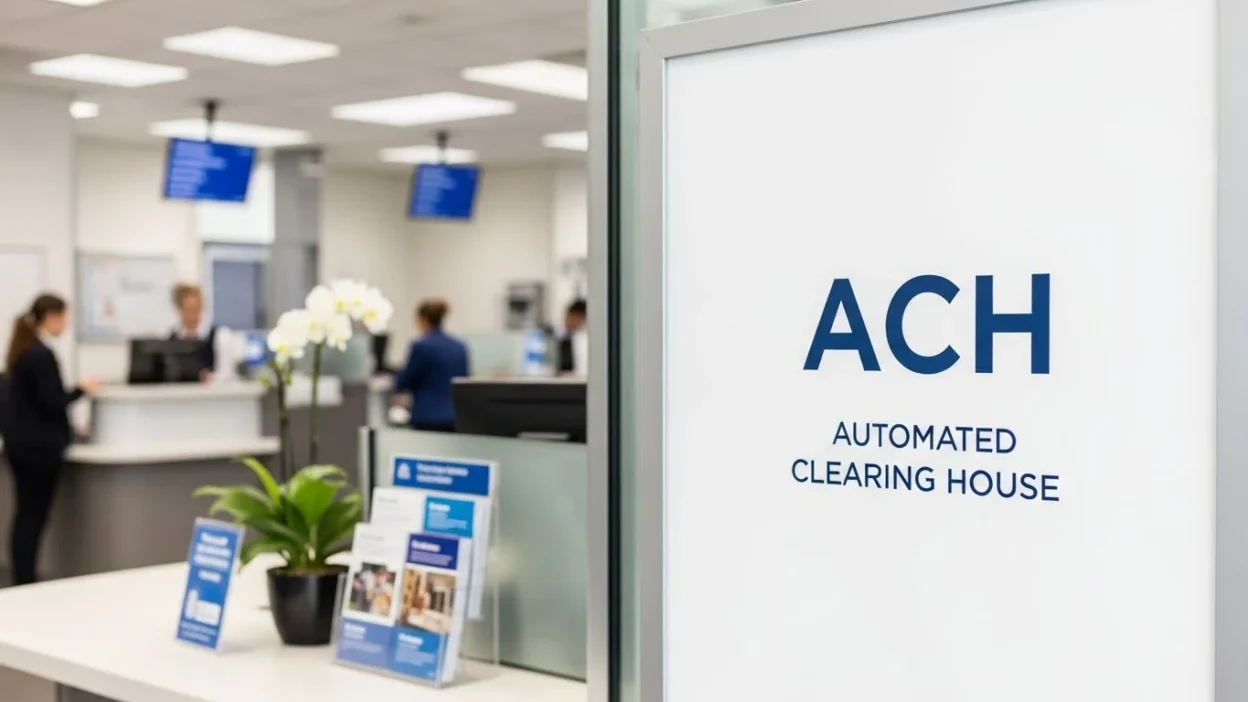
When navigating the world of banking, you’ve likely come across the term ACH and wondered, What does ACH stand for in banking? ACH stands for Automated Clearing House, a secure electronic network that enables funds to move between banks quickly and efficiently.
From paying bills to receiving payroll deposits, ACH transfers are a backbone of modern banking, saving time and reducing the need for paper checks.
Many people confuse ACH with wire transfers, debit cards, or other payment methods, but understanding how ACH works can simplify everyday transactions and even save money on fees.
If you’re an individual managing monthly bills or a business handling payroll, knowing the ins and outs of ACH is essential. In this article, we’ll explore ACH meaning, how ACH transfers work, its benefits, common uses, fees, security, and more, giving you a clear, practical understanding of this vital banking system.
ACH in Banking Quick Answer
ACH in banking stands for Automated Clearing House, a centralized electronic network that allows financial institutions to process transactions between accounts. Unlike traditional paper checks or cash, ACH enables money to move safely and efficiently from one bank account to another without the need for physical transfers. This system is widely used for a variety of payments, including payroll deposits, recurring bills, government benefits, and business-to-business transactions.
There are two main types of ACH transactions: ACH credit and ACH debit. An ACH credit occurs when a person or business sends money to another account, like when an employer deposits your paycheck directly into your bank account. On the other hand, an ACH debit happens when a company pulls money from your account with your authorization, such as for paying monthly utility bills or subscription services.
One of the biggest advantages of ACH is convenience. Payments can be automated, reducing the risk of late fees and ensuring that recurring expenses are paid on time. Additionally, ACH transfers are usually cost-effective, often cheaper than wire transfers, and are regulated by NACHA, the organization that oversees ACH rules and ensures security.
In short.
ACH is the backbone of modern electronic banking. It allows money to move quickly, safely, and efficiently between accounts, making it an essential tool for both individuals and businesses.
The Origin and History of ACH
The Automated Clearing House (ACH) system has a rich history that dates back to the early 1970s in the United States. Before ACH, most transactions, like payroll deposits and bill payments, relied on paper checks, which were slow, costly, and prone to errors. Banks and financial institutions saw the need for a more efficient method to move money electronically, leading to the creation of the ACH network.
In 1972, the first ACH transactions were processed in the United States, primarily for payroll and government benefit payments. The system allowed banks to batch transactions together, process them electronically, and settle funds between institutions in a timely manner. This innovation significantly reduced the reliance on physical checks and made recurring payments simpler for both businesses and individuals.
The National Automated Clearing House Association (NACHA) was established to oversee and regulate the ACH network. NACHA sets the rules, standards, and security guidelines to ensure that ACH transactions are reliable and protected against fraud. Over the decades, the network has expanded to support millions of transactions daily, including bill payments, direct deposits, tax refunds, and business-to-business transfers.
Today, ACH continues to evolve. Innovations like same-day ACH and integration with fintech platforms have made electronic payments faster and more accessible than ever. Understanding the history of ACH helps illustrate its critical role in shaping modern banking, moving the financial world from slow, paper-based methods to efficient, secure electronic transfers.
What Does ACH Stand for in Banking Transfers
ACH stands for Automated Clearing House, a network used in the United States to process electronic bank-to-bank transfers. It is a secure system that allows money to move between financial institutions without the need for paper checks, wire transfers, or physical cash. ACH payments are widely used for everyday transactions, making banking faster, more convenient, and more efficient for both individuals and businesses.
One of the most common uses of ACH transfers is direct deposit. Employers use the ACH network to send salaries directly into employees’ bank accounts. Government agencies also rely on ACH for distributing tax refunds and benefit payments. Because the process is automated and handled in batches, it reduces processing time and administrative costs compared to traditional payment methods.
ACH is also popular for bill payments and recurring transactions. Many people use ACH to pay utility bills, mortgage payments, subscriptions, and insurance premiums automatically. Businesses benefit from this system because it ensures timely payments and improves cash flow management. The automation minimizes errors and reduces the need for manual processing.
In addition, ACH transfers are commonly used for peer-to-peer payments and online banking services. When you transfer money between accounts at different banks, there is a high chance the transaction is processed through the ACH network. While ACH payments may take one to three business days to clear, they are generally more affordable than wire transfers.
Overall, ACH plays a vital role in modern banking by providing a reliable and cost-effective way to move money electronically. Its widespread use in payroll, bill payments, government transactions, and online transfers explains why it has become an essential part of today’s financial system.
How ACH Transfers Work
ACH transfers are a fundamental part of electronic banking, allowing money to move between accounts quickly and securely. The process is designed to be efficient, automated, and reliable, making it ideal for recurring payments like payroll or utility bills.
There are two main types of ACH transfers: ACH credit and ACH debit. In an ACH credit, the sender initiates the payment, pushing funds from their account to the recipient’s account. A common example is an employer depositing a paycheck directly into an employee’s bank account. ACH debit works differently—the recipient initiates the transaction, pulling funds from the sender’s account with prior authorization. Paying recurring bills, such as mortgages or subscription services, often uses ACH debit.
The ACH process typically follows several steps: First, the originating bank collects the transaction information in a batch. Next, this batch is sent to the ACH operator, such as the Federal Reserve or another clearinghouse. The operator sorts and delivers the transactions to the receiving banks, which then post the funds to the appropriate accounts. Most ACH transfers settle within 1–3 business days, although same-day ACH options are increasingly available.
Security is a crucial part of the process. NACHA rules require banks to verify accounts, authenticate transactions, and use encryption to protect sensitive data. This ensures that funds move safely and reduces the risk of fraud.
Overall, ACH transfers provide a fast, cost-effective, and secure method for moving money electronically, making them essential for both personal and business banking needs.
What Does ACH Stand for in a Bank Account?
ACH stands for Automated Clearing House, a network that facilitates electronic financial transactions between banks in the United States. It is a secure system that allows money to move directly from one bank account to another without the need for paper checks, wire transfers, or physical cash. The ACH network processes millions of transactions daily, making it a vital part of modern banking.
One of the most common uses of ACH in bank accounts is direct deposit. Employers use ACH transfers to send salaries directly to employees’ accounts, while government agencies use it to distribute benefits and tax refunds. This method is efficient, reliable, and usually faster than traditional paper-based payments.
ACH is also widely used for automatic bill payments. Customers can authorize companies to withdraw funds directly from their accounts for utilities, loan payments, subscriptions, or insurance premiums. This reduces the risk of missed payments and helps individuals manage recurring expenses more conveniently.
In business operations, ACH transfers simplify vendor payments and business-to-business transactions. Companies can process large volumes of payments at a lower cost compared to wire transfers. Financial institutions monitor ACH transactions closely to maintain security and prevent fraud, ensuring safe electronic fund movement.
Additionally, ACH supports peer-to-peer payment services and online banking transfers. Many digital payment platforms rely on the ACH network to move money between users and bank accounts seamlessly. Although ACH transfers may take one to three business days to process, they are generally cost-effective and dependable.
Overall, ACH plays a crucial role in everyday banking by enabling secure, electronic money transfers. From payroll deposits and bill payments to business transactions and online transfers, the Automated Clearing House network has transformed how individuals and organizations handle financial transactions efficiently and safely.
Types of ACH Transactions
ACH transactions are versatile and can be classified into different types based on how money is moved between accounts. Understanding these types helps both individuals and businesses use the system effectively.
The first type is ACH Credit, where the sender pushes money into the recipient’s account. A typical example is payroll. Employers deposit salaries directly into employees’ bank accounts, eliminating the need for paper checks. ACH credit can also be used for sending payments to suppliers or contractors electronically, simplifying business transactions.
The second type is ACH Debit, which allows a recipient to pull money from a sender’s account with prior authorization. This method is commonly used for recurring bills such as mortgages, utility payments, or subscription services. ACH debit ensures payments are automatic and timely, reducing late fees and administrative work.
Another important variation is Same-Day ACH, which enables transactions to be processed and settled on the same business day. This option is useful for urgent payments and is increasingly supported by banks and financial institutions.
Recurring ACH transactions are a subset of these types, designed for automated, repeating payments. Examples include monthly rent, insurance premiums, or subscription services like streaming platforms. By automating these payments, users save time and reduce the risk of missing deadlines.
Overall, these types of ACH transactions—credit, debit, same-day, and recurring—offer flexibility, security, and convenience. Whether for personal finances or business needs, understanding the differences helps users choose the most efficient way to move funds electronically.
What Does ACH Stand for in the Banking System
ACH stands for Automated Clearing House, a network used in the banking system to electronically move money between financial institutions. It plays a crucial role in processing direct deposits, bill payments, business transactions, and person-to-person transfers. Instead of using paper checks or physical cash, the ACH network allows funds to be transferred securely and efficiently through digital systems, making modern banking faster and more convenient.
One of the most common uses of ACH in banking is direct deposit. Employers use ACH to send salaries directly into employees’ bank accounts. Government agencies also rely on ACH to distribute benefits, tax refunds, and social security payments. This method eliminates the need for paper checks and ensures that funds are delivered safely and on time.
ACH is also widely used for bill payments and recurring transactions. Utility companies, subscription services, mortgage lenders, and insurance providers use ACH transfers to automatically withdraw payments from customers’ accounts. This automation reduces late payments and simplifies financial management for both businesses and individuals.
In business operations, ACH transfers support vendor payments and large-scale transactions between companies. Compared to wire transfers, ACH payments are generally more cost-effective, making them ideal for routine transactions. Although ACH payments may take one to three business days to process, they are reliable and secure due to strict banking regulations and verification procedures.
Additionally, peer-to-peer payment platforms use the ACH network to transfer funds between users’ bank accounts. Many digital payment apps connect directly to bank accounts through ACH to enable smooth money transfers without requiring physical visits to banks.
Overall, the Automated Clearing House system is a backbone of electronic banking. By enabling secure, efficient, and automated money transfers, ACH has transformed how individuals, businesses, and institutions handle financial transactions in today’s digital economy.
Benefits of Using ACH Payments
ACH payments offer numerous advantages for both individuals and businesses, making them one of the most popular electronic payment methods in banking. One of the primary benefits is convenience. With ACH, payments can be automated, eliminating the need to write checks or visit a bank. Recurring bills such as utilities, rent, or subscriptions can be scheduled, ensuring payments are made on time and reducing the risk of late fees.
Another major benefit is cost-effectiveness. Compared to wire transfers or credit card payments, ACH transactions are generally much cheaper, with lower or no fees for most routine transfers. This is especially valuable for businesses that process payroll or pay multiple vendors each month.
Security is also a significant advantage. ACH transactions are governed by NACHA rules and use encryption and verification processes to protect sensitive financial information. This reduces the risk of fraud compared to sending paper checks or cash.
ACH is also efficient and reliable. While most ACH transfers settle within 1–3 business days, same-day ACH is increasingly available, allowing faster access to funds when needed. For businesses, this ensures smoother cash flow management and predictable transaction processing.
Finally, ACH is environmentally friendly. By replacing paper checks with electronic transfers, ACH reduces paper use and contributes to sustainable banking practices.
In summary, ACH payments combine convenience, security, cost savings, efficiency, and environmental benefits, making them an essential tool for modern banking. Whether managing personal finances or running a business, ACH offers a seamless way to move money safely and reliably.
What Does ACH Stand for in Banking in USA
ACH stands for Automated Clearing House, a nationwide electronic payment network used in the United States to transfer money between banks. It allows financial institutions to process large volumes of credit and debit transactions in batches, making electronic payments secure, reliable, and cost-effective. Instead of using paper checks or wire transfers, ACH enables direct bank-to-bank transfers for everyday financial activities. This system plays a crucial role in the U.S. banking infrastructure by ensuring smooth and efficient money movement.
One of the most common uses of ACH in banking is direct deposit. Employers use the ACH network to deposit salaries directly into employees’ bank accounts. Government agencies also rely on ACH to distribute benefits such as Social Security payments and tax refunds. Because these transfers are automated and electronic, they reduce processing time and minimize errors compared to traditional paper-based methods.
ACH is also widely used for recurring payments. Consumers can authorize companies to withdraw funds directly from their accounts to pay bills such as utilities, mortgages, insurance premiums, and subscription services. This type of transaction, known as an ACH debit, helps customers avoid late fees and manage their finances more conveniently. Businesses benefit as well because automated payments improve cash flow and reduce administrative costs.
In addition, ACH transfers are commonly used for person-to-person (P2P) payments and online banking transactions. Many digital payment platforms and mobile banking apps rely on the ACH network to move money between accounts. While ACH transfers may take one to three business days to process, they are generally less expensive than wire transfers and are considered safe due to strict banking regulations and security standards.
Overall, ACH is a fundamental component of the U.S. banking system. By enabling electronic fund transfers for payroll, bill payments, government benefits, and online transactions, the Automated Clearing House network has transformed how Americans send and receive money, making banking more efficient, accessible, and dependable.
ACH vs Other Payment Methods
When managing money, it’s important to understand how ACH payments compare to other common payment methods, such as wire transfers, checks, and credit/debit cards. Each method has unique features, and knowing the differences helps individuals and businesses choose the most efficient option.
ACH vs Wire Transfer:
Wire transfers are faster, often completing the same day, but they come with higher fees, sometimes ranging from $15 to $50 per transaction. ACH transfers, on the other hand, are slower, typically taking 1–3 business days, but are much more cost-effective. For recurring payments or payroll, ACH is usually the preferred choice.
ACH vs Checks:
Traditional paper checks are slower, prone to errors, and can be lost in the mail. ACH eliminates these risks by processing payments electronically, saving time and improving reliability. Checks also require manual handling and bank deposits, whereas ACH transfers are fully automated.
ACH vs Credit/Debit Cards:
Credit or debit cards are convenient for point-of-sale transactions, online shopping, or one-time payments. However, they often involve merchant fees and interest charges if balances are not paid in full. ACH, in contrast, is ideal for recurring payments or larger transactions without the extra fees associated with card payments.
When to Use ACH:
ACH is particularly advantageous for recurring payments, payroll, vendor payments, and bill automation. It is cost-effective, secure, and reliable, making it an essential tool for both personal and business banking.
Common Uses of ACH in Banking
ACH payments are widely used in banking due to their efficiency, reliability, and low cost. They serve a variety of purposes for both individuals and businesses, making them an essential part of modern financial transactions.
One of the most common uses of ACH is payroll deposits. Employers use ACH to directly deposit salaries into employees’ bank accounts. This method eliminates the need for paper checks, ensures timely payment, and simplifies record-keeping for both employers and employees.
Another frequent application is bill payments. Utility companies, mortgage lenders, and subscription services often use ACH debits to automatically withdraw monthly payments from customers’ accounts. This helps prevent late fees and makes it easier to manage recurring expenses without manual intervention.
Business-to-business (B2B) transactions also rely heavily on ACH. Companies can pay suppliers, vendors, or contractors electronically, improving cash flow management and reducing administrative overhead. ACH is particularly useful for businesses that handle large volumes of regular payments, as it is faster and cheaper than issuing checks.
Government payments are another key use. Tax refunds, Social Security benefits, and other government disbursements are frequently processed via ACH, ensuring timely and secure delivery of funds.
Finally, peer-to-peer payments often utilize the ACH network behind the scenes. Apps like Venmo, Zelle, and PayPal transfer money between users’ bank accounts using ACH infrastructure.
Overall, ACH payments are versatile, secure, and efficient, serving a wide range of functions from personal finance to large-scale business transactions. Their ability to automate routine transfers makes them a cornerstone of the banking system.
What Does ACH Stand for in My Bank Account?
When you check your bank statement and notice the term ACH, it can be confusing at first. Many people wonder what ACH stands for in their bank account and whether it is something they should be concerned about. ACH stands for Automated Clearing House, a secure electronic network used for transferring money between banks in the United States. It is commonly used for everyday financial transactions, making payments and deposits more convenient and efficient.
One of the most common uses of ACH is direct deposit. Employers use the Automated Clearing House network to deposit salaries directly into employees’ bank accounts. Government agencies also use it to send benefits, tax refunds, and other payments. Because these transactions are electronic, they are usually processed quickly and safely without the need for paper checks.
ACH is also widely used for automatic bill payments. When you authorize a company to withdraw money from your account for utilities, subscriptions, loan payments, or insurance premiums, the transaction is typically processed through the ACH system. This helps ensure payments are made on time and reduces the risk of late fees. Many people prefer ACH payments because they are reliable and require less manual effort.
Another important function of ACH is person-to-person transfers. Many online payment platforms and banking apps rely on the Automated Clearing House network to move money between accounts. Whether you are transferring funds to another account you own or sending money to someone else, ACH makes the process seamless and cost-effective.
Overall, if you see ACH in your bank account, it simply refers to an electronic transfer processed through the Automated Clearing House network. It is a normal and widely used banking method that supports direct deposits, bill payments, and money transfers. Understanding what ACH stands for can help you better manage your finances and feel more confident when reviewing your bank statements.
ACH Fees and Transaction Limits
One of the reasons ACH payments are so popular is their cost-effectiveness compared to other banking methods. For most personal transactions, ACH transfers are free or incur minimal fees. Some banks may charge small amounts for certain ACH services, like same-day transfers or business ACH transactions, but these fees are generally lower than wire transfers or credit card payments.
For businesses, ACH fees vary depending on transaction volume and the bank’s policies. Typically, a single ACH payment might cost anywhere from $0.20 to $1.50 per transaction, making it far more economical for companies processing large payrolls or paying multiple vendors. By contrast, issuing checks can involve higher costs for paper, postage, and administrative handling.
Transaction limits are another important consideration. Individual ACH transfers often have daily or monthly caps set by the bank, usually ranging from $5,000 to $25,000 per day. Businesses may have higher limits but must comply with their financial institution’s policies. Same-day ACH transactions might have additional restrictions, often lower limits than standard ACH.
Understanding these fees and limits is crucial to avoid unexpected charges or delays. Many banks provide online tools to track ACH usage, ensuring transfers remain within allowed limits.
Overall, ACH offers a low-cost, efficient, and flexible payment solution. Its minimal fees, predictable costs, and reasonable transaction limits make it an attractive option for individuals, businesses, and government institutions alike, reinforcing why ACH has become a cornerstone of modern electronic banking.
Security and Regulations
Security is a critical aspect of ACH payments, and the system is designed to protect both individuals and businesses during electronic transfers. All ACH transactions are regulated by the National Automated Clearing House Association (NACHA), which sets strict rules and standards to ensure reliability, accuracy, and safety.
Banks and financial institutions follow these regulations to verify accounts, authenticate transactions, and encrypt sensitive data. This minimizes the risk of fraud or unauthorized access. For example, before processing an ACH debit, companies must obtain explicit authorization from the account holder, ensuring consent for each transaction.
Another important security feature is the fraud detection mechanisms employed by banks. ACH transfers are monitored for unusual activity, such as transactions exceeding normal limits or patterns that indicate potential scams. Many banks also offer alerts and notifications, allowing account holders to track transactions in real time.
NACHA also enforces rules regarding timely dispute resolution. If an ACH transfer is unauthorized or incorrect, account holders have the right to initiate a claim, and banks are required to investigate and resolve issues promptly. This regulatory oversight ensures that ACH remains a trusted method for electronic payments.
Additionally, technology improvements, such as multi-factor authentication, tokenization, and secure APIs for fintech platforms, have strengthened the security of ACH transfers.
In summary, ACH combines regulatory oversight, encryption, authentication, and monitoring to provide a secure and reliable payment system. These protections make ACH a safe choice for payroll, bill payments, government disbursements, and business transactions.
What Does ACH Number Stand for in Banking
An ACH number in banking stands for Automated Clearing House number. It is a unique nine-digit routing number used in the United States to identify financial institutions during electronic transactions. ACH numbers play a vital role in processing payments such as direct deposits, bill payments, and money transfers between banks. Understanding what an ACH number stands for helps individuals and businesses manage electronic payments safely and efficiently.
In everyday banking, ACH numbers are commonly used for direct deposits. When employers send salaries directly to employees’ bank accounts, the ACH network ensures the funds are transferred accurately. Government benefits, tax refunds, and recurring payments also rely on ACH routing numbers to move money securely between accounts without the need for paper checks.
For businesses, ACH numbers simplify payment processing. Companies use them to pay vendors, collect subscription fees, and handle automatic billing. Because ACH transactions are typically cost-effective compared to wire transfers, many organizations prefer them for routine financial operations. The system reduces paperwork and speeds up transaction processing.
Security is another important aspect of ACH numbers. Each routing number identifies a specific bank or credit union, helping ensure funds are sent to the correct institution. However, individuals must keep their banking details private to prevent unauthorized transactions. Banks use encryption and verification systems to protect ACH payments from fraud.
Overall, an ACH number stands for Automated Clearing House number and serves as a key component of electronic banking in the United States. From payroll deposits to business payments, it enables smooth, reliable, and secure financial transactions, making modern banking more convenient and efficient.
Real Life Examples of ACH Transfers
ACH transfers are an essential part of daily banking, and their practical applications make managing money easier for both individuals and businesses. Here are some real-life examples to illustrate how ACH works.
One of the most common examples is payroll direct deposits. Employers use ACH credit to deposit salaries directly into employees’ bank accounts. This method ensures that employees receive their pay on time without needing paper checks, reducing administrative work for HR departments and providing convenience for workers.
Another example is recurring bill payments. Many utility companies, mortgage lenders, and subscription services use ACH debits to automatically withdraw monthly payments from customers’ accounts. This eliminates the risk of late fees, helps maintain consistent payment schedules, and reduces the need to remember multiple due dates.
Business-to-business (B2B) transactions also rely heavily on ACH. Companies can pay vendors or suppliers electronically, streamlining cash flow and reducing paperwork. For example, a small business may use ACH to pay its monthly supplier invoices, saving time and avoiding postal delays.
Government payments are another practical use. Tax refunds, Social Security benefits, and unemployment compensation are often delivered via ACH, ensuring funds reach recipients securely and efficiently.
Finally, peer-to-peer (P2P) payments like Venmo, Zelle, or PayPal use ACH in the background to transfer funds between bank accounts. This enables quick, convenient, and safe transfers between friends, family, or small business customers.
In all these cases, ACH provides a secure, reliable, and cost-effective way to move money electronically, demonstrating its importance in modern banking and everyday financial life.
FAQs:
1. How long does an ACH transfer take?
Most ACH transfers are completed within 1–3 business days. However, with same-day ACH, funds can be transferred on the same day, depending on the bank and cutoff times.
2. Can ACH transfers fail?
Yes, ACH transfers can occasionally fail. Common reasons include insufficient funds, incorrect account information, or authorization issues. Banks usually notify the sender or recipient when a transfer fails.
3. Are ACH transfers reversible?
ACH transfers can sometimes be reversed, especially in cases of fraud, errors, or duplicate transactions. NACHA rules require banks to investigate disputes and reverse funds if necessary.
4. Is ACH safer than wire transfers?
ACH transfers are considered very safe due to encryption, verification, and regulatory oversight. While wire transfers are faster, ACH provides strong security and cost advantages, particularly for recurring payments.
5. Can ACH transfers be international?
ACH is primarily a U.S.-based system, though some international transfers can be processed through partnerships with foreign banks. For direct international payments, wire transfers are usually preferred.
6. Who regulates ACH payments?
The National Automated Clearing House Association (NACHA) oversees ACH, setting rules for processing, security, and dispute resolution.
7. What are common uses of ACH?
Payroll, bill payments, government disbursements, and business-to-business transactions are typical ACH applications.
Conclusion:
The future of ACH payments looks promising, with technology driving faster, more efficient, and more accessible electronic transfers.
Innovations like same-day ACH, improved fraud detection, and integration with fintech apps are transforming how individuals and businesses handle money.
As more people and organizations adopt digital banking, ACH will continue to play a central role in streamlining payments.
Faster processing is a key trend. Same-day ACH is becoming increasingly common, allowing funds to move quickly for payroll, urgent bills, or time-sensitive business payments.
Fintech platforms and mobile banking apps are also leveraging ACH infrastructure, making it easier than ever to send money, automate recurring payments, and manage finances from smartphones.
Security will remain a top priority. Enhanced encryption, tokenization, and monitoring systems are strengthening the ACH network, ensuring transactions remain safe and compliant with NACHA regulations.
In conclusion, ACH stands for Automated Clearing House, a secure, reliable, and cost-effective electronic payment system that underpins modern banking.
From direct deposit payrolls and bill payments to government disbursements and business-to-business transactions, ACH enables millions of transactions daily.
Its convenience, affordability, and security make it a preferred choice for individuals and organizations alike.
As digital banking evolves, ACH will continue to grow, offering faster transfers, seamless integration with technology, and greater financial efficiency.
Understanding ACH, its types, benefits, fees, and regulations empowers users to make informed decisions, ensuring smoother, safer, and more efficient money management.
Discover More Articale
- What Does P.s Mean Explained Clearly in 2026
- DNI Mean: Meaning, Examples, and Applications for 2026
- What Does Low Power Mode Do on Your Device for 2026

I’m the author behind Jokesattack.com, where I share the funniest jokes, puns, and memes to make your day brighter with laughter. 😄🎉