
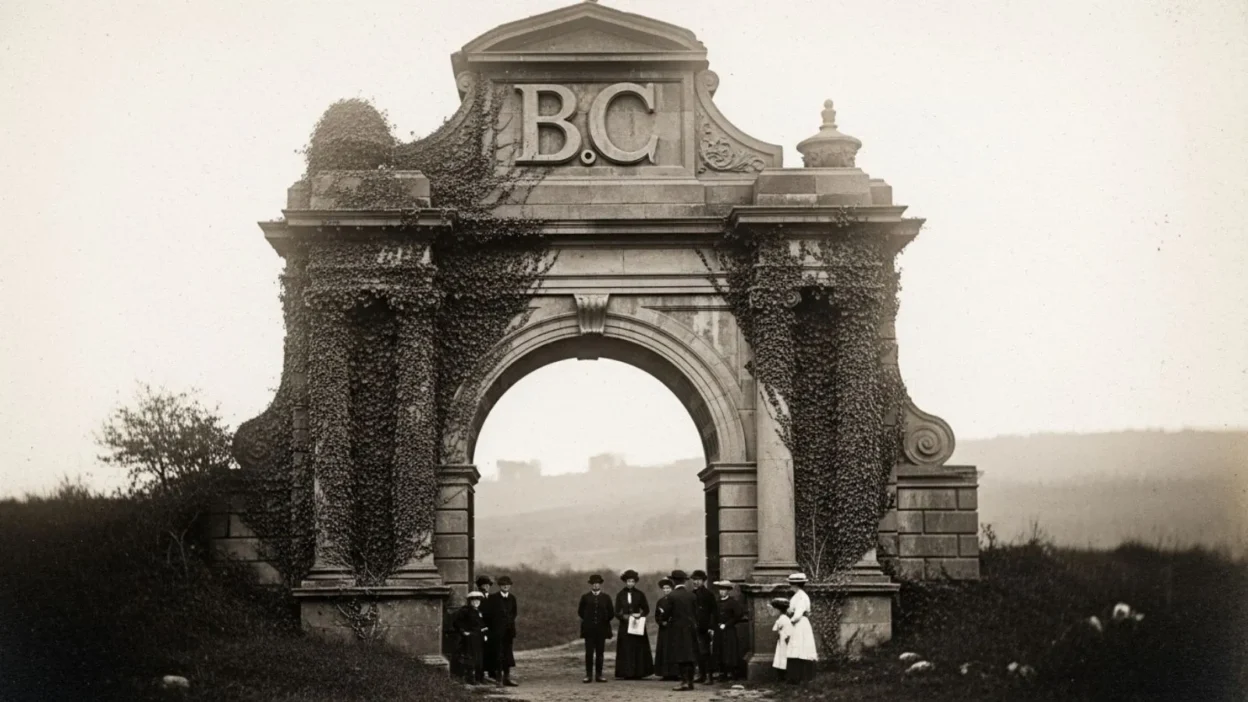
The abbreviation BC is short, simple, and widely used, yet it often leaves people confused. If you have ever seen BC in a history book, a text message, a medical report, or even a business document, you may have wondered what it actually stands for.
The truth is that BC has more than one meaning, and its definition depends heavily on the context in which it appears. In historical timelines, BC is most commonly used to refer to dates before a specific point in time.
In casual conversations and online chats, it can have a completely different meaning. You may also encounter BC in geography, medicine, business, and academic writing.
Understanding the correct meaning of BC is important to avoid misinterpretation, especially in professional or educational settings.
In this article, we will explore what BC stands for in different contexts, explain its most common uses, and provide clear examples to help you understand it with confidence.
What Does BC Stand For in History?
In history, BC stands for “Before Christ.” It is used to label years that occurred before the traditional birth year of Jesus Christ. This dating system has been widely used for centuries to organize historical events in a clear chronological order. When reading timelines, textbooks, or historical documents, BC helps indicate how far back in time an event took place.
The BC system counts years backward. For example, 300 BC happened earlier than 100 BC, even though the number is larger. This can feel confusing at first, but it simply means that time moves closer to the birth of Christ as the numbers decrease. There is also no year zero in this system. The year 1 BC is immediately followed by AD 1.
BC has been commonly paired with AD, which stands for Anno Domini, meaning “in the year of the Lord.” Together, BC and AD form a historical framework used across many cultures, especially in Western education. You might see examples like the construction of the pyramids around 2600 BC or the fall of Babylon in 539 BC.
Although BC has religious origins, it remains a standard reference in history. However, modern academic writing sometimes replaces BC with BCE (Before Common Era) to create a more neutral, globally inclusive dating system. Despite this shift, BC is still widely recognized and understood today.
BC vs AD vs BCE vs CE: What’s the Difference?
To fully understand what BC stands for, it helps to compare it with related dating terms such as AD, BCE, and CE. These abbreviations are all used to label years on historical timelines, but they come from different traditions.
BC (Before Christ) refers to years before the estimated birth of Jesus Christ. AD, which stands for Anno Domini (Latin for “in the year of the Lord”), marks years after that point. Together, BC and AD form the traditional Christian-based calendar system. One important detail is that there is no year zero—the timeline moves directly from 1 BC to AD 1.
In modern academic and international writing, many historians prefer BCE (Before Common Era) and CE (Common Era). These terms represent the same exact years as BC and AD but remove direct religious references. For example, 500 BC and 500 BCE refer to the same year, just expressed differently.
The main difference between these systems is language, not time. BC and AD are still widely used in schools, general media, and everyday writing, while BCE and CE are more common in scholarly articles and global publications.
Choosing which term to use often depends on the audience. If you are writing casually or for a general readership, BC and AD are easily understood. In academic or multicultural contexts, BCE and CE are often preferred for neutrality and inclusiveness.
What Does BC Mean in Texting and Slang?
In texting, social media, and online conversations, BC most commonly stands for “because.” It is a shortened form used to save time and effort when typing, especially in casual or fast-paced communication. You’ll often see it in text messages, WhatsApp chats, Instagram comments, or tweets where brevity matters.
For example, someone might say, “I can’t come today bc I’m busy,” or “She left early bc she had work.” In these cases, BC simply replaces the word “because” and carries no historical or formal meaning. This usage is especially popular among younger users and in informal settings.
However, BC in texting can sometimes cause confusion, particularly if the context is unclear. In more formal writing—such as emails, school assignments, or professional messages—using bc instead of “because” is generally discouraged. It may appear unprofessional or careless, especially in business or academic communication.
In rare cases, BC can have other slang-related meanings depending on the conversation, but “because” is by far the most common. The key to understanding BC in texting is to look at the sentence structure. If it is used to explain a reason or cause, it almost always means “because.”
Understanding this informal usage helps avoid misinterpretation, especially when switching between casual chats and serious discussions. Always consider the platform and audience before using abbreviations like BC, as clarity and tone can change significantly based on context.
What Does BC Stand For in Geography?
In geography, BC most commonly stands for British Columbia, a province located on the west coast of Canada. It is one of the country’s most well-known provinces and is often abbreviated as BC in maps, addresses, travel documents, news reports, and official records. When you see BC used alongside Canadian cities like Vancouver or Victoria, it almost always refers to British Columbia.
British Columbia is known for its diverse geography, including mountains, forests, coastal regions, and islands. Because the province’s name is long, the abbreviation BC is widely accepted and used both formally and informally. For example, mailing addresses often include “BC” followed by a postal code, such as Vancouver, BC.
It’s important not to confuse this geographic meaning of BC with its historical or slang meanings. Context makes the difference. If the discussion is about travel, population, weather, or Canadian politics, BC almost certainly refers to British Columbia rather than “Before Christ” or “because.”
In international contexts, especially outside North America, writers may add clarification such as “BC, Canada” to avoid confusion. This is especially useful in academic or professional documents where clarity is essential.
Overall, BC as an abbreviation for British Columbia is one of the most common non-historical uses of the term. Understanding this meaning helps readers quickly interpret geographic references and avoids misunderstandings when the abbreviation appears in global communication.
What Does BC Mean in Business and Corporate Terms?
In the business world, BC can have several important meanings depending on the context, but the most common is Business Corporation. This abbreviation is often used in legal, financial, and corporate documents to identify a company that has been officially registered as a corporation. For example, a company named GreenTech BC might indicate that it is a registered business corporation operating under that title.
Another common business-related usage of BC is in contracts, legal papers, or corporate filings, where it may appear as part of a formal name or designation. In some regions, BC is included alongside other corporate abbreviations like LLC (Limited Liability Company), Inc. (Incorporated), or Ltd. (Limited). Each abbreviation communicates specific legal and operational characteristics, and BC indicates that the entity is recognized as a corporation under local laws.
It’s worth noting that, unlike historical or texting meanings of BC, its business usage is formal and precise. Misunderstanding it can lead to confusion in legal, accounting, or professional contexts. For instance, assuming BC means “because” in a business contract would be incorrect and could lead to miscommunication.
In addition to Business Corporation, some industries might have niche uses of BC, such as Budget Control in finance or Business Continuity in risk management. However, Business Corporation remains the most recognized corporate definition.
What Does BC Stand For in Medical Terms?
In medical contexts, BC can have multiple meanings, and understanding the correct one depends entirely on the situation. Two of the most common interpretations are Breast Cancer and Blood Culture, both of which appear frequently in medical documents, reports, and discussions.
When BC refers to Breast Cancer, it is often used in patient records, research papers, and healthcare communications. For example, a doctor might write, “The patient was diagnosed with BC at stage II,” indicating a breast cancer diagnosis. In this case, BC is a shorthand that allows healthcare professionals to record information efficiently.
Another common medical meaning is Blood Culture. In laboratory and hospital settings, BC tests are used to detect bacterial or fungal infections in the blood. A report might state, “BC results are pending,” referring to the blood culture test, not breast cancer.
Because BC has multiple medical meanings, context is crucial. Misinterpreting BC in a clinical setting can lead to confusion or even errors in patient care. Therefore, doctors, nurses, and lab technicians pay close attention to accompanying notes, test results, and patient history to understand which BC meaning applies.
Medical abbreviations like BC highlight the importance of precision. While shorthand improves efficiency, it also requires careful reading to avoid mistakes. When encountering BC in a medical report, always consider the context, document type, and surrounding information to determine whether it refers to breast cancer, a blood culture, or another less common medical usage.
What Does BC Mean in Education and Academic Writing?
In education and academic contexts, BC is most commonly used in history, social studies, and archaeology to indicate years before the birth of Christ. Textbooks, research papers, and classroom materials frequently use BC to label historical dates, helping students and readers understand the chronological order of events. For example, “The Great Pyramid of Giza was built around 2600 BC” clearly shows that this event occurred long before the start of the AD timeline.
In academic writing, BC is often paired with AD, forming a standard system for organizing historical events. However, many modern textbooks and scholarly articles now prefer BCE (Before Common Era) and CE (Common Era). These terms are religiously neutral but refer to the exact same years as BC and AD. Using BCE and CE in academic writing allows for inclusivity in multicultural and global education settings while maintaining chronological accuracy.
BC in academic texts is not limited to history alone. It may appear in archaeology, paleontology, and anthropology when dating artifacts, fossils, or ancient civilizations. Students are taught to recognize BC and understand that larger numbers indicate earlier years, which is the opposite of AD dating.
It’s important to note that casual users might confuse BC with slang meanings like “because,” but in education, BC almost always refers to historical dates. Understanding this distinction ensures clarity and prevents misinterpretation, particularly in essays, research projects, and formal academic assessments.
What Does BC Stand For in Religion and Cultural Contexts?
The abbreviation BC, meaning “Before Christ,” has deep religious origins, rooted in Christianity. Historically, it was used to mark the years before the birth of Jesus Christ, making it a central reference in Christian calendars and timelines. In religious texts, historical accounts, and church records, BC has helped organize events in a way that aligns with Christian tradition.
Because of its religious foundation, the use of BC can sometimes be culturally sensitive. In modern, multicultural societies, writers and educators may prefer BCE (Before Common Era) to avoid religious connotations while still conveying the same chronological meaning. This allows historians, scholars, and students from diverse backgrounds to discuss historical dates in a neutral and inclusive manner.
BC is still widely recognized in popular culture, museums, documentaries, and media, making it familiar to most audiences. For instance, phrases like “3000 BC” or “1200 BC” are universally understood as referring to ancient historical periods, even by people from non-Christian backgrounds.
In cultural studies, BC also provides context for understanding the evolution of civilizations, religions, and societal structures before the Common Era. It appears in academic courses on history, archaeology, and theology, helping students trace human development over millennia.
While BC carries a religious origin, its meaning has transcended Christianity in modern usage. Today, it serves as a chronological reference understood globally, with BCE offering an alternative that respects cultural diversity without altering historical accuracy.
How to Identify the Correct Meaning of BC
The abbreviation BC can mean different things depending on the context, which makes understanding its correct meaning essential. Whether you encounter BC in a text message, historical document, medical report, or business file, the key is to analyze the surrounding information carefully.
One of the first steps is to consider the field or subject. If you are reading a history textbook, timeline, or archaeological report, BC almost always stands for “Before Christ”. Conversely, if BC appears in casual texting or online chats, it likely means “because”, used to explain a reason quickly. Similarly, in medical documents, BC could refer to Breast Cancer or Blood Culture, while in business, it often represents Business Corporation.
Another helpful clue is sentence structure and surrounding words. For example, phrases like “2600 BC” or “539 BC” indicate historical dating, while “I’m late bc traffic” clearly uses BC as shorthand for “because.” In business or legal contexts, BC often follows a company name or appears in formal documentation.
When in doubt, look for additional context such as the type of document, the audience, or related terms. For example, if BCE or CE is mentioned, it signals historical usage. If words like patient, diagnosis, or lab results appear, it’s likely medical.
By paying attention to these cues—field, sentence structure, and context—you can accurately determine the intended meaning of BC. This careful approach ensures clear communication and prevents misunderstandings in both casual and professional situations.
Common Misunderstandings and Mistakes About BC
Because BC has multiple meanings across different fields, it is easy to misunderstand or misuse the abbreviation. One of the most common mistakes is assuming that BC only refers to “Before Christ.” While this is correct in historical contexts, BC also has widely recognized meanings in texting, medicine, business, and geography. Confusing these can lead to miscommunication, especially in professional or academic settings.
For example, in casual texting, BC means “because.” A student might see a message like “I didn’t finish the homework bc I was sick” and misinterpret it if they are thinking about historical timelines. Similarly, in a medical report, BC could indicate Breast Cancer or Blood Culture, and misreading it could lead to serious misunderstandings regarding a patient’s health.
Another common error is mixing BC and BCE or AD and CE. Some people believe that BC and BCE refer to different years, but they represent exactly the same time periods, with BCE used for a more neutral, inclusive approach. Misapplying these terms can confuse readers or make academic work appear inaccurate.
In geography, BC is often misunderstood when referring to British Columbia. People unfamiliar with Canadian provinces might mistake BC for a historical or casual abbreviation.
The key to avoiding mistakes is careful attention to context. Always consider the surrounding words, the subject matter, and the intended audience. By doing so, you can correctly identify whether BC refers to history, texting, medicine, business, or geography, ensuring clarity and preventing misunderstandings.
Is BC Still Used Today?
Yes, BC is still widely used today, but its prevalence depends on the context. In historical writing and education, BC remains a familiar term for indicating years Before Christ. Textbooks, documentaries, museum exhibits, and academic discussions continue to use BC alongside AD, though many scholars now prefer BCE (Before Common Era) for a more neutral and globally inclusive alternative. Despite the shift toward BCE, BC is still instantly recognizable and widely understood by general audiences, making it a convenient choice for historical references.
In modern digital communication, BC is also common as a shorthand for “because” in texting, social media, and online chats. Younger generations, in particular, rely on this abbreviation for quick and casual communication. Its usage in digital conversations shows how flexible abbreviations can evolve over time to serve different purposes in everyday language.
In business, BC as Business Corporation continues to appear in company names, legal documents, and professional forms. Similarly, in the medical field, BC is still used in shorthand for Breast Cancer or Blood Culture, depending on the context.
Even though BC originated from religious and historical contexts, its modern usage spans multiple fields. The key to understanding BC today is context awareness—recognizing whether the term appears in history, texting, business, medical, or geographic discussions. By reading carefully, you can accurately interpret BC regardless of where it appears, ensuring clarity in both professional and casual situations.
Examples of BC Used in Sentences
Understanding BC becomes much easier when you see it used in different contexts. Here are some clear examples that illustrate its various meanings:
Historical Context (Before Christ):
- The Great Pyramid of Giza was completed around 2560 BC.
- Hammurabi ruled Babylon in 1792 BC.
- The founding of Rome is traditionally dated to 753 BC.
In these examples, BC clearly marks years before the estimated birth of Christ, helping readers place events in historical order.
Texting and Slang (Because):
- I stayed home today bc I wasn’t feeling well.
- She didn’t join us bc she had a meeting.
- I can’t answer right now bc my phone died.
Here, BC is an informal shorthand for “because,” commonly used in casual digital communication.
Geography (British Columbia):
- I’m traveling to Vancouver, BC, next summer.
- The weather in BC can be unpredictable.
- She moved to BC for work opportunities.
In these examples, BC clearly refers to the Canadian province of British Columbia.
Business (Business Corporation):
- GreenTech BC was registered as a business corporation in 2010.
- The BC filed its annual financial report last week.
Medical (Breast Cancer / Blood Culture):
- The patient was diagnosed with BC last year.
- BC results from the lab are pending.
These examples show that BC can mean very different things depending on context. By looking at the surrounding words and topic, readers can quickly determine whether BC refers to a date, reason, place, company, or medical term. Using examples like these helps prevent confusion and ensures correct understanding in real-world situations.
FAQs:
1. What does BC stand for in history?
In historical contexts, BC stands for “Before Christ” and is used to label years before the estimated birth of Jesus Christ.
2. Does BC mean before or after Christ?
BC always refers to before Christ. Years that occur after Christ’s birth are labeled AD (Anno Domini).
3. Is BC the same as BCE?
Yes. BCE (Before Common Era) represents the same years as BC but is a religiously neutral term used in academic and multicultural settings.
4. What does BC mean in texting or online chat?
In digital communication, BC usually means “because”, used to explain reasons quickly. For example: “I couldn’t go to the party bc I was sick.”
5. What does BC stand for in geography?
BC refers to British Columbia, a province in Canada. For instance, Vancouver, BC, indicates the city and province.
6. Can BC be used in business?
Yes. In business, BC often stands for Business Corporation, appearing in company names or legal documents.
7. What about BC in medical terms?
In medicine, BC may refer to Breast Cancer or Blood Culture, depending on the context. Accuracy is important to avoid misunderstandings.
8. How do I know which meaning of BC is correct?
Look at the context, surrounding words, and subject matter. Whether it’s historical, casual, business, geographic, or medical, context clues guide the correct interpretation.
Conclusion:
The abbreviation BC is short but versatile, with multiple meanings depending on context. Historically, it stands for “Before Christ”, marking years prior to the birth of Jesus, and is still widely recognized in textbooks, timelines, and educational materials.
In modern communication, BC can also mean “because” in texting, making it a common part of casual digital conversations. Additionally, BC appears in geography as British Columbia, in business as Business Corporation, and in medical contexts as Breast Cancer or Blood Culture.
Understanding the correct meaning of BC requires attention to context, surrounding words, and the subject at hand.
By recognizing these cues, you can confidently interpret BC in historical documents, online messages, professional reports, or everyday conversations.
If you encounter BC in history, texting, business, medical, or geographic contexts, knowing its proper meaning ensures clarity and prevents misunderstandings. Context is key to mastering the many uses of BC.

I’m the mind behind Jokesattack.com, your go-to place for daily laughs, clever puns, and hilarious memes. Spreading smiles one joke at a time!