
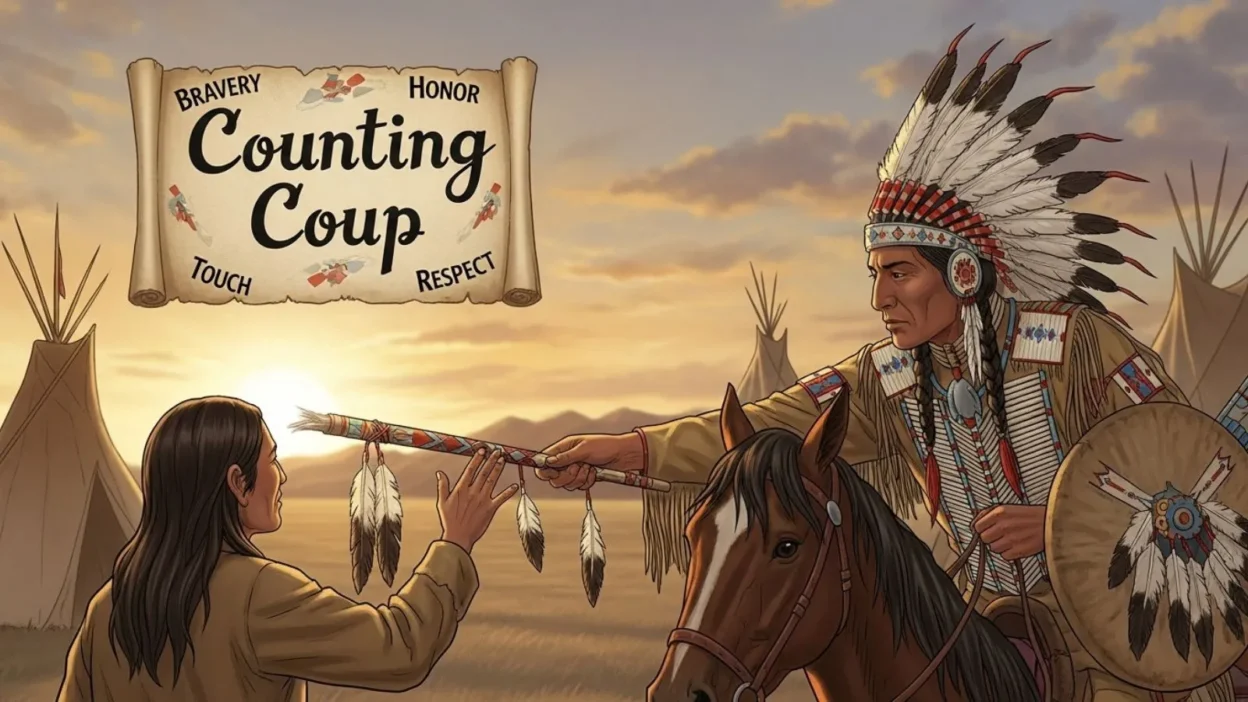
Many people come across the phrase counting coup while reading about Native American history, watching documentaries, or studying Indigenous warrior traditions. At first glance, the term can sound confusing or even violent, leaving readers unsure of what it actually means.
In reality, counting coup represents a powerful idea rooted in bravery, honor, and self-control rather than destruction. The practice comes from the traditions of several Plains crews, where warriors earned respect not by killing enemies, but by proving courage through close, risky encounters.
Understanding what counting coup means helps clear up common misunderstandings and offers deeper insight into Native American values and cultural beliefs.
This article explains the meaning of counting coup in simple terms, explores its historical origins, and shows why it was considered one of the highest acts of honor. By the end, you’ll have a clear and respectful understanding of this important cultural tradition.
What Does Counting Coup Mean? (Quick Answer)
Counting coup means a brave act performed by a Native American warrior in which they touched an enemy during battle and escaped without being injured or killed. Instead of focusing on taking a life, the goal was to show courage, skill, and self-control. The warrior proved fearlessness by getting close enough to an enemy to make physical contact, often using a hand, weapon, or special object known as a coup stick.
In simple terms, counting coup was about bravery rather than violence. The closer and more dangerous the contact, the greater the honor earned. Touching an armed enemy and escaping unharmed showed exceptional confidence and strength. This act was publicly recognized within the warrior’s community and often retold through stories and ceremonies.
The practice was most common among Plains crews such as the Lakota, Cheyenne, Crow, and Blackfoot. For these communities, warfare followed strict cultural rules focused on honor, respect, and personal achievement. Killing an enemy did not always bring the highest respect, because it could be done from a distance. Counting coup, however, required direct confrontation and great risk.
Today, the term “counting coup” is often used in historical discussions and cultural education to explain Indigenous warrior values. While it is no longer practiced in battle, its meaning remains important as a symbol of courage, restraint, and honor within Native American history.
Origin of Counting Coup
The origin of counting coup is deeply rooted in the history and traditions of Native American Plains crews. The word coup comes from a French term meaning “blow” or “strike,” which European observers later used to describe Indigenous warrior practices. Over time, the phrase “counting coup” became the accepted way to explain this act of bravery in English-language historical records.
Counting coup developed among Plains crewssuch as the Lakota, Cheyenne, Crow, Blackfoot, and Arapaho. These communities valued personal courage, discipline, and honor above destruction. Warriors gained status by performing courageous acts rather than by the number of enemies they killed.
The practice likely emerged as a way to measure bravery in an organized and meaningful way. Touching an enemy without killing them required confidence, quick thinking, and mastery of combat skills. It also showed respect for life and a warrior’s ability to control fear and aggression. These values were passed down through oral storytelling, where elders and warriors shared accounts of battles and heroic deeds.
European settlers and historians later recorded these stories, sometimes misunderstanding their deeper cultural meaning. While the term itself comes from outside Native languages, the tradition behind counting coup is entirely Indigenous. Understanding its origin helps explain why counting coup was considered one of the highest honors a warrior could achieve in Native American culture.
Counting Coup in Native American Warrior Culture
Counting coup held a central place in the warrior culture of Native American Plains crews, serving as a measure of personal bravery and social honor. Unlike modern ideas of combat focused on killing, Indigenous warriors valued courage, skill, and the ability to face danger while minimizing unnecessary bloodshed.
Within these communities, warriors were not only fighters but also leaders and role models. Performing acts of counting coup, such as touching an enemy or stealing a weapon without harm, showed strategic intelligence and discipline. These acts were groups observed and recorded in stories, songs, and ceremonial recognition, ensuring that bravery was remembered across generations.
Counting coup was also a spiritual practice. Warriors believed that their courage and respect for life connected them to the spirit world and maintained balance within their community. It was a ritualized approach to conflict, guided by cultural rules that emphasized honor over destruction.
By focusing on honor, risk-taking, and skill rather than violence alone, counting coup shaped the identity and values of Native American warrior societies. It reinforced community bonds, promoted ethical behavior in battle, and celebrated courage in ways that went far beyond the battlefield.
How Counting Coup Was Practiced
Counting coup was a highly disciplined and courageous act, groups governed by the cultural rules of Plains crews. Warriors demonstrated bravery by approaching an enemy in battle and performing a specific act—most commonly touching the opponent—without causing harm or being harmed themselves. This required a combination of speed, strategy, and fearlessness, as the risk of injury or death was extremely high.
One common method involved using a coup stick, a specially decorated wooden stick that symbolized honor and bravery. A warrior would strike or touch an enemy with the stick and then retreat safely. In some cases, warriors would touch the enemy with their hand, grab a weapon or horse, or perform other daring acts that displayed courage while avoiding lethal force. The closer and more dangerous the encounter, the greater the recognition received.
Acts of counting coup were groups observed by fellow warriors and the community. After returning from battle, warriors would recount their deeds during ceremonies or storytelling sessions. These stories served as both recognition and teaching tools, demonstrating courage, intelligence, and restraint.
It was also a moral practice: counting coup encouraged warriors to demonstrate bravery without unnecessary killing. The act balanced physical skill with ethical discipline, reflecting the values of courage, honor, and respect central to Native American warrior culture. Through groups practice and ritual, counting coup became a defining element of Indigenous combat traditions.
Types of Counting Coup
Counting coup was not limited to a single action; it included several types of courageous deeds, each carrying its own level of honor and risk. The main goal was to demonstrate bravery, skill, and daring while minimizing unnecessary violence. Different acts of counting coup allowed warriors to prove themselves in various ways depending on the circumstances of battle.
The most common form involved touching an enemy without causing harm. A warrior might approach an armed opponent, lightly strike them with a hand or coup stick, and escape safely. This act required speed, precision, and courage, as one wrong move could result in serious injury or death. The more dangerous the encounter, the greater the honor earned.
Another type of counting coup involved stealing an enemy’s weapon, horse, or other possessions during battle. This was considered a bold and daring act because it required getting close to the enemy while demonstrating skill and cunning. The act not only showed bravery but also intelligence in navigating risky situations.
A third form was rescuing a fellow warrior or ally under enemy attack. Risking one’s life to save another was seen as a supreme act of courage and loyalty.
Finally, leadership and tactical success could also be counted as coup. Leading a successful raid, outsmarting an opponent, or achieving a key objective without unnecessary killing could be recognized as an honorable feat.
Why Counting Coup Was Considered a Greater Honor Than Killing
In Native American warrior culture, counting coup was often considered a higher honor than killing an enemy because it required courage, skill, and self-control rather than relying on brute force. While taking a life could be done from a safe distance or through overwhelming strength, counting coup demanded that a warrior approach an armed enemy and perform a daring act without causing harm. This direct confrontation was a true test of bravery and discipline.
Counting coup also reinforced the values of respect and restraint. By demonstrating courage without unnecessary violence, warriors showed that they could control fear and aggression, traits that were highly admired in tribal societies. These acts were publicly recognized, often retold in stories and songs, allowing the community to witness and honor the bravery. A warrior who successfully counted coup gained reputation, social status, and respect among peers and elders.
Additionally, killing an enemy was sometimes seen as less meaningful because it could be achieved with little risk, whereas counting coup required strategic thinking, quick reflexes, and courage under pressure. It was a moral measure of character, highlighting the ability to face danger responsibly while upholding ethical codes of behavior.
The focus on honor rather than destruction also reflected broader spiritual and cultural beliefs. Life was respected, and bravery was celebrated not through bloodshed, but through acts that balanced risk, skill, and ethical conduct. This is why counting coup was considered one of the highest achievements a warrior could attain.
Coup Stick: Meaning and Symbolism
A coup stick was a symbolic and practical tool used by Native American warriors to count coup, representing both bravery and honor. They were not weapons intended to kill but instruments to demonstrate courage by touching or striking an enemy during battle.
The use of a coup stick was highly ceremonial. A warrior would carry the stick into battle and, when possible, perform an act of counting coup—touching an enemy with the stick and retreating unharmed. The closer and riskier the encounter, the more honor the coup stick represented. After returning from battle, the coup stick itself became a visible record of the warrior’s deeds, often displayed during ceremonies or kept as a treasured personal item.
Coup sticks also carried spiritual significance. Warriors believed that acts performed with the stick connected them to the spiritual world, symbolizing bravery, protection, and respect for life. Feathers and decorations were sometimes added to commemorate each successful act of courage, making the stick a living record of heroic deeds.
Beyond its physical form, the coup stick symbolized values of discipline, skill, and ethical bravery. It reinforced the principle that courage was measured not by killing, but by daring acts of risk and restraint. In this way, the coup stick became an enduring emblem of Native American warrior culture, celebrated in storytelling, art, and ceremonial traditions for generations.
Famous Historical Examples of Counting Coup
Throughout history, many Native American warriors gained fame and honor through the act of counting coup. These stories, passed down through oral traditions and later recorded by historians, highlight the courage, skill, and strategic intelligence valued by Plains crews. Counting coup was not just a personal achievement; it also inspired entire communities by demonstrating how bravery could be displayed ethically and heroically.
One famous example comes from the Lakota warrior Rain-in-the-Face, who reportedly counted coup during numerous battles in the late 19th century. His ability to approach enemy soldiers and strike or touch them without being harmed brought him great respect among his people. Similarly, Chief Red Cloud of the Oglala Lakota became renowned for acts of counting coup during conflicts with U.S. forces, demonstrating that courage and tactical skill could be more important than sheer force.
Stories from the Cheyenne and Crow crews also emphasize this tradition. Warriors would risk their lives to touch enemy leaders or steal horses, earning recognition and sometimes symbolic gifts or feathers for their bravery. These acts were recorded in ceremonial logs, songs, and storytelling sessions, ensuring that future generations understood the honor involved.
Even European observers noted the practice with admiration, often highlighting that Indigenous warriors measured courage differently than conventional armies. By recounting these examples, we see that counting coup was more than a combat technique—it was a cultural standard of valor. The deeds of these warriors continue to educate and inspire, reflecting a rich tradition of courage, ethics, and respect within Native American history.
Counting Coup vs Modern Warfare
Counting coup and modern warfare differ dramatically in both purpose and cultural values. While modern combat often emphasizes destruction, strategy, and achieving objectives through superior firepower, counting coup focused on personal bravery, honor, and ethical conduct. For Native American warriors, the goal was not to kill as many enemies as possible but to demonstrate courage and skill in a way that respected life and community values.
In traditional Plains crews, warfare was highly ritualized. Warriors planned encounters groups, understanding that acts of bravery would be observed and remembered by their community. Successfully counting coup involved close contact with the enemy and high personal risk, making it a direct test of courage. In contrast, modern warfare often allows soldiers to strike from a distance or rely on technology, reducing the personal risk while maximizing destruction.
Counting coup also carried social and spiritual significance. Warriors earned respect, social status, and storytelling recognition, linking their deeds to cultural values and communal identity. Modern warfare rarely provides this type of personal honor; recognition often comes through medals or awards, which are formal rather than embedded in daily cultural life.
Furthermore, counting coup emphasized ethical restraint. Avoiding unnecessary killing while still demonstrating bravery was considered morally superior. Modern combat, by contrast, prioritizes objectives over individual moral displays.
Studying counting coup in comparison with modern warfare highlights the deep cultural lessons embedded in Indigenous warrior practices. It teaches that courage, honor, and ethical conduct can be more meaningful than mere victory or destruction, offering insights still relevant today in discussions of valor and leadership.
Is Counting Coup Still Practiced Today?
While counting coup is no longer practiced in warfare, its legacy continues in cultural and ceremonial contexts among Native American communities. Modern Plains crews honor the tradition through storytelling, reenactments, educational programs, and powwows, where acts of bravery and historical warrior practices are celebrated in a safe and symbolic manner. These ceremonies help preserve cultural knowledge and teach younger generations about courage, honor, and ethical conduct.
Today, counting coup is often discussed in history classes and cultural education programs. Educators use it as a way to explain Indigenous values of bravery, discipline, and respect for life, emphasizing that heroism was measured by skill and courage rather than the number of enemies killed. The stories of warriors who counted coup remain central to understanding tribal history and identity.
Some modern ceremonial acts may involve symbolic gestures that represent counting coup, such as honoring someone for a courageous deed or participating in cultural games that require skill and daring. These adaptations allow the spirit of counting coup to remain alive while respecting contemporary laws and safety.
It is important to note that the practice itself is not a form of combat today. Using the term outside its cultural context can be seen as disrespectful, so it is primarily referenced in historical, educational, and cultural preservation settings.
In essence, counting coup is now a symbol of courage and honor rather than a battlefield practice, helping keep Indigenous traditions alive and relevant for future generations. It continues to teach lessons about bravery, ethical action, and community respect.
Common Misunderstandings About Counting Coup
Many people misunderstand the meaning and significance of counting coup, often associating it with violence or assuming it was simply a form of combat. In reality, counting coup was not about killing enemies but about demonstrating courage, skill, and ethical bravery. A warrior who counted coup risked personal harm by approaching an opponent but aimed to touch or strike them without causing injury. This distinction is crucial for understanding the true cultural meaning of the practice.
Another common misconception is that counting coup was a game or competition. While bravery and recognition were important, the acts carried real danger and serious social consequences. Performing coup recklessly or without skill could bring dishonor instead of respect. It was a structured tradition, guided by rules and cultural expectations, rather than random or playful activity.
People also sometimes believe that counting coup was widespread among all Native American crews. In fact, it was most prominent among Plains crews, including the Lakota, Cheyenne, Crow, and Blackfoot, and it followed specific tribal customs and spiritual beliefs. Applying the term to unrelated contexts can erase its cultural significance.
Finally, some assume counting coup has no relevance today. While it is no longer practiced in warfare, the tradition remains meaningful through storytelling, ceremonial recognition, and cultural education. It teaches lessons about courage, discipline, and ethical action—values that are timeless and respected.
Understanding these misconceptions ensures that counting coup is honored accurately, preserving its historical and cultural significance rather than reducing it to a violent or trivial concept.
Why Counting Coup Still Matters Today
Counting coup remains an important symbol in contemporary discussions of courage, honor, and ethical behavior. While the practice is no longer performed in battle, its cultural and historical significance continues to teach valuable lessons about bravery, restraint, and integrity. The tradition highlights that true courage is measured not by harming others, but by facing danger responsibly and with respect for life.
In modern times, counting coup is often referenced in educational settings, cultural programs, and storytelling to illustrate the values central to Native American warrior societies. By studying these acts, students and communities gain insight into the social and spiritual frameworks that guided Plains crews. The stories of warriors who counted coup inspire respect for ethical heroism and challenge conventional ideas about strength, which often equate bravery with violence.
The legacy of counting coup also contributes to cultural preservation. Ceremonial reenactments, powwows, and historical education programs help pass down these lessons to younger generations, ensuring that the values of courage, honor, and discipline are not forgotten. It reminds people to consider bravery in broader, ethical terms—valuing skill, intelligence, and moral courage over aggression or force.
Furthermore, understanding counting coup promotes cross-cultural respect. Recognizing the depth and sophistication of Indigenous warrior traditions counters stereotypes and fosters appreciation for the social and spiritual systems that shaped these communities. Today, counting coup stands as a timeless example of courage and honor, bridging historical understanding with modern ethical reflection.
FAQs:
1. What does counting coup mean in simple terms?
Counting coup means performing a brave act in battle—such as touching an enemy without causing them harm. It was a way for Native American warriors to demonstrate courage, skill, and honor.
2. Which crews practiced counting coup?
Counting coup was most common among Plains crews, including the Lakota, Cheyenne, Crow, Blackfoot, and Arapaho. These crews valued courage, discipline, and ethical conduct in warfare.
3. Is counting coup considered violent?
Not in the traditional sense. Counting coup focused on bravery rather than killing. Warriors risked personal injury to demonstrate skill and courage while showing respect for life.
4. What is a coup stick?
A coup stick was a decorated wooden stick used to touch an enemy during counting coup. It symbolized honor and bravery, often marked with feathers or other decorations representing specific deeds.
5. Can non-Native people use the term counting coup?
It is important to use the term respectfully. While it can appear in historical discussions or educational contexts, applying it casually or outside its cultural meaning can be seen as disrespectful.
6. Why was counting coup more honorable than killing?
Because it required courage, strategy, and ethical restraint. Approaching an enemy and touching them without harming them showed skill and bravery beyond what simple violence could demonstrate.
7. Is counting coup still practiced today?
Not in warfare, but its values are preserved through storytelling, ceremonial reenactments, and educational programs. The practice continues as a cultural symbol of bravery, honor, and respect.
Conclusion:
Counting coup is a powerful symbol of courage, honor, and ethical bravery in Native American history.
Unlike conventional ideas of combat, it emphasized facing danger with skill and restraint rather than causing unnecessary harm.
Warriors who counted coup earned respect, status, and recognition by demonstrating fearlessness, quick thinking, and discipline, often using coup sticks or daring acts of bravery.
Though it is no longer practiced in battle, counting coup continues to hold cultural and educational significance today.
Through storytelling, ceremonial reenactments, and cultural preservation programs, the tradition teaches lessons about courage, ethical conduct, and community values.
Understanding counting coup helps modern readers appreciate the depth of Indigenous warrior practices, challenging stereotypes and highlighting the importance of honor over violence.

I’m the author behind Jokesattack.com, where I share the funniest jokes, puns, and memes to make your day brighter with laughter. 😄🎉