
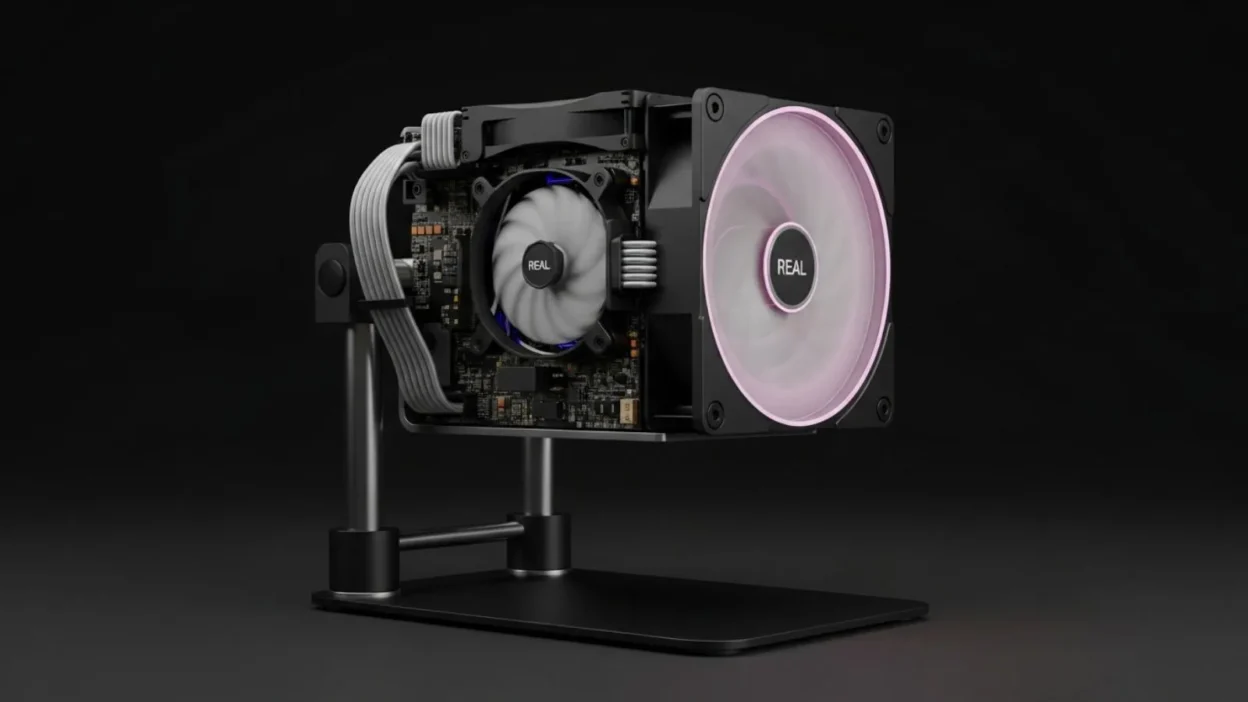
If you’ve ever used a computer, laptop, or smartphone, you’ve probably heard the term CPU, but do you really know what it means? CPU stands for Central Processing Unit, which is often referred to as the brain of the computer.
Just like our brain processes information and sends instructions to different parts of the body, a CPU handles all the instructions your device receives, ensuring everything runs smoothly.
Understanding what a CPU does is not only helpful for tech enthusiasts but also for anyone who wants to get the most out of their devices.
From checking your device’s performance to choosing the right computer for work or gaming, knowing about CPUs can make a huge difference.
In this article, we’ll explore the full form of CPU, its functions, types, components, and why it plays a critical role in modern technology.
CPU Full Form and Meaning
The term CPU stands for Central Processing Unit, and it is the most essential part of any computer, laptop, or smartphone. The CPU is often referred to as the “brain” of the device because it processes instructions and controls how other parts of the system work. Every action you perform on a computer—whether opening a program, browsing the internet, or playing a game—relies on the CPU to execute commands efficiently.
Breaking down the full form, “Central” indicates that this unit is at the core of the computer’s operations, “Processing” refers to its ability to execute instructions and perform calculations, and “Unit” signifies that it is a single, integrated component that manages multiple tasks simultaneously. Essentially, the CPU takes input data, processes it according to instructions from software, and produces output that you can see on your screen or interact with.
It’s important to note that the term CPU is often used interchangeably with the word processor, though technically, a processor can include additional components like integrated graphics. Despite its small size compared to the entire computer, the CPU is responsible for controlling all major functions and ensuring smooth performance. Without a CPU, your computer would simply be a collection of hardware parts with no way to communicate or function.
Functions of a CPU
The CPU (Central Processing Unit) plays a crucial role in a computer’s operation because it is responsible for executing all instructions from software and hardware. Simply put, the CPU is the command center of your device, ensuring that everything runs smoothly and efficiently.
One of the main functions of a CPU is to process data. It receives input from devices like keyboards, mice, or sensors, interprets the instructions, and produces the correct output. This process is known as the Input → Processing → Output cycle. For example, when you type a document, the CPU processes each keystroke and displays it on the screen almost instantly.
Another key function of the CPU is managing system resources. It decides how memory, storage, and other components work together to run multiple programs at the same time without causing errors or slowdowns.
The CPU also performs arithmetic and logic operations through its Arithmetic Logic Unit (ALU), which handles calculations and decision-making tasks required by software programs. Meanwhile, the Control Unit (CU) within the CPU directs the flow of data between the CPU and other components, keeping everything organized.
In addition, modern CPUs support multitasking, allowing multiple applications to run simultaneously without significant performance drops. Whether it’s running a game, streaming videos, or browsing the internet, the CPU ensures that instructions are processed quickly and accurately.
Components of a CPU
The CPU may look like a small chip, but it contains several critical components that work together to process data and run your computer efficiently. Understanding these components helps explain why the CPU is called the “brain” of your device.
The first key component is the Arithmetic Logic Unit (ALU). The ALU is responsible for performing all mathematical calculations and logical operations. This includes basic arithmetic like addition and subtraction, as well as more complex tasks like comparing numbers or evaluating conditions in programs. Without the ALU, a CPU would not be able to solve problems or make decisions.
Next is the Control Unit (CU), which acts as the traffic manager of the CPU. The CU directs the flow of data between the CPU, memory, and other hardware components. It ensures that instructions are executed in the correct sequence and coordinates operations between the ALU and other parts of the computer.
Another essential component is Registers, which are small, high-speed storage locations inside the CPU. Registers temporarily hold data, instructions, or memory addresses that the CPU needs quickly. They are faster than accessing data from regular RAM and allow the CPU to work efficiently.
Finally, modern CPUs may include Cache Memory, a small but ultra-fast memory that stores frequently used data and instructions. Cache reduces delays in processing, speeding up overall performance.
In summary, the CPU is made up of the ALU, Control Unit, Registers, and Cache, all working together to process instructions, manage data, and execute tasks. Each component plays a crucial role in ensuring your computer runs smoothly.
Types of CPUs
CPUs come in different types, each designed to meet specific computing needs. Understanding these types can help you choose the right device or optimize your computer’s performance.
The first distinction is between single-core and multi-core CPUs. A single-core CPU has only one processing unit, meaning it can handle one task at a time. While suitable for basic tasks like browsing the internet or writing documents, single-core CPUs struggle with multitasking or demanding applications. On the other hand, multi-core CPUs contain two, four, or even more cores, allowing them to process multiple instructions simultaneously. Multi-core processors are ideal for gaming, video editing, and running multiple programs at once.
CPUs are also designed for specific devices. Desktop CPUs are usually more powerful, with higher clock speeds and multiple cores, making them suitable for gaming and professional work. Laptop CPUs are optimized for energy efficiency to extend battery life while still providing good performance. Mobile CPUs, used in smartphones and tablets, focus on low power consumption and heat management while supporting everyday apps and tasks.
There are also specialized CPUs, such as server CPUs, which handle heavy workloads for data centers, and embedded CPUs, found in smart devices, cars, and IoT gadgets. These are designed for reliability, low power use, and continuous operation.
In short, CPU types vary based on cores, device type, and purpose, allowing manufacturers to balance performance, energy efficiency, and cost. Choosing the right CPU depends on your specific computing needs.
CPU Specifications That Matter
When choosing a CPU, several specifications determine its performance, speed, and efficiency. Understanding these key features helps you pick the right processor for your needs.
1. Clock Speed (GHz):
Clock speed measures how many cycles a CPU can execute per second, expressed in gigahertz (GHz). Higher clock speeds generally mean faster processing, allowing programs and tasks to run more smoothly. However, performance also depends on the number of cores and CPU architecture.
2. Cores and Threads:
A core is an individual processing unit within a CPU. Modern CPUs often have multiple cores, which enable multitasking and parallel processing. Threads are virtual components that help each core handle multiple tasks at once. More cores and threads improve performance for heavy tasks like video editing, gaming, and software development.
3. Cache Memory:
Cache is a small, high-speed memory inside the CPU used to store frequently accessed data and instructions. It reduces the need to fetch information from slower RAM, significantly improving processing speed and responsiveness.
4. Thermal Design Power (TDP):
TDP indicates the maximum heat a CPU generates under normal workload. A lower TDP means better energy efficiency and less heat, which is essential for laptops and compact devices.
5. Architecture and Generation:
Modern CPUs are built using advanced architectures that improve efficiency, speed, and power consumption. Newer generations typically offer better performance than older models even at similar clock speeds.
How a CPU Affects Overall Computer Performance
The CPU plays a critical role in determining a computer’s overall performance, as it handles all instructions and operations from both software and hardware. A powerful CPU can make a huge difference in how fast and smoothly your device runs.
One of the main factors is task execution speed. A CPU with higher clock speeds and multiple cores can process instructions faster, making applications like video editing, gaming, and 3D rendering much smoother. For basic tasks such as web browsing, email, or word processing, even a mid-range CPU can provide sufficient performance.
Multitasking capabilities are another area where the CPU directly affects performance. CPUs with more cores and threads can run multiple programs simultaneously without slowing down. For instance, you can stream videos, edit documents, and run background software all at once without noticeable lag if your CPU is powerful enough.
The CPU also influences software compatibility and efficiency. Some modern applications, especially games and professional software, require specific CPU capabilities to function optimally. Older or less powerful CPUs may struggle, causing slowdowns or crashes.
Additionally, the CPU impacts system responsiveness. Faster CPUs reduce delays in processing commands, whether opening applications, switching between tasks, or responding to inputs from devices like keyboards and mice.
In summary, the CPU’s speed, number of cores, and efficiency have a direct impact on your computer’s performance, affecting everything from daily tasks to high-end gaming and professional software. Choosing the right CPU ensures smooth, responsive, and reliable computing.
CPU in Everyday Devices
While we often associate CPUs with desktop computers and laptops, they are found in almost every electronic device we use today. The CPU is essential because it processes instructions and ensures devices operate smoothly and efficiently.
In desktop computers, CPUs are typically powerful, supporting high-performance tasks such as gaming, video editing, and software development. These CPUs often have multiple cores, high clock speeds, and large cache memory to handle complex workloads efficiently.
Laptop CPUs are designed differently. They focus on energy efficiency and heat management to prolong battery life while still providing enough power for everyday tasks like web browsing, streaming, and office work. Modern laptop CPUs can even handle some gaming and creative software, though not as efficiently as desktop CPUs.
Mobile devices, such as smartphones and tablets, rely on ARM-based CPUs, which are optimized for low power consumption and multitasking. These CPUs handle apps, cameras, internet browsing, and even AI-powered features like voice recognition and augmented reality.
CPUs are also integral to smart devices like smart TVs, wearable devices, smart home appliances, and IoT gadgets. They control device functions, manage connectivity, and run embedded software efficiently.
In short, whether it’s a desktop, laptop, smartphone, or smart appliance, the CPU is at the heart of every device. It ensures that applications run smoothly, instructions are processed quickly, and the user experience remains seamless across all types of modern technology.
History and Evolution of CPUs
The CPU has come a long way since its invention, evolving from large, slow machines to the compact, high-speed processors we use today. Understanding its history helps appreciate how far technology has advanced.
The first CPUs appeared in the 1960s and 1970s, primarily as part of large mainframe computers. These early processors were enormous, consumed a lot of power, and could perform only a limited number of calculations per second. Despite their size, they laid the foundation for modern computing.
In the 1970s, the invention of the microprocessor revolutionized CPUs. Companies like Intel introduced small, integrated circuits that combined all processing components into a single chip. The Intel 4004, released in 1971, was the world’s first commercial microprocessor. It could perform basic arithmetic and logic operations, marking the beginning of personal computing.
Over the years, CPUs became faster, smaller, and more energy-efficient. Advances in manufacturing allowed for multi-core processors, higher clock speeds, and larger caches, enabling computers to handle complex tasks like 3D rendering, AI applications, and gaming.
Today, modern CPUs are found in desktops, laptops, smartphones, and even embedded devices. They include billions of transistors on a single chip, enabling incredible processing power in a tiny package. Companies like Intel, AMD, and ARM continue to innovate, producing CPUs that are faster, more efficient, and optimized for specialized tasks.
In short, the CPU has evolved from massive machines to compact, powerful processors, transforming technology and making modern computing accessible to everyone.
Common CPU Questions and Myths
CPUs are often misunderstood, leading to questions and myths about their functions and capabilities. Clearing up these misconceptions can help you better understand your device and its performance.
Can a computer run without a CPU?
The simple answer is no. The CPU is the central processing unit, meaning it handles all instructions and operations. Without it, a computer or smartphone cannot function. Even if all other hardware components are present, the device cannot process data or run software without a CPU.
Is the CPU the same as the GPU?
No, they are different. While the CPU handles general processing tasks, the GPU (Graphics Processing Unit) specializes in rendering images, videos, and graphics. Modern computers often rely on both, with the CPU managing overall operations and the GPU handling visual tasks.
Does a faster CPU always mean better performance?
Not necessarily. While a higher clock speed improves processing speed, performance also depends on cores, threads, cache, and architecture. For example, a multi-core CPU with lower clock speed can outperform a single-core CPU with a higher clock speed in multitasking.
What is overclocking, and is it safe?
Overclocking increases a CPU’s speed beyond its default specifications for better performance. While it can improve speed, it also increases heat output and can reduce the CPU’s lifespan if not done carefully.
Fun Facts About CPUs
CPUs are fascinating components that go beyond just numbers and specifications. Here are some fun facts that show just how incredible these tiny chips really are.
- Small but Powerful: Modern CPUs contain billions of transistors on a chip smaller than a coin. These tiny switches allow the CPU to perform complex calculations at lightning speed.
- First CPU: The first commercial microprocessor, the Intel 4004, was released in 1971. It had only 2,300 transistors and a clock speed of 740 kHz, yet it paved the way for modern computing.
- CPU Evolution: CPUs have shrunk in size dramatically over the decades. Early mainframe CPUs filled entire rooms, whereas today’s processors fit in your laptop or smartphone pocket.
- CPU in Space: CPUs are used in satellites and space probes. Specially designed space-grade CPUs withstand radiation and extreme temperatures, helping missions run smoothly far from Earth.
- Multi-Core Revolution: Modern CPUs often have multiple cores, enabling multitasking and faster processing. Some high-end CPUs have 64 cores, allowing them to handle thousands of tasks simultaneously.
- Energy Efficiency: Mobile CPUs are designed to be energy-efficient, helping smartphones and tablets run longer on a single battery charge.
- AI and Specialized CPUs: Some modern CPUs are optimized for artificial intelligence and machine learning, allowing faster data processing for advanced applications.
In short, CPUs are amazing feats of engineering. From powering tiny gadgets to running space missions, their evolution and capabilities are a testament to human innovation and technology.
FAQs:
1. What does CPU stand for?
CPU stands for Central Processing Unit, which is the main part of a computer that processes instructions and manages tasks. It is often called the “brain” of the computer.
2. Can a computer run without a CPU?
No. The CPU is essential for any device to function. Without it, a computer, laptop, or smartphone cannot process instructions, run software, or communicate with other hardware components.
3. How do I check my CPU type and speed?
On Windows, you can check your CPU by going to Settings → System → About. On Mac, click the Apple menu and select About This Mac. Most Linux distributions also have system information commands to show CPU details.
4. What is the difference between a CPU and a GPU?
The CPU handles general-purpose processing and runs all types of software, while the GPU (Graphics Processing Unit) is specialized for graphics, video rendering, and complex calculations. Both work together in modern computers.
5. Does a higher CPU clock speed always mean better performance?
Not always. Performance also depends on the number of cores, threads, cache size, and CPU architecture. A multi-core CPU with lower clock speed can outperform a single-core CPU in multitasking scenarios.
6. What are cores and threads in a CPU?
Cores are independent processing units inside a CPU, while threads are virtual components that allow a single core to handle multiple tasks simultaneously, improving multitasking performance.
7. Can CPUs overheat?
Yes, CPUs generate heat while working. Proper cooling solutions like fans, heat sinks, or liquid cooling are essential to maintain performance and prevent damage.
Conclusion:
Understanding what CPU stands for and how it works is essential for anyone using modern technology.
The CPU, or Central Processing Unit, is the heart of every computer, laptop, smartphone, and even smart devices.
It processes instructions, manages data, and ensures that all components of a device work together efficiently.
From its components like the ALU, Control Unit, Registers, and Cache to its specifications such as clock speed, cores, and cache memory, the CPU plays a critical role in determining a device’s performance.
Different types of CPUs—single-core, multi-core, desktop, laptop, and mobile are designed to meet specific needs, balancing speed, efficiency, and power consumption.
By understanding CPUs, you can make informed decisions when choosing devices, optimizing performance, and troubleshooting issues.
If you are a beginner or a tech enthusiast, knowing about CPUs helps you appreciate the incredible technology that powers your daily digital life.

I’m the author of Jokesattack.com, where humor meets creativity! Bringing you nonstop laughter with the best jokes, memes, and funny moments every day.