
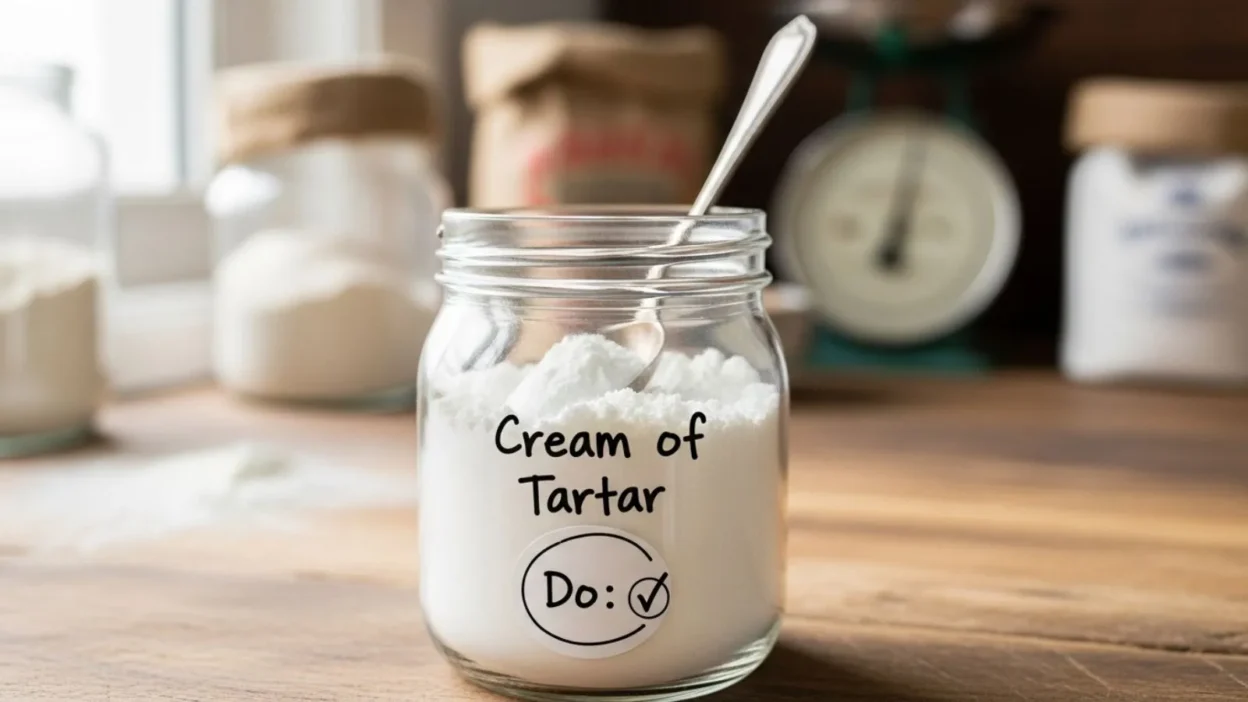
Cream of tartar is a common kitchen ingredient that many people have heard of but few truly understand. Chemically known as potassium bitartrate, it’s a natural byproduct of winemaking, forming inside wine barrels during fermentation.
Despite its unassuming appearance as a fine white powder, cream of tartar plays a surprisingly versatile role in cooking, baking, and even household remedies.
From stabilizing egg whites for fluffy meringues to preventing sugar from crystallizing in candies, it’s an essential tool for bakers seeking perfect results.
Beyond the kitchen, cream of tartar is used in traditional health remedies and as an eco-friendly cleaning agent, highlighting its multipurpose nature.
In this article, we’ll explore exactly what cream of tartar does, how to use it safely, its health benefits, practical household applications, and even some common mistakes to avoid helping you unlock the full potential of this underrated powder.
What is Cream of Tartar?
Cream of tartar, scientifically known as potassium bitartrate, is a fine, white, acidic powder that forms naturally as a byproduct of winemaking. During the fermentation process, tartaric acid crystallizes inside wine barrels, and when collected and purified, it becomes the cream of tartar commonly found in kitchens worldwide. Despite its name, it has nothing to do with dairy—it’s entirely plant-based and safe for culinary use.
This powder is highly valued in baking and cooking due to its chemical properties. It works as a stabilizer, preventing sugar from crystallizing and helping egg whites maintain their structure when whipped. In recipes that require rising, it often reacts with baking soda to create carbon dioxide, which adds lightness to cakes, cookies, and other baked goods.
Cream of tartar is sold in small jars in most grocery stores and usually comes as a pure, fine powder. It is often confused with baking powder, but the two are different: baking powder is a mixture that already contains cream of tartar, while cream of tartar alone is just the acidic component. Understanding what cream of tartar is and how it works chemically is the first step to using it effectively in recipes, health remedies, and even cleaning applications.
Culinary Uses of Cream of Tartar
Cream of tartar is a staple in many kitchens because of its unique ability to improve texture, stability, and consistency in cooking and baking. One of its most well-known uses is stabilizing egg whites. When whipping egg whites for meringues, soufflés, or angel food cakes, a pinch of cream of tartar helps the proteins hold air, creating a fluffy and stable structure that doesn’t collapse easily.
It is also essential in candy making and frostings. When combined with sugar, cream of tartar prevents crystallization, ensuring smooth, creamy textures in caramels, frostings, and syrups. Without it, sugar can form unwanted crystals, leaving a gritty texture.
In baked goods, cream of tartar reacts with baking soda to act as a leavening agent. This reaction produces carbon dioxide, which helps cakes, cookies, and pancakes rise and become lighter. It also enhances the color and tenderness of baked items, giving them a soft, appealing texture.
Additionally, cream of tartar can help maintain the color of vegetables during boiling. Adding a small pinch to the cooking water keeps green vegetables bright and fresh-looking.
To use cream of tartar effectively, it’s important to measure carefully, as too much can give a slightly bitter taste. A general guideline is 1/8 teaspoon per egg white for meringues or 1/2 teaspoon per cup of flour when combined with baking soda for leavening.
Health and Medicinal Uses of Cream of Tartar
Beyond its culinary applications, cream of tartar has been used in traditional health remedies for centuries. One of its most common uses is as a digestive aid. When mixed with water, it can act as a mild laxative, helping relieve occasional constipation. Some people also use it to help balance urinary pH, promoting kidney and bladder health, though it should be consumed in moderation.
Cream of tartar is sometimes incorporated into home remedies for minor skin irritations. When combined with water or other natural ingredients, it can help soothe rashes, reduce inflammation, or act as a gentle exfoliant. Its acidic nature gives it mild antiseptic properties, which can be useful for cleaning minor cuts or scrapes.
It’s important to note that while cream of tartar has health benefits, excessive consumption can be harmful. Large doses may lead to potassium overload, digestive discomfort, or electrolyte imbalance.
Some traditional remedies include mixing a small amount of cream of tartar with apple cider vinegar or lemon juice to create a tonic that supports digestion and detoxification. These natural remedies can be effective when used responsibly, but they are not a substitute for professional medical advice or treatment.
In short, cream of tartar’s role extends beyond baking—it can provide gentle support for digestive health, skin care, and home wellness practices when used safely and in small quantities.
Household and Cleaning Uses
Cream of tartar isn’t just for the kitchen—it also has a variety of practical household and cleaning applications. Its mildly acidic nature makes it a safe and eco-friendly alternative to harsh chemical cleaners, ideal for everyday chores.
One of the most popular uses is cleaning metal surfaces. When combined with vinegar or lemon juice, cream of tartar can help polish copper, brass, and stainless steel, removing tarnish and restoring shine. Simply make a paste with cream of tartar and water, apply it to the surface, let it sit for a few minutes, then wipe clean. The result is gleaming, spotless metal without the use of toxic chemicals.
It’s also effective in laundry cleaning and stain removal. Adding a teaspoon of cream of tartar to whites or colored clothes can help remove minor stains and brighten fabrics. Paired with baking soda, it creates a natural scrubbing agent for stubborn spots on clothing or fabric-covered surfaces.
In the kitchen, cream of tartar works as a deodorizer. Sprinkling it on cutting boards, sinks, or countertops neutralizes unpleasant odors and keeps surfaces fresh. It can also be used in homemade cleaning solutions for sinks, bathtubs, or tiles, making it a versatile, multi-purpose household ingredient.
Because it is non-toxic and safe, cream of tartar is particularly appealing for families with children or pets, offering a natural solution to common cleaning tasks. By incorporating it into daily chores, you can reduce reliance on harsh chemicals while taking advantage of this simple yet powerful powder.
Substitutes for Cream of Tartar
While cream of tartar is a versatile ingredient, there are times when you may not have it on hand. Fortunately, several common kitchen items can serve as substitutes, depending on the recipe.
One of the most popular alternatives is lemon juice. Its natural acidity mimics the effects of cream of tartar, making it effective for stabilizing egg whites or preventing sugar crystallization. The typical substitution ratio is 1 teaspoon of lemon juice for every ½ teaspoon of cream of tartar. This works well in meringues, frostings, and other baked goods.
Another reliable substitute is white vinegar. Like lemon juice, it is acidic and reacts with baking soda to produce carbon dioxide, which helps baked goods rise. The standard conversion is also 1 teaspoon of white vinegar for every ½ teaspoon of cream of tartar. It’s particularly useful in recipes where the flavor of vinegar won’t overpower the dish.
For leavening purposes, baking powder can be used as a substitute as well. Since baking powder already contains cream of tartar, you can replace both the cream of tartar and baking soda in a recipe with 2 teaspoons of baking powder for every 1 teaspoon of cream of tartar plus ½ teaspoon of baking soda. This ensures the proper chemical reaction for rising without changing the texture.
While these substitutes can work well, it’s important to remember that each option may slightly alter flavor or texture, so careful measurement is key. By knowing your alternatives, you can still achieve excellent results even if cream of tartar is unavailable.
How to Store Cream of Tartar
Proper storage of cream of tartar is essential to maintain its effectiveness, whether you’re using it in baking, cooking, or household cleaning. As a fine, acidic powder, cream of tartar is highly sensitive to moisture and air, which can cause it to clump or lose potency over time.
The best way to store cream of tartar is in a cool, dry place away from heat, sunlight, and humidity. A kitchen cabinet or pantry shelf works well, but avoid storing it near stoves, dishwashers, or sinks where steam or heat can affect its quality.
An airtight container is highly recommended. Many store-bought jars come with secure lids, but if transferring to another container, ensure it seals tightly to prevent exposure to air. Moisture can react with the powder, reducing its chemical effectiveness in recipes and potentially causing clumping that makes measuring difficult.
Cream of tartar has a relatively long shelf life, typically 3–5 years, but its potency can diminish over time. To test if it’s still active, mix a small amount with baking soda and water—if it fizzes vigorously, it’s still good to use. If not, it’s time to replace it.
Labeling the jar with the purchase date can help track freshness, ensuring your recipes turn out consistently. Proper storage not only preserves its culinary and household utility but also prevents waste and ensures that this versatile powder is always ready when needed.
Common Mistakes When Using Cream of Tartar
While cream of tartar is a versatile and useful ingredient, improper use can lead to disappointing results in cooking, baking, or household applications. Understanding common mistakes can help you make the most of this powder.
One frequent mistake is overuse or underuse in recipes. Using too much cream of tartar in baked goods can create a slightly bitter taste, while too little may prevent egg whites from stabilizing properly or sugar from staying smooth in candy and frosting. Accurate measurement is crucial—using a small pinch for egg whites or following specific recipe ratios for leavening is the best approach.
Another common error is confusing it with baking powder. Cream of tartar alone is acidic but does not contain a leavening agent. Recipes that call for cream of tartar with baking soda rely on their reaction to produce carbon dioxide for rising. Substituting one for the other without adjustment can result in flat or dense baked goods.
Improper storage is also a mistake. Exposure to moisture and air can cause clumping or loss of potency, leading to inconsistent results. Always keep cream of tartar in an airtight container in a cool, dry location.
Finally, in health remedies, overconsumption is a common error. Taking large amounts for digestive or urinary benefits can cause digestive upset or electrolyte imbalance. Always use small amounts and consult a healthcare professional if unsure.
Fun Facts and Trivia
Cream of tartar might seem like an ordinary kitchen ingredient, but it has an interesting history and some surprising uses that make it more fascinating than most people realize. Its scientific name is potassium bitartrate, and it naturally forms inside wine barrels during the fermentation of grapes. For centuries, winemakers would scrape off these crystalline deposits, eventually discovering their usefulness in cooking and baking.
Historically, cream of tartar became a key ingredient in European baking during the 17th and 18th centuries. Bakers noticed it improved the texture of cakes, cookies, and meringues, creating lighter, fluffier results than recipes without it. It was especially prized in delicate desserts like soufflés, which rely on stabilized egg whites for their signature airy structure.
Beyond baking, cream of tartar has some unusual household uses. For example, it can be used as a natural cleaning agent for metal, a deodorizer for sinks, and even as a minor stain remover. Its acidic properties make it versatile in ways that go far beyond the kitchen.
Another fun fact is that cream of tartar is completely plant-based, despite its name, which might suggest a dairy connection. It is derived entirely from grapes, making it suitable for vegetarian and vegan cooking.
Finally, its chemistry is fascinating: when combined with baking soda, it produces carbon dioxide gas, which is the same reaction that makes cakes rise. This simple chemical reaction has made cream of tartar an indispensable ingredient for bakers and home cooks alike.
FAQs:
1. Can you eat cream of tartar raw?
Yes, small amounts of cream of tartar are safe to consume raw, such as in a pinch for stabilizing whipped egg whites. However, it has a strong, slightly bitter taste, so it’s typically used in combination with other ingredients. Large amounts should be avoided as it can upset the digestive system.
2. Can cream of tartar replace baking powder entirely?
Not on its own. Cream of tartar is acidic but lacks the leavening agent found in baking powder. To mimic baking powder, you must combine cream of tartar with baking soda in the proper ratio—usually ½ teaspoon baking soda plus 1 teaspoon cream of tartar equals 1 teaspoon of baking powder.
3. Is cream of tartar safe for children and pets?
When used in small amounts for cooking, cream of tartar is generally safe for children. Pets should not consume it, as their digestive systems are sensitive to even small amounts of potassium bitartrate.
4. Can cream of tartar interact with medications?
It contains potassium, so individuals taking potassium-sparing medications or with kidney conditions should consult a doctor before consuming cream of tartar in medicinal amounts.
5. How long does cream of tartar last?
Stored in a cool, dry, airtight container, it can last 3–5 years. Its effectiveness can be tested by mixing a small amount with baking soda and water; if it fizzes, it’s still potent.
6. Can it be used for cleaning?
Absolutely! Cream of tartar can polish metals, remove stains, and deodorize areas in a natural, non-toxic way.
Conclusion:
Cream of tartar is a small but powerful ingredient with a surprising range of uses.
In the kitchen, it stabilizes egg whites, prevents sugar crystallization, and adds lightness to baked goods, making it indispensable for bakers.
Beyond cooking, it serves as a natural remedy for digestive issues, a gentle skin aid, and even an eco-friendly cleaning agent for metals, laundry, and surfaces.
Understanding how to use cream of tartar correctly, store it properly, and substitute it when necessary ensures that it delivers the best results every time.
Being aware of common mistakes, such as overuse or confusing it with baking powder, helps avoid unwanted outcomes. Its long history, plant-based origins, and simple chemistry make it both fascinating and practical.

I’m the author of Jokesattack.com, where humor meets creativity! Bringing you nonstop laughter with the best jokes, memes, and funny moments every day.