
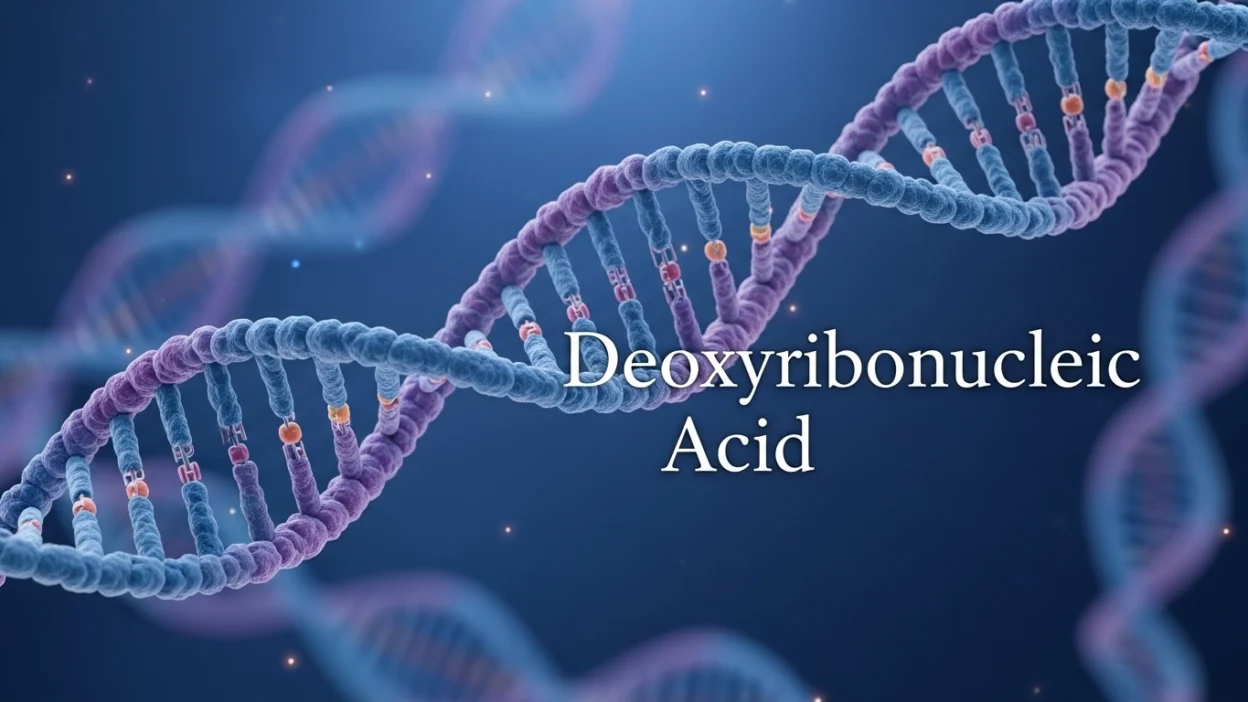
DNA is a term almost everyone has heard, yet many people still wonder what does DNA stand for and why it is so important.
You may come across DNA in biology classes, medical reports, crime investigations, or even ancestry tests, but its true meaning often feels confusing. Simply put, DNA is the basic instruction manual that tells every living thing how to grow, function, and survive.
From determining your eye color to influencing your height and health, DNA plays a major role in shaping who you are.
People search for what does DNA stand for because they want a clear, easy explanation without complicated scientific language.
Understanding DNA helps students, parents, and curious readers grasp how traits are passed from parents to children and why humans share similarities with other living organisms.
In this article, you will learn the full form of DNA, what it means in biology, how it works inside the body, and why it matters in everyday life.
What Does DNA Stand For? (Quick & Clear Answer)
DNA stands for Deoxyribonucleic Acid. It is a long, complex molecule that carries the genetic instructions used in the growth, development, functioning, and reproduction of all living organisms. In simple words, DNA is the information code that makes each living thing what it is.
To understand the full form better, let’s break it down. The word “Deoxy” refers to the lack of one oxygen atom in its sugar component. “Ribo” comes from ribose, a type of sugar related to the structure of DNA. “Nucleic” means DNA is found in the nucleus of cells, and “Acid” describes its chemical nature. Together, Deoxyribonucleic Acid describes both where DNA is found and what it is made of.
When people ask what does DNA stand for, they are often looking for more than just the full form. They want to know what DNA actually does. DNA acts like a blueprint or instruction manual for life. It tells cells how to make proteins, and proteins control almost everything in the body, including growth, repair, and daily functions.
Every human, plant, and animal has DNA, and no two people (except identical twins) have exactly the same DNA. This is why DNA is used in medical testing, family history research, and crime investigations. Understanding what DNA stands for is the first step toward learning how life works at the most basic level.
What Is DNA? (Beginner-Friendly Explanation)
DNA is the material inside every living cell that carries genetic information. In simple terms, DNA is what tells your body how to grow, develop, and function. It contains the instructions that make you human and determine many of your physical and biological traits, such as eye color, hair type, and even how your body responds to certain illnesses.
To understand what DNA is, imagine a recipe book. Each recipe gives instructions for making a specific dish. In the same way, DNA holds instructions for making proteins. These proteins control how cells work and help build and repair tissues in the body. Without DNA, cells would not know what to do or how to survive.
DNA is present in almost every cell of the body. It is tightly packed and organized so that a huge amount of information can fit inside a very small space. Even though DNA is tiny, it is extremely powerful. A small change in DNA can affect how the body looks or functions.
One of the reasons DNA is often called the “blueprint of life” is because it provides a complete plan for building and maintaining an organism. From the moment a baby is formed, DNA begins guiding growth and development. It also plays a key role throughout life by helping cells replace old or damaged parts.
Understanding what DNA is helps explain how living things are similar yet different. While humans share much of their DNA with other organisms, small differences in DNA make each species—and each person—unique.
History of DNA Discovery
The discovery of DNA was not the work of a single scientist but the result of many years of research by several brilliant minds. In the mid-1800s, scientists began to suspect that traits were passed from parents to children through some form of biological material, but they did not yet know what that material was.
In 1869, a Swiss scientist named Friedrich Miescher first identified a substance inside the nuclei of cells, which he called “nuclein.” At the time, he did not realize how important this discovery would become. Later research showed that this substance was DNA, although its function was still unknown.
During the early 1900s, scientists continued studying heredity and genetics. By the 1940s, experiments proved that DNA, not protein, carried genetic information. This was a major breakthrough in understanding how traits are inherited.
The most famous moment in DNA history came in 1953 when James Watson and Francis Crick described the double-helix structure of DNA. Their model was based on critical data from Rosalind Franklin, whose X-ray images revealed DNA’s twisted ladder shape, and Maurice Wilkins, who also contributed key research. This discovery explained how DNA could store and copy genetic information.
The understanding of DNA transformed science and medicine. It laid the foundation for modern genetics, biotechnology, and medical research. Today, DNA research continues to advance, helping scientists develop new treatments, solve crimes, and explore human ancestry.
Structure of DNA Explained Simply
The structure of DNA is often described as a double helix, which looks like a twisted ladder. This unique shape allows DNA to store a large amount of genetic information in a very small space. Understanding the structure of DNA helps explain how it can copy itself and pass information from one cell to another.
Imagine a ladder that has been gently twisted. The two sides of the ladder are called the sugar-phosphate backbone. These sides give DNA its strength and stability. The steps in the middle of the ladder are made of pairs of chemical bases. There are four types of bases in DNA: adenine (A), thymine (T), cytosine (C), and guanine (G).
These bases always pair in a specific way. Adenine pairs with thymine, and cytosine pairs with guanine. This base-pairing rule is essential because it allows DNA to copy itself accurately when cells divide. If the pairing were random, genetic information could be lost or damaged.
The twisted shape of the DNA ladder is not just for appearance. The double helix structure protects the genetic information and makes it easier for cells to read the instructions stored in DNA. It also helps DNA fit neatly inside the nucleus of a cell.
By understanding the structure of DNA, scientists can better understand how genes work, how mutations occur, and how genetic information is passed on. This simple yet powerful structure is one of the key reasons DNA is able to support life on Earth.
Chemical Composition of DNA
DNA is made up of smaller building blocks called nucleotides. Each nucleotide has three main parts: a sugar molecule, a phosphate group, and a nitrogenous base. These components work together to form the long, twisted structure of DNA that carries genetic information.
The sugar found in DNA is called deoxyribose. This sugar is what gives DNA its name, Deoxyribonucleic Acid. The sugar molecules connect to phosphate groups, creating the strong outer backbone of the DNA strand. This sugar-phosphate backbone provides stability and holds the DNA together.
Attached to each sugar is one of four nitrogenous bases: adenine (A), thymine (T), cytosine (C), or guanine (G). These bases are responsible for storing genetic information. The order in which the bases appear forms a code that tells cells how to make proteins. Even a small change in this sequence can lead to noticeable differences in traits.
The bases pair with each other through hydrogen bonds. Adenine always pairs with thymine, and cytosine always pairs with guanine. These bonds are strong enough to hold the DNA strands together but weak enough to allow the strands to separate during processes like DNA replication.
The chemical composition of DNA is simple, yet incredibly effective. With just four bases and a repeating structure, DNA can store vast amounts of information. This elegant design is one of the reasons DNA is capable of supporting the complexity of all living organisms.
Where Is DNA Found in the Body?
DNA is found inside nearly every cell of the human body. Most of it is located in a part of the cell called the nucleus, which acts as a control center. The nucleus safely stores DNA and protects it from damage while allowing the cell to access the genetic instructions it needs to function properly.
Inside the nucleus, DNA is tightly packed into structures known as chromosomes. Humans typically have 46 chromosomes, arranged in 23 pairs. These chromosomes contain thousands of genes, each responsible for specific instructions that affect how the body grows and works. Even though DNA is extremely long, it fits inside the nucleus because it is tightly coiled and organized.
In addition to nuclear DNA, there is another type called mitochondrial DNA. This DNA is found in the mitochondria, which are often referred to as the power plants of the cell. Mitochondrial DNA is inherited only from the mother and plays a key role in producing energy for the body.
DNA is not limited to humans alone. It is present in animals, plants, bacteria, and other living organisms. While the structure of DNA is similar across all forms of life, the sequence of genetic information differs, making each species unique.
Understanding where DNA is found helps explain how scientists collect DNA samples for medical tests, research, and forensic investigations. Whether from blood, saliva, or skin cells, DNA carries the same genetic information throughout the body.
What Does DNA Do?
DNA serves as the instruction manual for life. Every living organism relies on DNA to guide its growth, development, and daily functioning. Without DNA, cells would not know how to perform their essential tasks, and life as we know it would not exist.
One of the main functions of DNA is to store genetic information. The sequence of its four bases—adenine (A), thymine (T), cytosine (C), and guanine (G)—forms a code that tells the body which proteins to make. Proteins are the building blocks of cells and tissues, and they control nearly every process in the body, from digestion to immune response. In essence, DNA determines how a cell behaves, what it produces, and how it functions.
DNA also plays a critical role in inheritance. The information stored in DNA is passed from parents to children, which is why children often resemble their parents. Traits such as eye color, hair type, and even susceptibility to certain illnesses are influenced by DNA. It acts as a blueprint that ensures life continues from one generation to the next.
Additionally, DNA guides cellular reproduction through a process called DNA replication. Before a cell divides, it makes an exact copy of its DNA so that each new cell has the same genetic instructions. This process is crucial for growth, repair, and overall health.
In short, DNA controls the who, what, and how of living organisms. It is the foundation of life, carrying instructions that make each organism unique while maintaining the processes necessary for survival.
DNA, Genes, and Chromosomes: Key Differences
Understanding DNA also means understanding how it relates to genes and chromosomes, as these terms are often used interchangeably but have distinct meanings. Together, they form the foundation of genetics and inheritance.
DNA is the long molecule that stores all genetic information. Think of it as the complete instruction manual for building and running a living organism. The sequence of its bases—adenine (A), thymine (T), cytosine (C), and guanine (G)—creates codes that cells read to produce proteins.
Genes are specific segments of DNA. Each gene contains instructions for making a particular protein or carrying out a specific function in the body. For example, a gene may determine your eye color, while another controls blood type. There are thousands of genes in each organism, and their combination creates unique traits.
Chromosomes are structures that organize DNA in the cell. In humans, DNA is tightly coiled and packaged into 46 chromosomes, arranged in 23 pairs. Each chromosome contains many genes along its length. Chromosomes make it easier for cells to manage DNA during processes like cell division.
The differences can be summarized simply: DNA is the full set of instructions, genes are individual instructions within DNA, and chromosomes are the organized packages that keep DNA and genes in order. Understanding these distinctions helps clarify how traits are inherited, why genetic testing works, and how mutations in specific genes can lead to changes in an organism.
By grasping the relationship between DNA, genes, and chromosomes, we can better understand the science of heredity and the biological blueprint that makes each organism unique.
How DNA Is Passed From Parents to Children
DNA is the molecule responsible for heredity, meaning it carries the instructions that determine traits passed from parents to children. When a child is conceived, they inherit half of their DNA from the mother and half from the father, which is why children often resemble both parents.
Humans have 23 pairs of chromosomes, for a total of 46. One chromosome from each pair comes from the mother, and the other comes from the father. Each chromosome carries thousands of genes, and the combination of these genes determines traits such as eye color, hair type, height, and even certain health risks.
Genes can be dominant or recessive. A dominant gene is more likely to show its trait, while a recessive gene only expresses itself if the corresponding gene from the other parent is also recessive. For example, brown eye color is typically dominant, while blue eyes are recessive. The way these genes combine results in the unique characteristics of each child.
In addition to nuclear DNA, children inherit mitochondrial DNA (mtDNA) exclusively from their mother.This type of DNA is especially useful for tracing maternal ancestry.
DNA Replication: How DNA Copies Itself
DNA replication is a vital process that ensures every new cell receives an exact copy of genetic information. Without replication, cells could not divide properly, and organisms would be unable to grow, repair damaged tissues, or reproduce.
The process begins when the double helix structure of DNA unwinds, creating two separate strands. Each strand serves as a template for building a new complementary strand.
The nucleotides follow the base-pairing rules, with adenine pairing with thymine and cytosine pairing with guanine. This ensures that the new strands are identical copies of the original DNA.
The result of DNA replication is two identical DNA molecules, each containing one original strand and one newly synthesized strand.
DNA replication is extremely accurate, but sometimes small errors called mutations can occur. While many mutations are harmless, some can lead to changes in traits or even cause diseases. Fortunately, cells have proofreading mechanisms to correct most mistakes.
DNA Mutations and Changes
DNA is remarkably stable, but it is not immune to changes. Sometimes, mutations occur in the DNA sequence, altering the genetic instructions. While many mutations are harmless, some can affect an organism’s traits or lead to diseases.
Mutations come in different types. Point mutations involve a change in a single base pair, which can sometimes alter a gene’s function. Larger structural changes, such as duplications, inversions, or translocations of DNA segments, can also occur.
Not all mutations are harmful. Some are beneficial, giving organisms new traits that can improve survival. For example, small genetic changes over generations can lead to adaptations in response to environmental pressures, driving evolution. Mutations also contribute to the genetic diversity that makes each individual unique.
Cells have repair mechanisms to correct many DNA errors, but when these fail, the mutations can persist. Some mutations can lead to inherited genetic disorders, while others might increase the risk of certain cancers or diseases. Scientists study mutations to understand their effects on health and evolution.
In summary, DNA mutations are natural changes in genetic material. They play a critical role in evolution, diversity, and sometimes disease. Understanding how and why DNA changes occur helps scientists develop treatments, study heredity, and appreciate the complexity and adaptability of life.
Importance of DNA in Medicine
DNA plays a central role in modern medicine, revolutionizing the way we diagnose, treat, and prevent diseases. Because DNA contains all the instructions for building and operating the human body, analyzing it allows doctors and scientists to understand the root causes of many medical conditions.
One of the primary applications of DNA in medicine is genetic testing. By examining a person’s DNA, doctors can detect inherited disorders such as cystic fibrosis, sickle cell anemia, or certain types of cancer. Early detection through DNA testing enables timely treatment, better management of diseases, and informed family planning decisions.
DNA is also essential in the development of personalized medicine. For example, specific medications may work better for some patients than others depending on their DNA. This approach increases effectiveness while reducing side effects.
Advances in DNA technology, including CRISPR, allow scientists to edit genes with increasing precision, opening the door to potential cures for genetic disorders previously considered untreatable.
It helps identify unknown individuals, trace the spread of diseases, and develop new treatments. Understanding DNA allows doctors and scientists to move from reactive healthcare to proactive and preventive strategies.
In short, DNA is the backbone of modern medicine. Its study has transformed healthcare, enabling early diagnosis, personalized treatment, and groundbreaking therapies that save lives and improve human health.
DNA in Forensics and Crime Investigation
DNA has become a powerful tool in forensic science, helping law enforcement solve crimes and identify individuals with remarkable accuracy. Every person (except identical twins) has a unique DNA sequence, making it an excellent way to match suspects to evidence found at a crime scene.
When investigators collect biological samples such as blood, saliva, hair, or skin cells, they can extract DNA and create a DNA profile.A match can confirm a person’s presence at a crime scene, while a non-match can help rule someone out.
DNA evidence is particularly valuable because it is more reliable than fingerprints in many cases. Even tiny or degraded samples can provide enough information for identification. Additionally, DNA testing can link serial crimes, exonerate wrongfully convicted individuals, and solve cold cases that were previously unsolvable.
Forensic DNA analysis involves several steps: collection, preservation, extraction, amplification, and comparison. Scientists use advanced techniques like PCR (Polymerase Chain Reaction) to make millions of copies of DNA from tiny samples, making even trace amounts usable in investigations.
Beyond criminal investigations, DNA is also used in identifying victims of disasters, such as accidents or natural catastrophes, and in paternity testing. Its precision and reliability have made DNA evidence a cornerstone of modern law enforcement and justice systems.
In summary, DNA in forensics allows investigators to accurately identify individuals, solve crimes, and ensure justice. Its role in crime investigation highlights the real-world importance of understanding DNA and its unique properties.
DNA Testing and Ancestry
DNA testing has become increasingly popular for both medical purposes and exploring family history. By analyzing a person’s DNA, scientists can uncover information about ancestry, heritage, and genetic traits. These tests are widely used to trace lineage, understand health risks, and even connect with distant relatives.
When someone takes a DNA ancestry test, a sample—usually saliva or a cheek swab—is collected. The DNA in the sample is then analyzed to identify specific markers that are unique to different populations around the world. These markers can reveal a person’s ethnic background, often broken down into percentages representing regions like Europe, Asia, Africa, or the Americas.
DNA testing also allows individuals to explore maternal and paternal ancestry. Mitochondrial DNA (mtDNA), inherited from the mother, traces maternal lineage, while the Y chromosome, passed from father to son, traces paternal lineage. Combining these analyses provides a detailed picture of family history and migration patterns.
Beyond ancestry, DNA testing can highlight potential genetic health risks, such as predisposition to certain diseases. This information allows people to take preventive measures and make informed lifestyle choices. Some companies also offer insights into traits like lactose tolerance, muscle composition, or even sleep patterns.
In conclusion, DNA testing connects people to their roots, helps them learn about inherited traits, and provides valuable health insights. It’s a modern tool that blends science with personal discovery, allowing individuals to explore both their heritage and biology in depth.
DNA in Modern Science and Technology
DNA is at the heart of many scientific and technological advances, transforming medicine, agriculture, and biotechnology. Its ability to store and transmit genetic information allows scientists to manipulate and study life in ways that were unimaginable a few decades ago.
One of the most significant applications is genetic engineering. By altering the DNA of organisms, scientists can develop crops that are more resistant to pests, diseases, and harsh climates. This has revolutionized agriculture, increasing yields and reducing the need for chemical pesticides.
CRISPR-Cas9 is a groundbreaking technology that allows precise editing of DNA sequences. With this tool, researchers can remove, replace, or modify genes, offering potential cures for genetic disorders like cystic fibrosis, sickle cell anemia, and certain cancers. The precision of CRISPR has opened a new era in personalized medicine and gene therapy.
DNA is also essential in cloning and synthetic biology. Scientists can create copies of cells, organisms, or specific genes, enabling studies in developmental biology and drug testing. DNA databases help track genetic variations, leading to better understanding of evolution, biodiversity, and species conservation.
In addition, forensic technology, ancestry research, and bioinformatics rely heavily on DNA analysis. Computers can now process massive DNA datasets, uncovering patterns in disease, evolution, and population genetics.
In short, DNA is more than a molecule; it is a powerful tool for innovation. Its study and manipulation have far-reaching impacts, shaping agriculture, medicine, biotechnology, and even our understanding of life itself. Science continues to unlock the limitless potential of DNA.
Fun and Interesting Facts About DNA
DNA is not only essential for life, but it is also fascinating in many surprising ways. One incredible fact is its sheer length With trillions of cells in the human body, the total DNA would stretch from the Earth to the Sun and back many times over!
Another interesting fact is that humans share about 98–99% of their DNA with chimpanzees, our closest living relatives. Even more surprisingly, humans share DNA with many other organisms. For example, humans share around 60% of their DNA with fruit flies and about 50% with bananas. These similarities highlight the universal building blocks of life.
DNA is also highly unique to individuals. Except for identical twins, no two people have the exact same DNA. This uniqueness makes DNA extremely valuable for forensic investigations and paternity testing.
In addition, DNA can survive for thousands of years under the right conditions. Scientists have successfully extracted DNA from ancient bones, teeth, and even frozen mammoths, helping us learn about extinct species and human evolution.
Finally, DNA is not just functional—it’s also beautiful. The double helix structure, discovered by Watson and Crick, resembles a twisted ladder and is elegant in its simplicity. Its design allows it to store vast amounts of information efficiently while being durable enough to survive generations.
These facts show that DNA is more than just a molecule; it is a marvel of biology, combining complexity, longevity, and universality in ways that continue to amaze scientists and the public alike.
Common Myths and Misunderstandings About DNA
Clearing up these misconceptions helps people understand DNA’s true role in life and science.
One common myth is that humans only use 10% of their DNA. These non-coding regions often regulate genes, help with DNA stability, or play roles we are only beginning to understand.
Another misconception is that DNA determines everything about a person. While DNA influences traits like eye color, height, and susceptibility to certain diseases, environment and lifestyle also play crucial roles. For example, diet, exercise, and exposure to sunlight can affect health and appearance, showing that genes are only part of the story.
A further myth is that identical twins have identical health outcomes. While they share the same DNA, small differences in gene expression, environment, and life experiences mean that twins can develop differently over time.
Finally, many think DNA testing provides complete certainty about ancestry or traits. In truth, DNA results are probabilities, not guarantees, and interpretation depends on reference populations and available data.
Understanding the truth about DNA helps people appreciate its complexity and power without falling for exaggerations. By separating fact from fiction, we can better use DNA in medicine, ancestry, and science.
FAQs:
1. What does DNA stand for in biology?
DNA stands for Deoxyribonucleic Acid, the molecule that stores genetic information in all living organisms.
2. Is DNA the same in every cell?
Almost all cells in an organism contain the same DNA. However, some cells, like red blood cells, do not have a nucleus and lack DNA. Additionally, mitochondrial DNA differs slightly from nuclear DNA.
3. Can DNA change over time?
Yes, DNA can undergo changes called mutations. Some mutations occur naturally during DNA replication, while others can be caused by environmental factors like radiation or chemicals. Most mutations have little effect, but some can alter traits or cause diseases.
4. Who discovered DNA?
DNA was first identified by Friedrich Miescher in 1869. Its double-helix structure was discovered later in 1953 by James Watson and Francis Crick, with essential contributions from Rosalind Franklin and Maurice Wilkins.
5. Why is DNA called the blueprint of life?
DNA contains all the instructions needed to build, maintain, and operate an organism. Just like a blueprint guides construction, DNA guides the formation and function of every cell.
6. Can identical twins have different DNA?
Identical twins share almost identical DNA, but small differences called epigenetic changes can make them genetically and physically slightly different over time.
7. Why is DNA important for science and medicine?
DNA helps in diagnosing genetic disorders, developing personalized medicine, solving crimes, tracing ancestry, and understanding evolution.
Conclusion
DNA, or Deoxyribonucleic Acid, is the fundamental blueprint of life, holding the instructions that shape every living organism.
From determining physical traits to guiding cell functions, DNA influences how we grow, develop, and even respond to the environment.
Understanding what DNA stands for and how it works provides insight into genetics, inheritance, and the remarkable complexity of life.
Beyond biology, DNA has transformed medicine, forensics, ancestry research, and biotechnology.
It helps doctors diagnose diseases, enables personalized treatments, and allows scientists to explore evolution and species diversity. Despite common myths, DNA is both stable and unique, providing individuality while maintaining life’s essential processes.
By learning about DNA, its structure, functions, and importance, we can appreciate the intricate code that makes each organism special.
If for science, health, or curiosity, understanding DNA opens doors to exploring life at its most fundamental level.
Discover More Articles
- What Does Tamiflu Do for Flu Treatment and Recovery? 2026
- What Does NPO Mean in Medical Terms: Complete Guide for 2026
- What Does A Herniated Disc Feel Like? Recognizing the Pain 2026

I’m the author of Jokesattack.com, where humor meets creativity! Bringing you nonstop laughter with the best jokes, memes, and funny moments every day.