If you’ve been dealing with tiny, stubborn bumps that look like acne but never seem to improve, you might be wondering what does fungal acne look like and whether it’s different from regular breakouts.
Fungal acne, medically known as Malassezia folliculitis, is often mistaken for traditional acne because the symptoms look very similar at first glance.
However, this condition is caused by an overgrowth of yeast on the skin, not bacteria, which is why common acne treatments often make it worse instead of better.
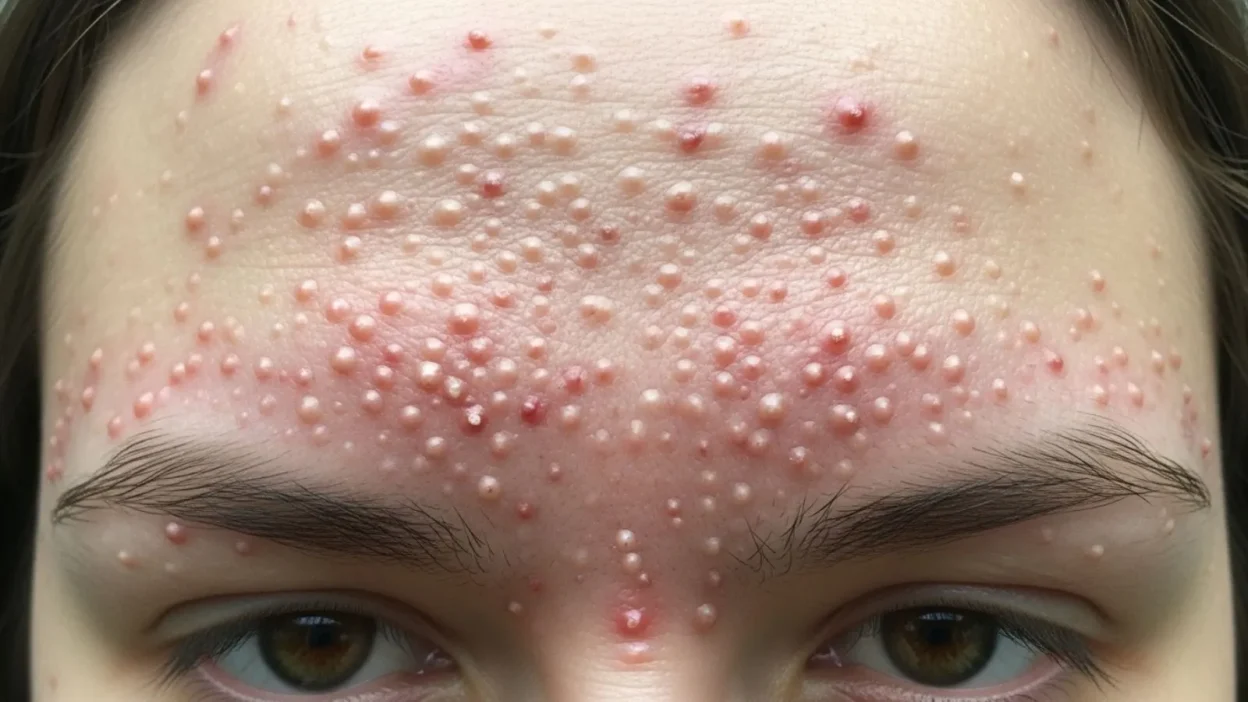
Fungal acne usually appears as small, uniform bumps that can be red, pink, or skin-colored and often come with itching or irritation.
It commonly shows up on the forehead, cheeks, chest, and back, especially in hot or humid conditions. Understanding how fungal acne looks and behaves is the first step toward choosing the right treatment and finally getting clear skin.
What Is Fungal Acne?
Fungal acne is a skin condition caused by an overgrowth of yeast called Malassezia, which naturally lives on the skin. Medically, this condition is known as Malassezia folliculitis. Unlike regular acne, which is caused by bacteria, clogged pores, excess oil, and inflammation, fungal acne develops when yeast grows too much inside hair follicles. This key difference is why traditional acne treatments, such as benzoyl peroxide or antibiotics, often fail to improve fungal acne and may even make it worse.
Although it’s commonly called “fungal acne,” it isn’t true acne in the medical sense. There are no clogged pores, blackheads, or whiteheads involved. Instead, the yeast feeds on oils on the skin, especially in warm, humid environments. When conditions are right—such as heavy sweating, tight clothing, or weakened skin barriers—the yeast multiplies rapidly and triggers inflammation around the hair follicles.
Fungal acne often appears suddenly and spreads quickly, forming clusters of similar-looking bumps. It commonly affects oily areas like the forehead, hairline, chest, shoulders, and upper back. Many people notice itching or a burning sensation, which is uncommon with regular acne and serves as an important clue.
Understanding what fungal acne is helps explain why proper identification matters so much. Since the cause is fungal rather than bacterial, effective treatment requires antifungal products instead of standard acne medications.
What Does Fungal Acne Look Like?
So, what does fungal acne look like exactly? Fungal acne usually appears as small, uniform bumps that all look very similar in size and shape. This is one of the biggest visual clues. Unlike regular acne, where pimples can vary in size and form, fungal acne tends to be monomorphic, meaning the bumps look almost identical. They may be red, pink, or the same color as your skin and often appear in tight clusters rather than spreading randomly.
Another key feature is the lack of blackheads or whiteheads. If you notice tiny bumps without visible pus or clogged pores, fungal acne may be the cause. The texture of the skin often feels rough or bumpy, even if the bumps are not very inflamed. Many people also experience itching, tingling, or a mild burning sensation, which is uncommon with typical acne.
Fungal acne most commonly appears on the forehead, hairline, cheeks, chest, shoulders, and upper back. These areas produce more oil, which feeds the yeast responsible for the condition. Heat and sweat can make the bumps more noticeable, and flare-ups often worsen after exercise or in humid weather.
Because fungal acne looks similar to acne but does not respond to standard treatments, it can be frustrating and persistent. Recognizing its uniform appearance, itchy nature, and common locations can help you correctly identify it and choose treatments that actually work.
Common Areas Where Fungal Acne Appears
Fungal acne tends to show up in areas of the body that produce more oil and experience frequent sweating. These conditions create the perfect environment for yeast to grow, which is why fungal acne often appears in specific, predictable locations rather than randomly across the skin.
One of the most common areas is the forehead, especially along the hairline. Hair products, sweat, and natural oils can build up in this area, making it a frequent spot for fungal acne flare-ups. The cheeks and jawline are also commonly affected, particularly in people with oily or combination skin. In these areas, the bumps may appear in clusters and feel itchy or irritated.
Fungal acne is not limited to the face. Many people experience it on the chest, shoulders, and upper back, especially after sweating heavily or wearing tight, non-breathable clothing. These areas contain a high number of hair follicles and oil glands, which allows yeast to multiply more easily. Gym-goers and athletes often notice fungal acne on the upper body due to prolonged moisture and friction.
In some cases, fungal acne can appear on the neck, upper arms, or along the edges of the scalp, though this is less common. Regardless of location, the bumps usually look similar in size and shape and may worsen in hot or humid conditions.
Fungal Acne vs Regular Acne
It can be tricky to tell fungal acne apart from regular acne because both appear as small bumps on the skin. However, understanding the differences is key to choosing the right treatment.
Appearance:
Fungal acne usually presents as small, uniform bumps that are similar in size, whereas regular acne can include a mix of pimples, blackheads, whiteheads, and cysts. Regular acne often varies in size and shape, while fungal acne is consistently tiny and clustered.
Location:
Fungal acne commonly affects areas with more oil and sweat, such as the forehead, chest, shoulders, and upper back. Regular acne may appear in these areas too, but it often shows up in more random patterns and can occur anywhere on the face.
Symptoms:
One of the biggest differences is itchiness. Fungal acne often causes mild to moderate itching, while regular acne may be tender or inflamed but usually not itchy.
Response to Treatment:
Traditional acne treatments, like benzoyl peroxide, salicylic acid, or antibiotics, often improve bacterial acne but may not work or even worsen fungal acne. In contrast, antifungal treatments are effective against fungal acne but won’t help typical acne.
Texture:
Fungal acne bumps feel firm and uniform, while regular acne can include soft pustules or inflamed nodules.
Early Stage vs Severe Fungal Acne Appearance
Fungal acne can vary in appearance depending on how advanced it is. Recognizing the stage is important for proper treatment and prevention of worsening symptoms.
Early-Stage Fungal Acne:
In the beginning, fungal acne appears as tiny, uniform bumps that are mostly skin-colored or slightly red. These bumps are often itchy, but inflammation is minimal. They usually appear in clusters on the forehead, chest, upper back, or shoulders. At this stage, the bumps are small and may be easily mistaken for mild acne or clogged pores. Early-stage fungal acne often responds well to antifungal creams or gentle skincare adjustments, making early detection crucial.
Moderate Fungal Acne:
If left untreated, fungal acne can progress. Bumps become more numerous and may turn slightly redder, forming larger clusters. Itching can intensify, and the skin may feel rough or irritated. Some people notice minor scaling or flaking around the bumps. This stage often signals that the yeast overgrowth is increasing due to heat, sweat, or skincare products that feed the yeast.
Severe Fungal Acne:
Severe fungal acne is characterized by dense clusters of inflamed bumps covering larger areas. The skin may appear very red, irritated, and itchy. Severe cases can be persistent, spreading to the shoulders, upper arms, or other areas. Over-the-counter treatments may no longer be sufficient, and medical intervention, such as prescription antifungals, may be required.
Does Fungal Acne Itch or Hurt?
One of the most distinguishing features of fungal acne is its tendency to itch, which sets it apart from typical acne. While regular acne may feel sore or inflamed, fungal acne often produces a persistent itching or tingling sensation that can be uncomfortable and distracting. The itchiness usually worsens in warm or humid conditions, after sweating, or when tight clothing rubs against the affected areas.
Fungal acne typically does not cause severe pain, but some people may feel mild discomfort due to inflammation. The bumps themselves are firm and raised, but unlike cystic acne, they generally do not form deep, painful nodules. The combination of itching and clustered bumps is often the key sign that differentiates fungal acne from bacterial acne or regular breakouts.
It’s important not to scratch fungal acne, even though the itch can be tempting. Scratching may spread the yeast to nearby areas or irritate the skin, leading to more inflammation. Instead, using antifungal creams, gentle cleansers, and cooling skincare products can help reduce the itch while treating the underlying cause.
People with fungal acne often report that the itching worsens at night or after exercise, which can make sleep and workouts uncomfortable. Recognizing the presence of itchiness, along with the small, uniform bumps, can help confirm that the issue is fungal rather than bacterial acne.
What Causes Fungal Acne?
Fungal acne, also known as Malassezia folliculitis, develops when an overgrowth of yeast called Malassezia affects the hair follicles. While this yeast naturally lives on healthy skin, certain conditions can trigger its rapid growth, leading to the characteristic bumps and itching of fungal acne.
One major factor is excess oil production. Oily skin provides an ideal environment for yeast to thrive, especially on the forehead, chest, back, and shoulders, which are naturally oilier areas. Similarly, hot and humid weather can increase sweat and moisture, creating perfect conditions for yeast overgrowth.
Another common cause is occlusive skincare products. Heavy creams, oils, or moisturizers that trap moisture on the skin can feed the yeast and worsen fungal acne. People who use hair oils, conditioners, or sunscreen that are not fungal-acne-safe may notice flare-ups along the hairline or forehead.
Antibiotic use is also a contributor. While antibiotics target bacteria, they can disrupt the skin’s natural balance and allow yeast to grow unchecked, increasing the risk of fungal acne.
Clothing choices and lifestyle factors can play a role too. Wearing tight, non-breathable fabrics, especially during exercise, traps sweat and heat, encouraging yeast proliferation.
Understanding the causes of fungal acne helps identify preventive measures and informs proper treatment. By reducing triggers such as excessive oil, harsh products, heat, and moisture, you can significantly improve the skin’s condition while targeting the yeast with antifungal treatments.
Who Is Most at Risk of Developing Fungal Acne?
Fungal acne can affect anyone, but certain people are more prone due to skin type, lifestyle, or environmental factors. Understanding who is at risk can help in prevention and early detection.
Oily and acne-prone skin types are at higher risk because excess sebum feeds the Malassezia yeast that causes fungal acne. People with naturally oily skin may notice bumps forming more easily on the forehead, cheeks, chest, or back.
Climate and environment also play a significant role. Fungal acne is more common in hot and humid climates because sweat and moisture create an ideal environment for yeast to multiply. People living in tropical areas or experiencing summer heat often see flare-ups during warmer months.
Active lifestyles increase the risk as well. Athletes or frequent gym-goers who sweat heavily and wear tight, non-breathable clothing can experience fungal acne on the chest, back, and shoulders. Moisture trapped against the skin allows yeast to thrive and form clusters of bumps.
Medical factors like antibiotic use or weakened immune systems can also contribute. Antibiotics disrupt the natural balance of skin bacteria, allowing yeast to grow unchecked, while certain medical conditions may make it harder for the body to regulate yeast on the skin.
Even skincare and haircare habits matter. Using heavy oils, moisturizers, or hair products that aren’t fungal-acne-safe can trigger flare-ups, especially around the hairline and forehead.
How to Tell If You Have Fungal Acne at Home
Identifying fungal acne at home can be tricky, as it often looks similar to regular acne. However, there are several signs and tests you can use to determine if your breakouts are likely caused by yeast rather than bacteria.
Visual Signs:
Fungal acne usually appears as small, uniform bumps that are red, pink, or skin-colored. Unlike regular acne, these bumps do not have blackheads or whiteheads and often form clusters in areas like the forehead, hairline, chest, upper back, and shoulders. The bumps tend to be similar in size and may feel slightly firm to the touch.
Symptoms:
One of the key indicators is itchiness. Fungal acne often causes a mild to moderate itch or tingling sensation, which worsens with sweat or heat. If your pimples are itchy rather than sore or tender, fungal acne might be the culprit.
Response to Acne Treatments:
Another test is to observe how your skin reacts to standard acne treatments. If benzoyl peroxide, salicylic acid, or antibiotics don’t improve the condition—or make it worse—this may suggest fungal acne.
Home Tests:
Some people try antifungal creams on a small area for a few days. If the bumps start improving, it’s a strong indication that yeast is involved. However, this should be done cautiously and not replace professional evaluation.
FAQs:
1. Is fungal acne contagious?
No, fungal acne is not contagious. It’s caused by an overgrowth of yeast that naturally lives on your skin, so it cannot be spread from person to person.
2. Can fungal acne spread?
Fungal acne can appear in clusters and multiple areas on your own skin, but it doesn’t spread between people. Sweat, heat, and occlusive products can cause flare-ups in different areas of your body.
3. Does fungal acne leave scars?
Fungal acne usually does not cause deep scarring if treated early. However, scratching or picking at the bumps may lead to temporary marks or post-inflammatory hyperpigmentation.
4. Can makeup cause fungal acne?
Yes, certain heavy or oil-based makeup products can feed the yeast on your skin and trigger fungal acne, especially around the hairline, forehead, and cheeks. Using non-comedogenic and fungal-acne-safe products is recommended.
5. How long does fungal acne take to go away?
With proper antifungal treatment, mild fungal acne may improve within 1–2 weeks, while moderate to severe cases can take 4–6 weeks or longer. Consistency in treatment and avoiding triggers is key.
6. Can diet affect fungal acne?
Diet has a minor role, but reducing high sugar or yeast-rich foods may help some people. Topical treatment and hygiene remain the primary solutions.
7. When should I see a dermatologist?
If bumps persist, worsen, or spread, or if over-the-counter treatments don’t work, consult a dermatologist for accurate diagnosis and prescription antifungals.
Conclusion:
Fungal acne, or Malassezia folliculitis, can be confusing because it looks similar to regular acne but requires a completely different approach.
Unlike bacterial acne, fungal acne appears as small, uniform bumps, often clustered on the forehead, chest, shoulders, and back, and is frequently itchy rather than painful.
Understanding its unique appearance, common locations, and triggers like excess oil, sweat, and heavy skincare products can help you identify it early.
Treatment focuses on antifungal creams, shampoos, and careful skincare choices rather than traditional acne medications. Preventive measures, such as breathable clothing, fungal-acne-safe products, and hygiene habits, can reduce flare-ups and speed up recovery.
Recognizing fungal acne and acting quickly is the key to clearer, healthier skin. If symptoms persist or worsen, consulting a dermatologist ensures proper diagnosis and effective treatment.

I’m the mind behind Jokesattack.com, your go-to place for daily laughs, clever puns, and hilarious memes. Spreading smiles one joke at a time!