
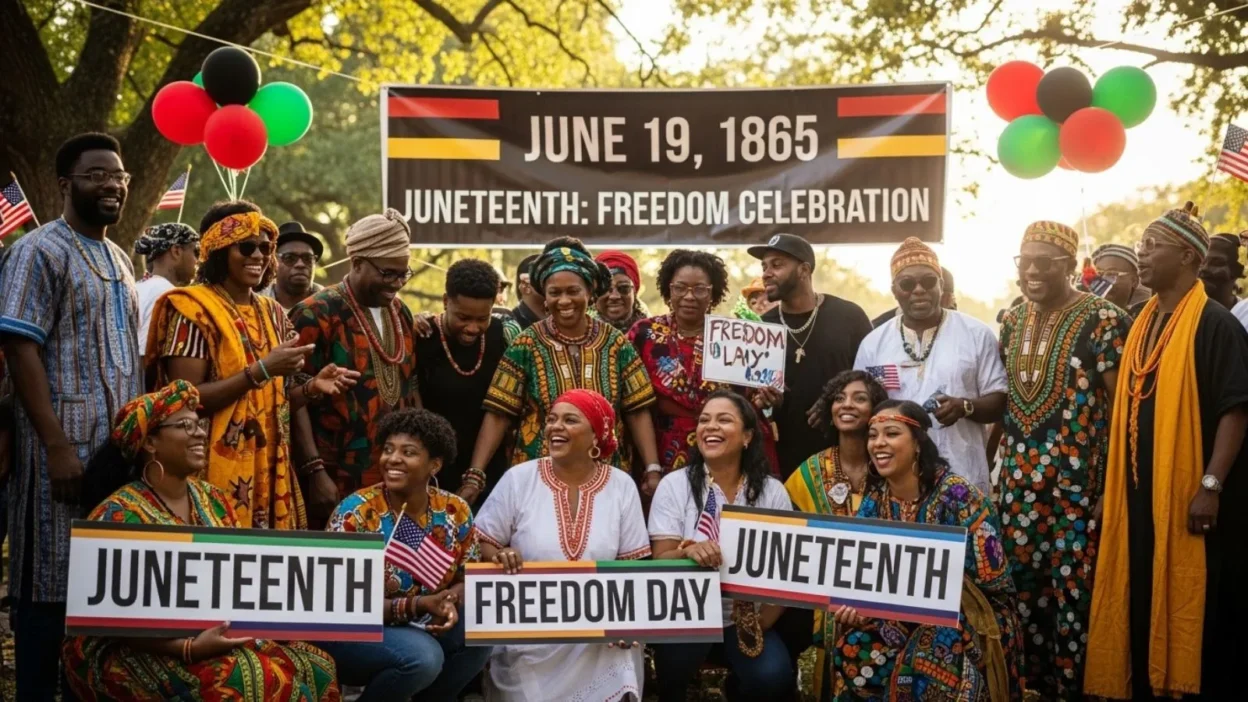
What does Juneteenth mean, and why is it an important day in American history? Juneteenth, celebrated on June 19, marks the moment when enslaved African Americans in Texas finally learned they were free.
Although the Emancipation Proclamation was issued in 1863, slavery did not end everywhere at the same time. It took more than two years for the news of freedom to reach some states, making Juneteenth a powerful symbol of delayed justice and resilience.
Today, Juneteenth is recognized as a federal holiday in the United States and is often called Freedom Day or Emancipation Day.
It represents not only the end of slavery but also the ongoing struggle for equality and civil rights.
Understanding the meaning of Juneteenth helps us better appreciate its historical significance and why it continues to matter in modern society.
What Is Juneteenth?
Juneteenth is a holiday that commemorates the end of slavery in the United States. The word “Juneteenth” is a combination of “June” and “nineteenth,” referring to June 19, the day freedom was finally announced to enslaved people in Texas in 1865. While slavery had already been declared illegal through the Emancipation Proclamation in 1863, that freedom was not immediately enforced in all states.
On June 19, 1865, Union Army General Gordon Granger arrived in Galveston, Texas, and issued General Order No. 3. This order informed enslaved African Americans that they were free and that slavery was officially over. For many people, this moment marked the first time they learned about their freedom, making Juneteenth a deeply meaningful and emotional milestone.
Juneteenth is often referred to as Freedom Day, Emancipation Day, or Black Independence Day. It represents more than a historical event—it symbolizes the long and difficult journey toward freedom, justice, and equality. The holiday highlights the reality that freedom delayed is freedom denied, and it reminds people that laws alone do not always bring immediate change.
Today, Juneteenth is recognized across the United States as a time for education, reflection, and celebration. It honors the strength and resilience of African American communities while encouraging all Americans to learn about a crucial chapter in the nation’s history.
The History Behind Juneteenth
To understand the meaning of Juneteenth, it is important to look at the history of slavery in the United States and the events that led up to June 19, 1865. Slavery had been a central part of the American economy and society for centuries, especially in Southern states where enslaved people were forced to work on plantations under harsh and inhumane conditions.
On January 1, 1863, President Abraham Lincoln issued the Emancipation Proclamation, declaring that enslaved people in Confederate states were free. However, this proclamation did not immediately end slavery everywhere. It applied only to states in rebellion against the Union and depended heavily on the presence of Union troops to be enforced. As a result, many enslaved people remained in bondage even after the proclamation was signed.
Texas was one of the most isolated Confederate states, and enforcement of emancipation there was slow. Slaveholders continued the practice of slavery, and many enslaved people were deliberately kept unaware of their freedom. This continued until the Civil War ended and Union forces arrived in Texas.
When General Gordon Granger reached Galveston on June 19, 1865, he announced that all enslaved people were free. This declaration effectively marked the end of slavery in the United States. Juneteenth stands as a reminder of this delayed freedom and the complex path toward justice and equality in American history.
Why Slavery Continued After Emancipation
Many people wonder why slavery continued even after the Emancipation Proclamation was issued in 1863. The main reason is that the proclamation did not instantly free all enslaved people. It only applied to Confederate states that were still rebelling against the Union, and it required Union military presence to be enforced. In areas where Union troops had not yet arrived, enslaved people remained under the control of slaveholders.
Texas, in particular, was geographically distant from major Civil War battles. Because of this isolation, there were very few Union soldiers present to enforce emancipation. Slaveholders in Texas often ignored the proclamation and continued enslaving people, knowing there would be little immediate consequence. In some cases, enslaved individuals were intentionally kept unaware that slavery had been declared illegal.
Another factor was resistance from slaveholders who refused to accept the loss of free labor. They delayed compliance for as long as possible, exploiting the lack of enforcement and communication. News traveled slowly during the 19th century, especially to remote areas, which further contributed to the delay in freedom.
Slavery officially ended only after the Civil War concluded and Union forces gained full control of the former Confederate states. When General Gordon Granger arrived in Texas in June 1865, his announcement finally enforced the law. Juneteenth exists because freedom was delayed, reminding us that legal change does not always lead to immediate justice without action and accountability.
The First Juneteenth Celebrations
The first Juneteenth celebrations began in 1866, just one year after freedom was announced in Texas. Newly freed African Americans gathered to honor their liberation and to remember the struggles they had endured under slavery. These early celebrations were deeply meaningful, serving as both joyful events and powerful acts of remembrance.
Early Juneteenth observances often included prayer services, public readings of the Emancipation Proclamation, and storytelling from elders who had lived through slavery. Music, singing, and dancing were also central parts of the celebrations, reflecting cultural traditions and the expression of newfound freedom. Families and communities came together to share meals, often featuring traditional foods passed down through generations.
Because segregation laws restricted access to public spaces, many African American communities pooled resources to purchase land specifically for Juneteenth gatherings. These areas became known as “Emancipation Parks” and still exist in some cities today. The effort to create these spaces shows how important Juneteenth was to Black communities, even in the face of discrimination and limited rights.
Although early Juneteenth celebrations were primarily held in Texas, they gradually spread to other states as African Americans migrated across the country. Over time, the holiday became a lasting tradition, passed down through families and communities. These early celebrations laid the foundation for how Juneteenth is observed today—as a time to celebrate freedom, honor history, and strengthen community bonds.
How Juneteenth Evolved Over Time
After the first Juneteenth celebrations in the late 1800s, the holiday continued to evolve alongside changes in American society. During the Reconstruction era, Juneteenth served as a powerful reminder of freedom and hope for newly emancipated African Americans. It was a day to focus on education, voting rights, and community building, all of which were seen as essential steps toward true equality.
However, during the early 20th century, Juneteenth observances began to decline in some areas. The rise of Jim Crow laws, racial segregation, and economic hardship made it difficult for Black communities to openly celebrate. In many cases, Juneteenth was observed quietly within families rather than through large public events. Despite these challenges, the tradition was never fully lost.
The Civil Rights Movement of the 1950s and 1960s helped renew interest in Juneteenth. Activists connected the holiday’s message of delayed freedom to ongoing struggles for civil rights and social justice. By the late 20th century, Juneteenth celebrations started to grow again, spreading beyond Texas to cities across the United States.
In the 21st century, Juneteenth gained national attention as conversations about racial equality became more prominent. Media coverage, educational efforts, and community events helped bring the holiday into the mainstream. This renewed recognition eventually led to Juneteenth being declared a federal holiday, ensuring its continued visibility and importance for future generations.
Why Juneteenth Is Important Today
Juneteenth is more than a historical milestone; it remains a powerful symbol of freedom, resilience, and the ongoing struggle for equality. Although slavery officially ended in 1865, systemic racism and social inequalities have persisted, making the celebration of Juneteenth both a reflection on the past and a reminder of work still to be done. The holiday encourages Americans to recognize the resilience of African American communities and to honor their contributions to society.
Juneteenth also serves an educational purpose. Schools, organizations, and communities use this day to teach the history of slavery, emancipation, and the Civil War. By understanding the challenges that African Americans faced even after freedom was declared, students and adults alike gain a clearer perspective on why equality and justice require constant effort. This educational aspect ensures that the meaning of Juneteenth goes beyond celebration—it becomes an opportunity for reflection and learning.
In addition to education, Juneteenth is a time for cultural celebration. Music, art, storytelling, and traditional foods allow communities to preserve their heritage and pass down traditions from one generation to the next. Parades, festivals, and public gatherings bring people together, creating a sense of unity and shared purpose.
Finally, Juneteenth reminds society that freedom is valuable but fragile. It highlights the importance of vigilance, advocacy, and understanding history. Celebrating Juneteenth today honors both the past struggles of African Americans and the ongoing pursuit of equality, making it a holiday with enduring relevance in modern America.
When Did Juneteenth Become a Federal Holiday?
Juneteenth’s journey from a regional celebration to a nationally recognized holiday reflects its growing importance in American society. For many decades, Juneteenth was primarily celebrated in Texas and other Southern states, often as a local or state holiday. It wasn’t until the late 20th and early 21st centuries that the holiday began to gain widespread recognition across the United States.
Individual states gradually started to officially recognize Juneteenth. Texas led the way in 1980 by declaring it a state holiday. Over the next several decades, more states followed, with varying levels of observance—some offered a paid holiday for state employees, while others marked it with educational events or cultural celebrations.
The push for federal recognition gained momentum in the 2010s, as public awareness of racial justice issues increased and communities across the country highlighted the significance of Juneteenth. Advocates emphasized that acknowledging this day nationally was not just about commemorating history but also about promoting understanding, equality, and inclusion.
On June 17, 2021, President Joe Biden signed a bill officially making Juneteenth a federal holiday. This milestone ensured that the holiday would be observed nationwide, giving it the same status as Independence Day, Martin Luther King Jr. Day, and other national observances. Federal recognition also provides opportunities for schools, organizations, and employers to educate the public about Juneteenth, making it a day of reflection, education, and celebration for all Americans.
How Is Juneteenth Celebrated Today?
Today, Juneteenth is celebrated across the United States as a day of freedom, reflection, and cultural pride. Modern celebrations vary widely, ranging from community gatherings and parades to educational events and family reunions. These celebrations honor the resilience of African Americans and highlight the historical significance of June 19, 1865.
Community events are a major part of Juneteenth observances. Parades, concerts, and festivals bring people together to celebrate freedom and African American culture. These events often feature live music, dance performances, storytelling, and art displays that reflect the rich traditions of Black communities. Local organizations and historical societies may also host lectures, panel discussions, or exhibits that provide educational context about slavery, emancipation, and civil rights.
Food plays a central role in Juneteenth celebrations. Traditional dishes often include barbecue, red foods like watermelon or red velvet cake, and other regional favorites. Sharing meals strengthens community bonds and preserves cultural heritage, connecting generations through food and tradition.
Schools and workplaces increasingly recognize Juneteenth as an opportunity for learning and reflection. Many educational institutions organize lessons or activities that teach students about the historical and cultural importance of the holiday. Employers may provide resources or time off for employees to participate in events or educational programs.
Overall, modern Juneteenth celebrations combine joy, remembrance, and education. They honor the struggles and triumphs of African Americans, fostering community, reflection, and understanding. Celebrating Juneteenth today ensures that the history it represents is remembered and appreciated by future generations.
Juneteenth Symbols and Colors
Juneteenth is rich in symbols and colors that reflect freedom, heritage, and resilience. Understanding these symbols helps explain the deeper meaning of the holiday and why it continues to hold significance for African American communities.
One of the most prominent symbols is the Juneteenth flag, officially recognized in 1997. The flag features a burst in the center, representing a new beginning for enslaved people after freedom was declared. A star sits in the middle of the burst, symbolizing Texas—the “Lone Star State”—where Juneteenth originated. The star also represents freedom for all African Americans throughout the United States. The arc around the star signifies a horizon, suggesting the promise of a brighter future.
Colors play an important role as well. Red is widely used in decorations and clothing during Juneteenth celebrations. It represents resilience, bloodshed, and the enduring spirit of African Americans. Black symbolizes the African American community and its history, while green often represents hope and growth for future generations.
Other symbols include emancipation bells, which commemorate the moment freedom was announced, and flags or banners with historical dates, such as June 19, 1865. Foods like red velvet cake or watermelon have also become cultural symbols, connecting the holiday to tradition and shared experiences.
Together, these symbols and colors create a visual and cultural language for Juneteenth. They remind people of the struggles overcome, the strength of the community, and the ongoing pursuit of equality. Observing these symbols ensures that the history and significance of Juneteenth remain visible and celebrated.
Juneteenth vs Independence Day
While both Juneteenth and Independence Day celebrate freedom in the United States, they represent very different historical events and perspectives. Independence Day, celebrated on July 4, commemorates the adoption of the Declaration of Independence in 1776, which declared the American colonies free from British rule. However, this freedom did not apply to enslaved African Americans, who remained in bondage for nearly another century.
Juneteenth, on the other hand, specifically marks the end of slavery in the United States. On June 19, 1865, Union forces arrived in Galveston, Texas, and informed enslaved people that they were free—over two years after the Emancipation Proclamation had been issued. For African Americans, Juneteenth represents a delayed but crucial step toward liberty, justice, and equality.
Independence Day often focuses on national pride, fireworks, and patriotic celebrations. While it is an important part of American history, it does not acknowledge the experiences of enslaved people. Juneteenth, in contrast, emphasizes reflection, education, and community. It honors the struggles, resilience, and contributions of African Americans throughout history.
Both holidays are essential for understanding freedom in the United States, but they highlight different aspects of liberty. Independence Day celebrates political independence, while Juneteenth commemorates the hard-won emancipation of a people denied freedom for far too long. Recognizing this distinction helps Americans understand the full scope of the nation’s history and appreciate the meaning behind both holidays.
Common Misunderstandings About Juneteenth
Despite its growing recognition, Juneteenth is still widely misunderstood. Clarifying these misconceptions helps people better appreciate its historical and cultural significance.
One common misunderstanding is that slavery ended everywhere in 1863. While the Emancipation Proclamation declared freedom for enslaved people in Confederate states, enforcement depended on Union troops. Many enslaved individuals, particularly in remote areas like Texas, remained unaware of their freedom until June 19, 1865. This delay is precisely why Juneteenth exists.
Another misconception is that Juneteenth replaces Independence Day. While both holidays celebrate freedom, they focus on different events. Independence Day marks the colonies’ political independence from Britain in 1776, while Juneteenth celebrates the emancipation of enslaved African Americans—an essential step in the nation’s broader journey toward liberty and equality.
Some also believe that Juneteenth is a “new holiday.” In reality, it has been celebrated by African American communities since 1866. What is new is its recognition at the state and federal levels, which has brought wider awareness to the holiday in recent years.
Finally, there is confusion about who Juneteenth is for. While it originated as a celebration of African American freedom, Juneteenth today is a day for all Americans to learn about history, reflect on racial justice, and honor the resilience of those who endured slavery.
By addressing these misunderstandings, people can fully grasp the significance of Juneteenth and participate in celebrations with respect and understanding.
How Schools, Workplaces, and Communities Observe Juneteenth
Juneteenth has evolved into a holiday that is observed not only by families and local communities but also in schools and workplaces across the United States. Each setting adapts the celebration in ways that promote education, reflection, and cultural appreciation.
In schools, Juneteenth provides an opportunity to teach students about American history from a broader perspective. Educators incorporate lessons on slavery, the Emancipation Proclamation, and the Civil War. Some schools organize special assemblies, student projects, or art exhibitions that highlight African American contributions to society. By teaching Juneteenth, schools help younger generations understand the struggles for freedom and equality, making history more relatable and meaningful.
Workplaces increasingly recognize Juneteenth as a day for reflection and learning. Many companies provide resources or host discussions about the historical significance of the holiday and its relevance today. Some businesses offer paid time off to employees, while others organize cultural events, volunteer activities, or educational webinars. This recognition not only honors African American history but also promotes diversity, equity, and inclusion within organizations.
Communities celebrate Juneteenth with public gatherings, parades, and festivals. Local organizations host storytelling sessions, music performances, and art displays that showcase African American culture. Community events often include speeches by historians or activists who emphasize the importance of continued advocacy for civil rights.
By observing Juneteenth in schools, workplaces, and communities, Americans from all backgrounds can participate in meaningful celebrations. These observances ensure that the holiday serves as both a cultural festival and a platform for education, reflection, and unity.
Is Juneteenth Celebrated Outside the United States?
While Juneteenth originated in the United States, awareness of the holiday has been spreading internationally in recent years. Its significance resonates beyond American borders because it represents a universal struggle for freedom, equality, and human rights.
In countries with large African diaspora communities, such as Canada, the United Kingdom, and Brazil, some organizations and cultural groups have begun observing Juneteenth. These celebrations often focus on education and cultural heritage, with events highlighting the history of slavery, emancipation, and the contributions of African-descended peoples. Music, art, and storytelling are common elements, helping connect participants with African American traditions while promoting broader discussions about racial justice globally.
Media coverage and social media have also played a key role in spreading knowledge of Juneteenth worldwide. As international audiences learn about the delayed freedom of enslaved African Americans, they often draw parallels to local histories of oppression and civil rights struggles. This has helped make Juneteenth a symbol of resilience and human dignity beyond U.S. borders.
Additionally, some global corporations and universities recognize Juneteenth, offering educational programs or cultural events for employees and students, regardless of nationality. These efforts help foster understanding of American history while promoting diversity and inclusion in international settings.
Although Juneteenth remains primarily an American holiday, its themes of freedom and justice have universal appeal. Celebrating or acknowledging Juneteenth outside the United States allows people worldwide to reflect on the importance of equality and the enduring legacy of those who fought for their freedom.
FAQs”
1. What does Juneteenth symbolize?
Juneteenth symbolizes the end of slavery in the United States and represents freedom, resilience, and the ongoing pursuit of equality. It is a reminder that liberty was delayed for many and celebrates the strength of African American communities.
2. Is Juneteenth only celebrated by African Americans?
While it originated as a celebration within African American communities, Juneteenth is now recognized by people of all backgrounds. Schools, workplaces, and public organizations encourage everyone to learn about its history and significance.
3. Why did Texas play a key role in Juneteenth?
Texas was one of the most isolated Confederate states, and enforcement of the Emancipation Proclamation was slow. On June 19, 1865, General Gordon Granger arrived in Galveston, Texas, to announce the freedom of all enslaved people, marking the origin of Juneteenth.
4. Is Juneteenth a federal holiday?
Yes. On June 17, 2021, Juneteenth was officially declared a federal holiday in the United States. This recognition allows schools, workplaces, and communities across the country to honor and educate about its significance.
5. How can people respectfully observe Juneteenth?
Observing Juneteenth can include attending community events, learning about African American history, reflecting on freedom and equality, and participating in cultural activities such as music, art, and food traditions. Respectful observance emphasizes education, remembrance, and celebration.
6. When do states officially recognize Juneteenth?
Many states recognized Juneteenth as a state holiday before federal recognition. Some offer paid leave for employees, while others host educational or cultural events. Federal recognition ensures nationwide observance.
Conclusion
Juneteenth is a powerful reminder of freedom, resilience, and the long journey toward equality in the United States.
Celebrated every June 19, it marks the day when enslaved African Americans in Texas were finally informed of their liberation, over two years after the Emancipation Proclamation.
The holiday carries deep historical, cultural, and educational significance, highlighting both the struggles endured and the triumphs achieved by African Americans.
Today, Juneteenth is observed through community gatherings, parades, educational programs, and cultural celebrations that honor African American heritage. It has evolved into a day for all Americans to reflect on the importance of freedom, justice, and equality.
Recognizing Juneteenth encourages learning, understanding, and unity while preserving the memory of a pivotal moment in history.
By appreciating the meaning of Juneteenth, we not only honor the past but also commit to building a more just and inclusive society for the future.

I’m the author behind Jokesattack.com, where I share the funniest jokes, puns, and memes to make your day brighter with laughter. 😄🎉