
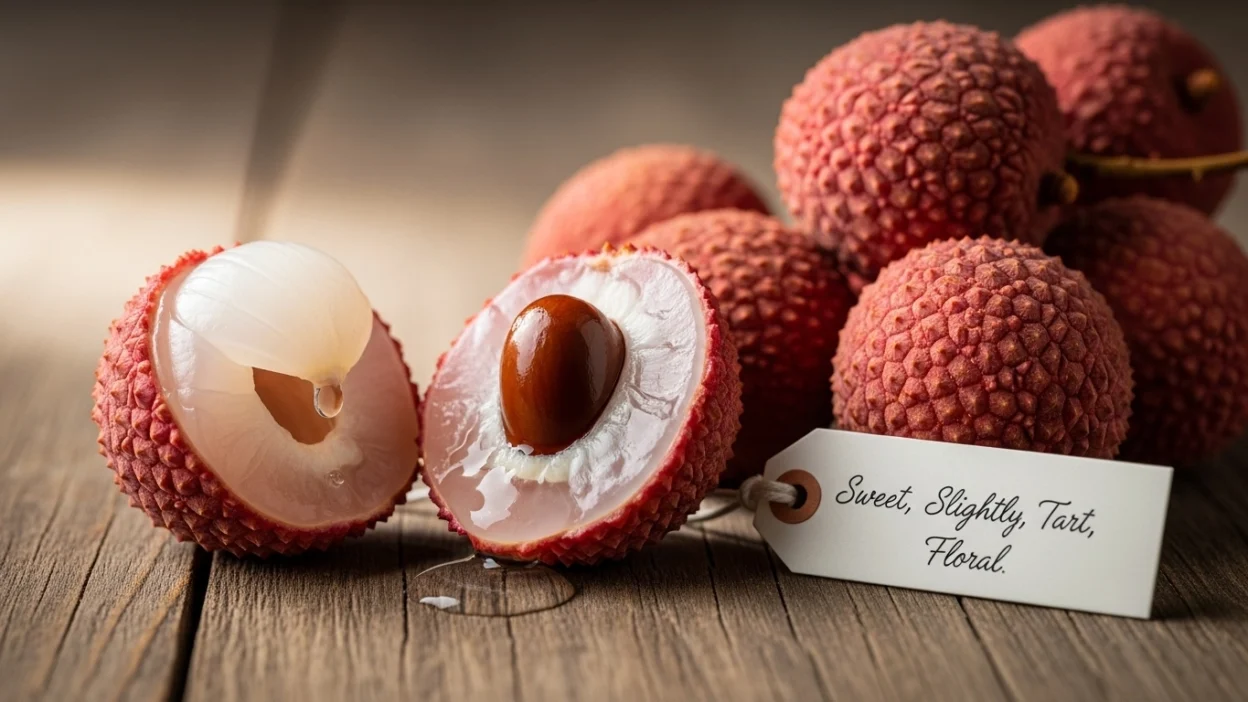
Lychee is one of those fruits people hear about often but hesitate to try because they can’t imagine the flavor. If you’ve ever wondered what does lychee taste like, you’re not alone.
This small tropical fruit is known for its unique combination of sweetness, fragrance, and juiciness, making it a favorite in many Asian cuisines and summer drinks.
At first bite, lychee delivers a refreshing sweetness that feels light rather than heavy, followed by a gentle floral note that sets it apart from common fruits.
Some people compare lychee to grapes or pears, while others notice a subtle rose-like scent.
In this guide, we’ll break down the exact taste of lychee, how it compares to other fruits, and what you can expect if you try it fresh, canned, or in drinks so you know exactly what you’re biting into.
What Does Lychee Taste Like? (Quick & Clear Answer)
So, what does lychee taste like in the simplest terms? Lychee has a sweet, juicy, and lightly floral flavor that feels refreshing rather than overpowering. The first thing most people notice is its natural sweetness, which is similar to a ripe grape but softer and more delicate. Unlike very sugary fruits, lychee’s sweetness feels clean and balanced, making it easy to enjoy even for those who don’t like overly sweet flavors.
Along with sweetness, lychee has a subtle floral note that gives it a unique personality. This floral taste is mild and pleasant, not sharp or bitter, and is often compared to rose or jasmine. It’s part of what makes lychee stand out from everyday fruits. Some people notice this aroma more than others, especially when tasting lychee for the first time.
Lychee also has a hint of tartness, which keeps the flavor fresh and prevents it from feeling heavy. This gentle tang works together with the sweetness to create a smooth, juicy bite. The fruit’s high water content adds to the refreshing experience, especially when eaten chilled.
Overall, lychee tastes light, fragrant, and naturally sweet with a juicy texture that melts in your mouth. It’s not intense or strange, which is why many first-time tasters are pleasantly surprised. If you enjoy fruits like grapes, pears, or mildly floral flavors, chances are you’ll find lychee both enjoyable and easy to love.
How to Describe Lychee Flavor Accurately
Describing lychee flavor can be tricky because it combines several gentle tastes into one smooth experience. At its core, lychee has a clean, natural sweetness that isn’t sharp or sugary. The sweetness feels similar to fruit juice rather than candy, making it refreshing and easy on the palate. This is one reason many people find lychee pleasant even on their first try.
What truly sets lychee apart is its floral note. The aroma and taste carry a light fragrance often compared to rose petals or jasmine. This floral quality is soft and subtle, not strong or perfumed when the fruit is ripe.
Lychee also has a mild tanginess that balances the sweetness. This slight tart edge keeps the fruit from tasting flat or heavy. It’s not sour like citrus, but just enough to add depth and freshness. When you bite into a lychee, the juicy flesh releases a burst of flavor that feels cooling and smooth.
Another important part of lychee’s taste is its clean finish. There’s no bitter aftertaste, only a light sweetness that fades gently. This makes lychee popular in desserts and drinks, where its flavor enhances other ingredients rather than overpowering them.
In simple words, lychee tastes sweet, lightly floral, juicy, and refreshing. Its balanced flavor profile is what makes it unique among tropical fruits and enjoyable for a wide range of people.
Is Lychee Sweet, Sour, or Floral?
Lychee is best described as sweet with a gentle floral touch, rather than sour. The sweetness comes naturally from the fruit’s sugar content and feels light and refreshing instead of heavy or sticky. When fully ripe, lychee has a clean sweetness similar to a juicy grape or pear, making it enjoyable for most people, even those who prefer mild flavors.
Lychee is not a sour fruit, but it does have a very mild tang. This slight tartness adds balance and keeps the sweetness from becoming overpowering. Unlike citrus fruits, the tang in lychee is subtle and smooth, giving the fruit a fresh and juicy character rather than a sharp bite.
The floral note is what makes lychee unique and often sparks curiosity. Some people notice a soft rose- or jasmine-like aroma, especially when the fruit is freshly peeled. This floral taste is natural and comes from aromatic compounds in the fruit. For most people, it feels pleasant and delicate, not strong or artificial. However, those who are sensitive to floral flavors may notice it more clearly than others.
The balance of sweet, mild tang, and floral aroma is what gives lychee its signature taste. No single element overpowers the others. Instead, they work together to create a smooth and refreshing flavor experience. This is also why lychee pairs well with desserts, drinks, and even light savory dishes.
What Fruits Does Lychee Taste Like? (Taste Comparisons)
Many people understand lychee’s flavor better when it’s compared to fruits they already know. The most common comparison is grapes. Like grapes, lychee is juicy, sweet, and refreshing, but lychee has a softer texture and a more aromatic flavor.
Another close comparison is pears. Lychee shares a similar gentle sweetness and smooth mouthfeel, especially when fully ripe. Both fruits feel juicy and clean on the palate, but lychee is more fragrant and less grainy than pear flesh. The taste of lychee is also brighter and slightly more complex.
Some people compare lychee to strawberries, mainly because of the subtle sweetness and hint of acidity. However, lychee lacks the strong berry flavor and seeds, making it smoother and more delicate in taste. The sweetness in lychee is lighter and more refreshing than the bold sweetness of strawberries.
Lychee is also often compared to rambutan and longan, which are closely related fruits. Rambutan tastes similar but slightly creamier, while longan is less floral and has a more honey-like sweetness. Among these, lychee is usually considered the most fragrant and refreshing.
Overall, lychee tastes like a blend of grape and pear with a floral twist. These familiar comparisons help explain why lychee doesn’t feel strange or overpowering, even to first-time tasters. If you enjoy juicy, mildly sweet fruits with a refreshing finish, lychee will likely feel familiar yet pleasantly different.
Texture and Mouthfeel of Lychee
The texture of lychee plays a huge role in how the fruit tastes and feels when you eat it. Once peeled, lychee reveals soft, translucent flesh that looks smooth and glossy. When you take a bite, the first thing you notice is how juicy it is. Lychee has a high water content, which creates a refreshing burst of juice in the mouth.
The flesh itself is tender yet slightly firm. It’s not mushy like an overripe banana, nor crunchy like an apple. Instead, it has a gentle bite that quickly melts as you chew. This balance between firmness and softness makes lychee very easy and pleasant to eat.
Lychee also has a slippery, jelly-like mouthfeel, similar to a peeled grape. This smooth texture allows the sweetness and floral flavors to spread evenly across the palate. There’s no fibrous or grainy feeling, which is why many people describe lychee as smooth and clean-tasting.
Another important texture element is the contrast between the flesh and the seed. The large seed in the center encourages slow, mindful eating, which helps you appreciate the fruit’s delicate flavor. Once the seed is removed, the remaining flesh feels light and refreshing rather than heavy.
Overall, lychee’s texture is soft, juicy, and smooth, making it especially enjoyable when eaten chilled. The mouthfeel enhances the sweetness and floral notes, turning a simple bite into a refreshing experience. This pleasant texture is one of the main reasons lychee is popular in fruit bowls, desserts, and summer drinks.
What Does Fresh Lychee Taste Like?
Fresh lychee offers the purest and most vibrant taste of this tropical fruit. When perfectly ripe, the flesh is tender, juicy, and bursting with natural sweetness. Unlike canned lychee, fresh lychee has a clean, delicate flavor that balances mild sugariness with subtle floral notes, making it incredibly refreshing. Many first-time tasters are surprised by how light and fragrant the fruit feels, especially when eaten chilled.
A perfectly ripe lychee should have a slightly firm exterior that yields easily when bitten. Under-ripe lychee, on the other hand, may taste a little tart or bland, lacking the signature sweetness and aroma. Overripe lychee can become too soft and watery, sometimes tasting slightly fermented or flat. This is why freshness is key to experiencing lychee at its best.
The aroma of fresh lychee is another defining feature. You may notice a gentle floral scent, reminiscent of rose petals or jasmine, that complements the sweet, juicy flavor.
Fresh lychee is versatile in how it’s enjoyed. You can eat it raw, add it to fruit salads, blend it into smoothies, or even pair it with desserts. Its light, aromatic flavor ensures it enhances other ingredients without overpowering them. For those curious about tropical fruits, fresh lychee is the best way to experience its unique sweetness, floral aroma, and juicy texture.
What Does Canned Lychee Taste Like Compared to Fresh?
Canned lychee offers a convenient alternative to fresh fruit, but its taste and texture differ noticeably. The main difference lies in sweetness. Canned lychee is typically packed in syrup, which increases its sugar content. This makes it taste sweeter than fresh lychee, sometimes almost like candy, depending on the brand and syrup concentration. For people who enjoy very sweet flavors, canned lychee can be appealing, but it lacks the natural balance of fresh fruit.
Another difference is the floral aroma. Fresh lychee has a subtle rose-like or jasmine fragrance, which gives it a delicate, refreshing flavor. In canned lychee, this aroma is often muted or absent due to processing and storage. As a result, the fruit may taste less complex and more one-dimensional, focusing primarily on sugary sweetness.
The texture also changes. While fresh lychee is juicy and slightly firm, canned lychee tends to be softer and sometimes slippery because of the syrup. It can feel more uniform and less “bursting with juice” than fresh fruit, but it still retains a pleasant smoothness. The seed remains in the center, but the flesh around it is generally easy to separate.
Despite these differences, canned lychee has its advantages. It’s available year-round, convenient, and still carries the signature tropical sweetness. For desserts, cocktails, and fruit salads, canned lychee provides the flavor and texture needed without the need for peeling and pitting fresh fruit.
What Does Lychee Juice Taste Like?
Lychee juice is a concentrated way to enjoy the fruit’s signature flavor. It captures the sweetness, floral notes, and refreshing qualities of lychee while often enhancing the fruit’s natural aroma. When freshly pressed, lychee juice tastes light, juicy, and slightly fragrant, much like biting into a ripe lychee but in liquid form. It has a clean, tropical sweetness that’s not overpowering, making it a favorite for summer drinks and mocktails.
Compared to eating fresh lychee, juice delivers a more intense sweetness because the water content in the flesh is concentrated. Some lychee juices also include a mild tartness, which balances the sugar and makes the drink more refreshing. This combination of sweet, floral, and slightly tangy flavors gives lychee juice its unique appeal.
Lychee juice is also highly versatile. It can be enjoyed on its own or mixed into cocktails, smoothies, lemonades, and iced teas. When paired with other fruits like pineapple, mango, or lime, the floral sweetness of lychee creates a harmonious tropical blend.
For those who enjoy subtle floral flavors and a clean, sweet taste, lychee juice is an excellent way to experience the fruit. While it may lack the bite and texture of fresh lychee, the intense aroma and sweetness make it a satisfying and refreshing alternative that highlights what makes lychee so distinctive.
Is Lychee Very Sweet or Mild?
Lychee is known for its naturally sweet flavor, but it is not overwhelmingly sugary. The sweetness is gentle and refreshing, making it enjoyable for a wide range of palates. Unlike candy or very ripe tropical fruits like mango, lychee’s sugar content feels light and balanced, so the flavor doesn’t feel heavy or cloying. This natural sweetness is one of the reasons the fruit is often added to desserts and drinks, as it enhances other flavors without overpowering them.
The sweetness is complemented by a subtle floral note that adds complexity to the taste. This combination of mild sweetness and floral aroma is what makes the fruit stand out and gives it a delicate, refreshing profile.
Lychee also has a slight tang, though it is very mild. This tiny bit of tartness prevents the fruit from tasting flat and keeps the flavor bright and juicy. The balance between sweet, floral, and slightly tangy makes lychee a well-rounded fruit, appealing to those who enjoy gentle tropical flavors.
For first-time tasters, the mild sweetness may surprise them, as it is easy to eat and not cloying. Whether eaten fresh, canned, or in juice, lychee maintains this lightly sweet, fragrant, and refreshing taste, making it one of the most enjoyable tropical fruits for casual snacking, desserts, and beverages alike.
Does Lychee Have a Floral or Perfume Taste?
One of the most distinctive aspects of lychee is its floral aroma, which some people describe as perfume-like. This natural fragrance comes from aromatic compounds in the fruit that give it a subtle rose- or jasmine-like scent. When fresh and ripe, this floral note is gentle and enhances the fruit’s sweetness rather than overpowering it.
The floral flavor is most noticeable when lychee is fresh and chilled. As you bite into the fruit, the juice releases both sweetness and a soft, aromatic note that spreads across the palate. This combination of sweet and floral creates a light, refreshing taste that is rare among common fruits. Some people even say it reminds them of a lightly scented candy, but without the artificial taste.
Not everyone experiences the floral taste the same way. People’s taste perceptions vary, so some might notice it strongly while others perceive only a hint. Interestingly, the floral note can also diminish in canned or processed lychee, making fresh lychee the best option for experiencing its signature aroma.
The floral quality of lychee is one of the reasons it pairs so well with other fruits, desserts, and drinks. Overall, the perfume-like flavor is a gentle, aromatic layer that makes lychee unique among tropical fruits, appealing to those who enjoy subtle, fragrant tastes.
Why Do Some People Love Lychee and Others Don’t?
Lychee is a tropical fruit that tends to divide opinions. While many people fall in love with its sweet, floral flavor and juicy texture, others find it unusual or even off-putting. The differences in preference often come down to taste sensitivity, aroma perception, and prior exposure to floral fruits.
One reason some people love lychee is its unique combination of sweetness and floral notes. Its smooth, soft texture also adds to the enjoyment, making it easy to eat and appealing for those who like mild, tropical fruits.
On the other hand, some people are more sensitive to the floral aspect, perceiving it as a perfume-like taste that they may not enjoy. Individuals who are accustomed to more common fruits like apples or grapes might find lychee’s aroma unusual. Additionally, first-time tasters may be surprised by the subtle tang or slipperiness of the flesh, which can affect their perception of the fruit.
Cultural and dietary exposure also plays a role. Over time, many people who initially dislike it begin to enjoy the sweet, refreshing, and lightly floral taste once they become familiar with it.
In short, whether someone loves or dislikes lychee depends on taste sensitivity, prior fruit experiences, and how receptive they are to floral flavors. It’s a fruit that rewards curiosity and open-minded tasting.
How Lychee Taste Changes When Cooked or Mixed
Lychee is incredibly versatile, and its flavor can change depending on how it’s prepared or combined with other ingredients. When cooked or mixed into dishes, the fruit often becomes sweeter and softer, while its floral aroma can either mellow or blend harmoniously with other flavors. This adaptability is one reason lychee is widely used in both sweet and savory recipes.
In desserts, such as lychee jelly, cakes, or ice creams, the fruit retains its signature sweetness but loses some of the crisp juiciness of fresh lychee. The floral notes remain subtle, enhancing the overall taste without being overpowering. Lychee pairs exceptionally well with ingredients like coconut, mango, and berries, where its tropical flavor adds a light, fragrant touch.
When added to drinks or cocktails, lychee provides a refreshing sweetness and a hint of floral aroma. Mixed with lime, mint, or ginger, the fruit’s sweet and fragrant profile complements tangy or spicy flavors, creating a well-balanced beverage.
Even in savory dishes, lychee can add an unexpected pop of sweetness. For example, lychee can be included in stir-fries, salads, or sauces, where its juice balances salty or spicy ingredients. Cooking slightly reduces the floral aroma but emphasizes the juicy sweetness.
Overall, whether cooked, blended, or mixed, lychee adapts gracefully, enhancing flavors while retaining its light, sweet, and slightly floral characteristics. Its taste may shift slightly, but it remains refreshing and enjoyable in a variety of culinary contexts.
Who Will Enjoy the Taste of Lychee?
Lychee is a fruit that appeals to a wide range of people, but it’s especially enjoyable for certain flavor preferences. If you like fruits that are mildly sweet, juicy, and fragrant, lychee is likely to be a favorite. Its gentle sweetness and light floral notes make it approachable for first-time tasters, while its unique taste can captivate those who enjoy tropical flavors.
Fans of grapes, pears, or tropical fruits such as mango and longan often appreciate lychee because it shares familiar sweetness and juiciness while offering a delicate, aromatic twist. People who enjoy fruit salads, smoothies, or desserts with subtle flavors will also find lychee complements other ingredients beautifully without overpowering them.
Lychee is particularly appealing to those who like refreshing, light fruits rather than heavy, intensely sweet options. Its high water content and smooth texture make it ideal for hot weather or as a hydrating snack.
Children and adults alike often enjoy lychee because it’s fun to peel and eat. Even people who are hesitant about tropical fruits may find lychee approachable due to its mild, clean taste. For adventurous eaters, its use in drinks, desserts, and even savory dishes provides a versatile flavor experience.
In short, lychee is most enjoyed by anyone who appreciates juicy, mildly sweet, and lightly floral fruits. Its unique combination of sweetness, aroma, and refreshing texture makes it a universally appealing tropical fruit for casual snacking, culinary creations, and beverages alike.
FAQs:
1. Does lychee taste like rose?
Yes, fresh lychee has a subtle floral aroma reminiscent of rose petals.
2. Is lychee very sweet?
Lychee is naturally sweet but not excessively so. Its mild sugar content balances well with a slight tang, making it refreshing and easy to enjoy.
3. Does lychee taste sour?
Fresh, ripe lychee is only slightly tangy at most. Unripe lychee may have a tart edge, but the ripe fruit is primarily sweet with a hint of floral aroma.
4. Is lychee similar to rambutan or longan?
Lychee, rambutan, and longan are related tropical fruits. Lychee is generally sweeter and more fragrant than longan and has a more delicate floral note than rambutan.
5. Does canned lychee taste the same as fresh?
Canned lychee is sweeter because it’s preserved in syrup, and the floral aroma is often muted. The texture is softer and less juicy than fresh lychee.
6. Can you taste lychee in drinks?
Yes, lychee juice and syrup retain the sweet and floral flavor of the fruit, making it popular in cocktails, mocktails, and smoothies.
Conclusion
Lychee is a tropical fruit that delights the senses with its unique combination of sweetness, floral aroma, and juicy texture.
Its natural sweetness is balanced by subtle tang and delicate floral notes, making it approachable for first-time tasters and enjoyable for seasoned fruit lovers alike.
The smooth, tender flesh and high water content enhance the eating experience, while the perfume-like aroma sets lychee apart from common fruits. While some may be sensitive to its floral notes, most people find lychee refreshing, versatile, and satisfying.
From casual snacking to creative culinary uses, lychee’s flavor adapts gracefully, making it a tropical favorite. If you haven’t tried it yet, experiencing the sweet, juicy, and lightly floral taste of lychee is a delightful adventure worth taking.
Discover More Articles
- What Does It Feel Like Outside? Exploring Sensations for 2026
- What Does Encrypted Mean: Easy Explanation for Everyone 2026
- What Does Aperol Taste Like? A Complete Guide for 2026

I’m the author behind Jokesattack.com, where I share the funniest jokes, puns, and memes to make your day brighter with laughter. 😄🎉