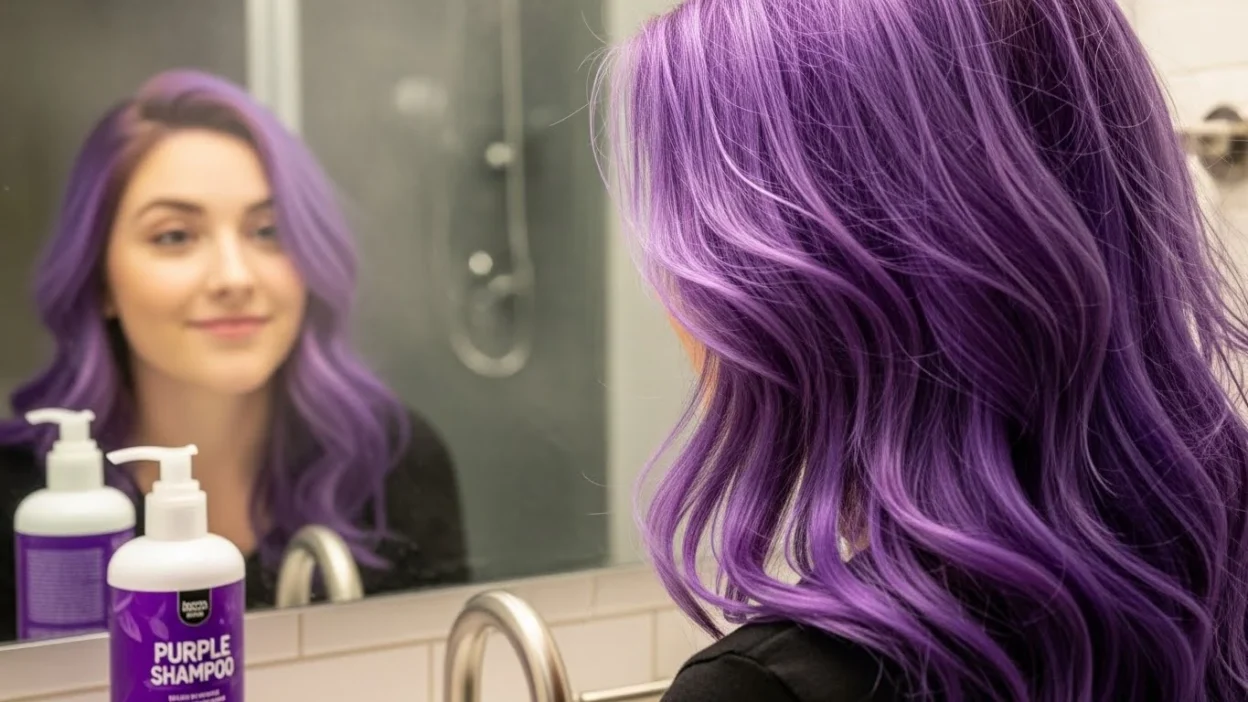
Brassy or yellow tones in blonde, silver, or gray hair can be frustrating, especially when you’ve spent time and money on coloring or maintaining your natural shade. This is where purple shampoo comes to the rescue.
But what does purple shampoo do exactly, and how can it help you achieve vibrant, salon-fresh hair at home? Purple shampoo is specially formulated with purple pigments that neutralize unwanted yellow or orange tones in light-colored hair.
By using it correctly, you can maintain a bright, cool-toned look, enhance shine, and reduce the need for frequent salon visits.
It works on a variety of hair types, including natural blonde, bleached, highlighted, gray, or silver hair, making it a versatile tool in your hair care routine.
In this article, we’ll explore the benefits of purple shampoo, how it works, the best ways to use it, and tips to avoid common mistakes, ensuring your hair always looks its best.
What Is Purple Shampoo?
Purple shampoo is a specially formulated hair care product designed to maintain and enhance blonde, gray, silver, or highlighted hair. Unlike regular shampoos, which focus primarily on cleansing, purple shampoo contains purple pigments that help neutralize unwanted yellow or brassy tones. This makes it an essential tool for anyone looking to keep light-colored hair looking fresh, vibrant, and salon-ready between coloring sessions.
The science behind purple shampoo is based on color theory. Yellow and orange tones are opposite purple on the color wheel, so the purple pigment counteracts these warm hues, leaving hair with a cooler, more natural shade. This is especially important for bleached or highlighted hair, which tends to develop brassy tones over time due to exposure to sunlight, hard water, or styling products.
There are different types of purple shampoo tailored to specific hair needs. Some are designed for natural blonde hair to prevent subtle yellowing, while others are formulated for gray or silver hair to enhance shine and vibrancy. Highlighted hair and balayage also benefit from purple shampoo, as it balances the overall tone and prevents uneven brassiness.
In addition to toning, many purple shampoos contain conditioning agents to reduce dryness and maintain softness. Using a purple shampoo regularly can help extend the life of your color, save money on salon visits, and ensure your hair stays bright, healthy, and beautiful.
What Does Purple Shampoo Do to Blonde Hair
Purple shampoo is a specially formulated hair product designed to maintain and enhance blonde hair. Whether your blonde is natural, highlighted, or fully bleached, maintaining its brightness can be challenging. Over time, blonde hair often develops unwanted yellow or brassy tones due to factors like sun exposure, heat styling, hard water, and environmental pollutants. Purple shampoo works as a toning solution that helps keep blonde hair looking cool, fresh, and vibrant.
The key function of purple shampoo is color correction. Based on the color wheel principle, purple sits opposite yellow, which means it neutralizes yellow tones. When applied to blonde hair, the violet pigments in the shampoo counteract brassiness and restore a cooler, more balanced shade. This helps maintain icy, platinum, or ash-blonde tones without the need for frequent salon visits.
Purple shampoo is especially beneficial for chemically treated blonde hair. Bleaching lifts natural pigment from the hair, often exposing warm undertones. Regular use of purple shampoo helps control these tones and extend the life of professional color treatments. It acts as a maintenance product between toning sessions, keeping hair looking salon-fresh for longer.
In addition to toning, many purple shampoos are formulated with nourishing ingredients. These may include moisturizing agents, proteins, or strengthening compounds that help repair damage caused by bleaching. Since blonde hair can become dry and fragile, using a purple shampoo with conditioning benefits supports overall hair health while correcting color.
However, it’s important to use purple shampoo correctly. Leaving it on for too long or using it too frequently may cause a temporary purple tint, especially on very light or porous hair. Most experts recommend using it once or twice a week, depending on how brassy the hair becomes. Proper application ensures balanced toning without over-depositing pigment.
Overall, purple shampoo plays a crucial role in maintaining blonde hair by neutralizing unwanted yellow tones, enhancing cool shades, and supporting hair health. Its targeted toning ability makes it an essential product for anyone wanting to keep their blonde hair bright, fresh, and beautifully balanced.
How Does Purple Shampoo Work?
The effectiveness of purple shampoo lies in its unique use of color theory. Hair that has been bleached, highlighted, or naturally light blonde can develop yellow or brassy tones over time. These warm tones occur due to chemical processes in the hair, sun exposure, or even minerals in water. Purple shampoo contains violet pigments, which are directly opposite yellow on the color wheel. This means the purple tones neutralize the yellow and orange hues, leaving hair looking cooler, brighter, and more natural.
When you lather purple shampoo onto damp hair, the pigments deposit onto the strands. The amount of pigment absorbed depends on how long the shampoo is left in the hair and the porosity of your strands. For example, bleached hair or highly porous hair may absorb pigments more quickly, producing noticeable toning results after just a few minutes. Hair that is less porous or naturally blonde may require repeated use over time to maintain a consistent, cool tone.
Purple shampoo works on different hair types. For blonde hair, it prevents yellowing; for silver or gray hair, it enhances brightness and avoids dullness; and for highlighted or balayage hair, it balances the overall tone, preventing uneven brassiness. Many formulations also include moisturizing or conditioning ingredients, so your hair remains soft, shiny, and manageable while toning.
By understanding how purple shampoo works, you can use it effectively to maintain your hair’s color, avoid unwanted warm tones, and keep your hair looking fresh and vibrant between salon visits.
What Does Purple Shampoo Do to Brown Hair?
Purple shampoo is widely known for its toning effects, but many people with brown hair wonder whether it works for them too. While it is most commonly associated with blonde or gray hair, purple shampoo can also have noticeable effects on brown hair, especially if it contains lighter highlights or brassy tones. Understanding how it works can help you decide whether it’s a useful addition to your hair care routine.
Purple shampoo works by neutralizing unwanted warm tones in the hair. It contains violet pigments that sit opposite yellow and orange tones on the color wheel. When applied to brown hair, particularly light brown or highlighted hair, it can reduce brassiness and create a cooler, more balanced shade. However, the effect is usually subtle compared to its impact on blonde hair.
For individuals with dark brown hair, purple shampoo may not create a dramatic change. Since darker hair has stronger underlying pigments, the violet tones may not be very visible. Still, if your brown hair has lighter streaks, balayage, or sun-faded sections, purple shampoo can help maintain a fresher, ashier appearance.
In hair maintenance routines, purple shampoo is often used once or twice a week instead of regular shampoo. Leaving it on for a few minutes allows the pigments to deposit properly. Overuse, however, can sometimes leave a slight purple tint on very light strands, so moderation is important.
Overall, purple shampoo helps brown hair by reducing brassiness and enhancing cooler tones, particularly in lighter or highlighted sections. While it won’t drastically change natural dark brown hair, it can improve tone balance and keep color-treated hair looking fresh and vibrant.
Benefits of Using Purple Shampoo
Using purple shampoo offers several key benefits for anyone with blonde, gray, silver, or highlighted hair. One of the main advantages is its ability to prevent brassiness and yellow tones. Over time, hair can develop unwanted warm hues due to sunlight, pollution, styling tools, or mineral-rich water. Purple shampoo neutralizes these tones, keeping hair looking fresh, bright, and vibrant.
Another benefit is that it helps maintain the overall hair color between salon visits. Bleached or highlighted hair requires frequent toning to stay cool and even. Regular use of purple shampoo extends the life of your color, saving both time and money. Silver or gray hair also benefits, as purple pigments enhance shine, prevent dullness, and give hair a soft, reflective glow.
Purple shampoo can also improve hair texture and appearance. Many formulas include conditioning agents that hydrate and soften hair, preventing dryness that can occur from bleaching or frequent coloring. This makes hair more manageable, reduces frizz, and enhances shine, leaving your locks looking healthier and smoother.
In addition, purple shampoo is versatile for different hair types. Whether your hair is natural blonde, platinum, gray, silver, or highlighted, it works to balance tone, enhance vibrancy, and maintain a polished look.
Overall, the consistent use of purple shampoo ensures your hair stays cool-toned, vibrant, and beautiful, allowing you to enjoy a salon-fresh look every day while protecting your investment in hair coloring or natural light tones.
How to Use Purple Shampoo Correctly
Using purple shampoo correctly is essential to get the best results without causing unwanted purple or gray tones. The first step is to choose the right shampoo for your hair type—blonde, gray, silver, or highlighted. Each formulation may have different pigment strengths, so picking one suited to your hair ensures optimal toning.
Start by wetting your hair thoroughly. Apply a generous amount of purple shampoo to your hair, focusing on areas where brassy tones are most noticeable, such as the roots, ends, or highlighted sections. Gently massage the shampoo into your hair to ensure even distribution.
Leave the shampoo on for the recommended time. For most hair types, 2–5 minutes is sufficient, but darker blonde or more porous hair may need a little longer. Avoid leaving it on too long, as this can result in a temporary purple tint. After the processing time, rinse your hair thoroughly to remove all pigments.
Follow with a hydrating conditioner or hair mask, as purple shampoo can be slightly drying due to its pigment content. This helps maintain softness, shine, and manageability.
Frequency of use depends on your hair’s needs. For blonde or highlighted hair, 1–2 times per week is usually enough. Silver or gray hair may benefit from 2–3 times per week to maintain brightness. Always monitor your hair’s response and adjust frequency accordingly.
By following these steps, you can maximize the benefits of purple shampoo, keep your hair cool-toned, and avoid common mistakes that reduce its effectiveness.
What Does Purple Shampoo Do to Orange Hair?
Purple shampoo is widely known for its ability to tone brassy hair, but many people wonder what it actually does to orange hair. When hair is lightened—whether through bleaching or highlighting—it can sometimes turn orange due to underlying warm pigments. Purple shampoo is designed to neutralize certain warm tones, but its effectiveness depends on the specific shade of brassiness present in the hair.
In color correction, purple sits opposite yellow on the color wheel. This means purple shampoo works best on yellow or pale brassy tones. If your hair has light orange undertones mixed with yellow, purple shampoo can slightly reduce the warmth and make the color appear cooler and more balanced. However, if the orange tone is deep or very vibrant, purple shampoo may not be strong enough to fully correct it.
For darker orange hair, blue shampoo is often more effective because blue neutralizes orange on the color wheel. In such cases, purple shampoo might only create a subtle toning effect rather than a dramatic change. Understanding the difference between yellow and orange brassiness helps determine whether purple shampoo is the right solution.
Using purple shampoo regularly can help maintain cooler blonde shades and prevent mild warmth from returning. It is usually applied once or twice a week, left on for a few minutes, and then rinsed out. Overuse may cause hair to appear slightly purple or dry, so moderation is important.
Overall, purple shampoo can help reduce light orange and yellow tones, but it is not a complete fix for deep orange hair. Choosing the right toning product based on your hair’s specific undertone will give the best results and help maintain a brighter, cooler finish.
Common Mistakes to Avoid
While purple shampoo is an excellent tool for maintaining blonde, silver, or highlighted hair, using it incorrectly can reduce its effectiveness or even cause unwanted results. One common mistake is leaving the shampoo on for too long. Over-processing can deposit too much pigment, leaving hair with a faint purple or gray tint, especially on porous or bleached strands. Always follow the manufacturer’s recommended timing.
Another frequent error is overusing purple shampoo. Using it every day can dry out hair and make it feel rough or brittle. For most hair types, 1–2 times per week is sufficient, while silver or gray hair may need 2–3 times weekly. Overuse doesn’t speed up toning—it can actually create uneven color.
Skipping conditioner or deep care treatments is also a mistake. Purple shampoos can slightly strip moisture from hair, so always follow up with a nourishing conditioner or mask to maintain softness, shine, and manageability.
Some people make the error of using purple shampoo on dark hair unnecessarily. The pigments are most effective on light-colored strands and have little effect on dark hair, meaning you could be wasting product or causing buildup without any benefit.
Finally, uneven application can result in patchy toning. Make sure to apply the shampoo evenly, concentrating on brassy areas, and massage it thoroughly through the hair.
By avoiding these mistakes, you can maximize the benefits of purple shampoo, keep your hair looking bright and cool-toned, and ensure it stays healthy, soft, and vibrant between salon visits.
Purple Shampoo for Different Hair Types
Purple shampoo is versatile, but its effects vary depending on your hair type. Understanding how to use it according to your hair ensures the best results.
Blonde Hair:
For natural or bleached blonde hair, purple shampoo is essential to prevent yellow or brassy tones. It helps maintain a cool, bright shade and enhances overall shine. Lighter shades may only require weekly use, while bleached hair can benefit from 1–2 times per week.
Gray or Silver Hair:
Gray and silver hair often develops a dull, yellowish tint over time. Purple shampoo enhances brightness, keeps silver tones reflective, and prevents hair from looking lifeless. For these hair types, 2–3 weekly applications may be necessary to maintain a vibrant look.
Highlighted or Balayage Hair:
Highlights can sometimes appear uneven or brassy. Purple shampoo balances tones, ensuring highlights look fresh and natural. Focus on areas where highlights are most prominent and adjust processing time based on hair porosity.
Curly or Textured Hair:
Curly hair can be prone to dryness, so it’s important to use hydrating formulas or follow up with a rich conditioner after purple shampoo. This prevents dryness while still toning brassy areas effectively.
Natural Hair:
Even naturally blonde hair can develop warm tones. Purple shampoo works subtly here, keeping the hair cool-toned without drastically altering its natural shade.
Alternatives and Complementary Products
While purple shampoo is highly effective for neutralizing yellow or brassy tones, there are several alternatives and complementary products that can enhance your hair care routine.
Blue Shampoo:
For brunettes or those with dark highlights, yellow tones may appear warmer or orange. Blue shampoo works similarly to purple shampoo but targets orange and brassy tones, balancing the color for a cooler, more natural look.
Hair Toners:
Professional toners, often applied in salons, provide a more intense correction than shampoo. They are ideal for correcting stubborn brassiness or for hair that has been heavily processed. Toners can be combined with purple shampoo to maintain results at home between salon visits.
Purple Conditioner or Mask:
Many brands offer conditioners and masks with purple pigments. These add extra toning power while moisturizing and repairing hair, making them perfect for dry or damaged strands. Using these after purple shampoo helps maintain color and hair health simultaneously.
Natural Remedies:
Some people opt for home remedies, like chamomile tea rinses for blonde hair, or apple cider vinegar to remove mineral buildup. While not as strong as purple shampoo, these methods can complement your routine and enhance overall hair brightness.
Regular Hair Care Products:
Maintaining healthy hair with hydrating shampoos, conditioners, and masks prevents dryness and ensures even pigment absorption from purple shampoo. Healthy hair tones better and looks shinier, making your color last longer.
Expert Tips and Tricks
To get the most out of purple shampoo, following some expert tips can make a big difference in maintaining vibrant, brassy-free hair.
Use on Damp Hair:
Purple shampoo works best when applied to thoroughly damp hair, allowing the pigments to distribute evenly along each strand. This ensures consistent toning and prevents patchy results.
Start with a Small Amount:
Begin with a small amount of shampoo and add more if needed. Applying too much at once can lead to excessive pigment deposition, which may leave hair with a slight purple tint.
Adjust Timing Based on Hair Porosity:
Hair that is porous or bleached absorbs pigment faster. Experts recommend starting with 2–3 minutes and adjusting up to 5 minutes if needed. Less porous hair may require longer application.
Follow with Conditioner or Mask:
Purple shampoo can slightly dry hair due to its pigment content. Using a hydrating conditioner or mask afterward restores moisture, softness, and shine, preventing brittle or frizzy hair.
Monitor Frequency:
Avoid daily use. For most hair types, 1–2 times per week is sufficient. Silver or gray hair may benefit from slightly more frequent use.
Patch Test Before Full Application:
Especially for first-time users, test on a small section of hair to see how your hair reacts. This prevents accidental over-toning.
Protect Hands and Clothing:
Purple pigments can stain, so wear gloves and rinse carefully to avoid staining towels or hands.
FAQs:
1. How often should I use purple shampoo?
For most hair types, 1–2 times per week is sufficient. Gray or silver hair may benefit from 2–3 times per week to maintain brightness. Overuse can cause dryness or a slight purple tint.
2. Can purple shampoo damage hair?
When used correctly, purple shampoo does not damage hair. However, frequent use without conditioning may dry the strands. Always follow with a hydrating conditioner or mask.
3. Does it work on natural blonde hair?
Yes. Even natural blonde hair can develop yellow tones over time. Purple shampoo helps neutralize these unwanted warm hues and keeps hair looking cool and vibrant.
4. Can it replace regular shampoo?
Purple shampoo should not replace your regular shampoo entirely. It is meant for toning purposes, while regular shampoo cleanses the hair and scalp. Use purple shampoo occasionally for best results.
5. Can it lighten hair?
No, purple shampoo does not lighten hair. It only neutralizes yellow or brassy tones, keeping the color cool and bright.
6. Can men use purple shampoo?
Absolutely. Purple shampoo works on any light-colored hair, regardless of gender, including gray, silver, or blonde hair.
Conclusion:
Purple shampoo is a simple yet powerful solution for anyone looking to maintain bright, cool-toned hair.
If you have blonde, gray, silver, or highlighted hair, it works by neutralizing unwanted yellow or brassy tones, keeping your color vibrant and fresh between salon visits.
Using it correctly following proper timing, frequency, and conditioning afterward ensures the best results without causing dryness or unwanted purple tints.
In addition to preventing brassiness, purple shampoo can enhance shine, soften hair, and extend the life of your hair color.
Understanding your hair type and adjusting your routine accordingly, along with avoiding common mistakes, allows you to achieve a professional, polished look at home.
Combined with complementary products like purple conditioners, masks, or toners, it can become an essential part of your hair care routine.
Discover More Articles
- What Does It Feel Like Outside? Exploring Sensations for 2026
- What Does Toner Do for Your Skin According to Dermatologists
- What Does Primer Do and Why You Should Use It 2026

I’m the author behind Jokesattack.com, where I share the funniest jokes, puns, and memes to make your day brighter with laughter. 😄🎉