
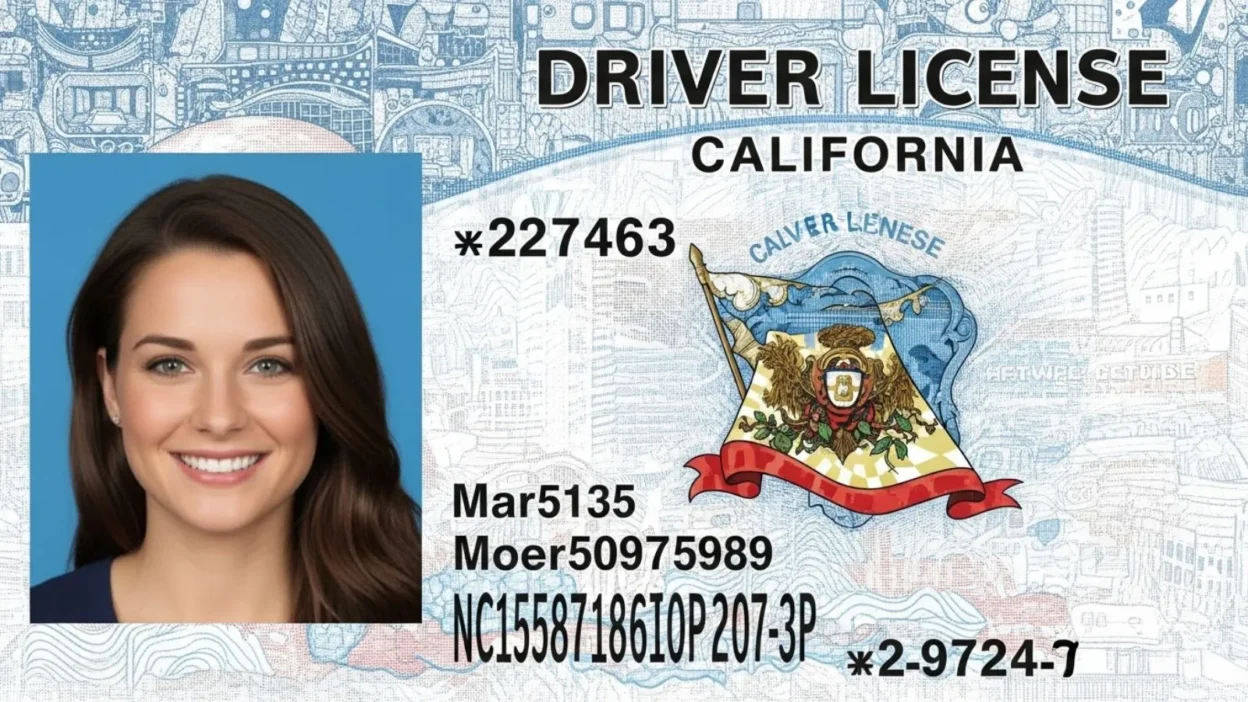
If you’ve ever wondered what a REAL ID looks like, you’re not alone. With the REAL ID Act now fully enforced for domestic air travel and federal facility access, understanding the appearance and features of this federally approved ID is more important than ever.
Unlike a standard driver’s license or state ID, a REAL ID includes distinct visual cues, most notably the gold or black star in the top right corner, signaling its compliance with federal security standards.
Each state may have slight design variations, but the star remains universal. Beyond appearances, a REAL ID is essential for TSA verification, boarding flights, and entering certain government buildings.
Knowing how to identify a REAL ID quickly can save you time and prevent travel disruptions. In this guide, we’ll break down the key REAL ID features, explain how it differs from a standard ID, and provide tips for spotting it instantly.
What Is a REAL ID?
A REAL ID is a federally compliant form of identification issued by state governments in the United States. It was established under the REAL ID Act of 2005 to set nationwide standards for state-issued driver’s licenses and ID cards. The main goal of this program is to enhance security and prevent identity fraud, ensuring that IDs meet federal verification requirements.
Unlike a standard state ID or driver’s license, a REAL ID is required for certain federal purposes. Most importantly, starting May 7, 2025, you will need a REAL ID—or another acceptable form of federal identification—to board domestic flights within the U.S. or enter federal buildings, such as courthouses and military facilities.
A REAL ID looks similar to a regular ID, but it includes specific visual features that indicate federal compliance. The most noticeable feature is the gold or black star located in the top right corner of the card. While states may vary slightly in design, the star symbol is universal. Other security features may include holograms, microprinting, and ghost images to help prevent forgery.
Obtaining a REAL ID requires verification of your identity, Social Security number, and proof of residency. Understanding the differences between a REAL ID and a standard license is crucial for anyone traveling by air or accessing federal facilities. Knowing what to look for ensures you remain compliant and avoid unnecessary travel disruptions.
Key Visual Features of a REAL ID
Understanding what a REAL ID looks like is essential for quickly identifying it. While each state has slightly different designs, all REAL IDs share certain federally mandated features that distinguish them from standard driver’s licenses or ID cards.
The most recognizable feature is the gold or black star located in the top right corner of the card. This star indicates that the ID meets the REAL ID Act requirements and is valid for federal purposes, such as boarding domestic flights or entering federal buildings. The star is the universal marker that helps anyone quickly verify compliance.
Other visual features include microprinting, fine lines, and intricate background designs that prevent counterfeiting. Some REAL IDs also include holographic images or ghost photos—smaller versions of the cardholder’s photo embedded in the card design. These features are designed to enhance security and make forgery more difficult.
Additionally, REAL IDs often display standard card information, such as your full name, date of birth, expiration date, and issuing state, but sometimes with slight layout changes to accommodate security markings. While colors and patterns vary by state, the star and security elements remain consistent, making it easy to differentiate a REAL ID from a regular ID.
By knowing these key features of a REAL ID, you can ensure your identification is compliant and ready for travel or federal access, avoiding last-minute issues at TSA checkpoints or government facilities.
REAL ID vs Standard Driver’s License
Many people are unsure how to distinguish a REAL ID from a standard driver’s license or state ID. While both forms of identification serve as proof of identity, there are key differences that set REAL IDs apart, especially for federal purposes.
The most obvious difference is the gold or black star in the top right corner of a REAL ID. This star signals that the ID complies with the REAL ID Act of 2005 and is valid for boarding domestic flights or entering federal buildings. Standard driver’s licenses do not feature this star, which means they cannot be used for federal travel unless accompanied by another form of identification.
In addition to the star, REAL IDs often include enhanced security features, such as microprinting, holograms, and ghost images, designed to prevent fraud. Standard IDs may have some security elements, but they are not required to meet federal standards.
Layout differences can also help you identify a REAL ID. Some states adjust the placement of the photo, text, or background design to accommodate security markings, while standard IDs typically maintain a simpler format.
Functionally, the key difference lies in usage: a standard ID works for everyday purposes, such as driving or proving age, but cannot replace a REAL ID for TSA verification or federal access. Understanding these distinctions ensures that you are prepared for travel and compliant with federal regulations, preventing unnecessary delays at airports or government facilities.
How to Identify a REAL ID Quickly
Knowing how to identify a REAL ID quickly can save time at airports, federal buildings, and other secure locations. While each state may have slightly different designs, the key visual and security features remain consistent across the country.
The first thing to look for is the gold or black star in the top right corner of the card. This is the universal marker of REAL ID compliance and the easiest way to tell it apart from a standard driver’s license or state ID. If the card does not have a star, it cannot be used for federal purposes.
Next, check for enhanced security features. Many REAL IDs include microprinting, which is tiny text that is difficult to replicate. Some cards have holographic images or a smaller ghost photo of the cardholder embedded in the design. These elements help prevent counterfeiting and confirm authenticity at a glance.
Additionally, verify the layout and card information. REAL IDs often include the cardholder’s full name, date of birth, expiration date, and issuing state, sometimes with subtle background patterns or raised elements. These are less prominent or missing on standard IDs.
For travelers, a quick checklist is helpful: look for the star, check for security markings, and confirm the expiration and issuing state. By paying attention to these features, you can confidently identify a REAL ID, avoid travel delays, and ensure compliance with federal regulations.
Obtaining a REAL ID What You Need
Getting a REAL ID requires more than just visiting the DMV. Because it is a federally compliant form of identification, the application process is stricter than obtaining a standard driver’s license or ID.
First, you will need proof of identity. This usually includes a valid passport, birth certificate, or permanent resident card. Next, you must provide your Social Security number, which helps verify your citizenship or legal residency. Finally, you need proof of residency, such as a utility bill, lease agreement, or bank statement, to show that you live in the state where you are applying.
Eligibility for a REAL ID varies slightly by state, but generally, applicants must meet the minimum age for obtaining a driver’s license or ID. Minors may also apply, but parental or guardian documentation is required.
The application process typically involves visiting your local DMV in person. You may need to fill out forms, provide original documents, and have your photo taken. Some states allow appointments to streamline the process. Fees vary depending on the state and the type of ID or license you are obtaining.
Once your application is approved, your REAL ID will be issued with all the federal security features, including the gold or black star. Knowing what documents are required in advance can make the process smoother and ensure that you leave the DMV with a compliant REAL ID card ready for travel and federal identification purposes.
Why REAL ID Matters
A REAL ID is more than just a driver’s license—it is a federally approved form of identification that plays a critical role in travel and security. With the REAL ID Act now fully enforced, having a REAL ID ensures that you can board domestic flights and access certain federal facilities without issues.
The most important reason REAL IDs matter is for air travel within the United States. Starting May 7, 2025, the Transportation Security Administration (TSA) requires travelers to present a REAL ID or another acceptable form of federal identification, such as a passport. Standard driver’s licenses without the gold or black star will no longer be sufficient for boarding flights.
REAL IDs are also required for entry into federal buildings, including courthouses, military installations, and certain government offices. Without a REAL ID, access to these secure locations may be restricted.
Beyond travel and access, REAL IDs enhance security and identity verification. They include federal security features like holograms, microprinting, and ghost images, making them harder to forge than standard IDs. This reduces the risk of identity theft and ensures that the ID accurately represents the cardholder.
For anyone planning to travel or enter federal facilities, a REAL ID is no longer optional—it is essential. Understanding why REAL ID matters helps individuals stay compliant with federal regulations, avoid delays at airports, and confidently navigate situations where proof of identity is critical.
REAL ID in Popular Use Cases
A REAL ID is not just a government requirement—it is a practical tool for everyday situations and travel. Understanding the common scenarios where a REAL ID is needed can help you plan ahead and avoid complications.
The most prominent use case is domestic air travel. Starting May 7, 2025, the TSA requires all travelers to present a REAL ID or another acceptable form of federal identification to board flights within the United States. Standard driver’s licenses without the gold or black star will no longer be accepted, making a REAL ID essential for anyone who flies frequently.
REAL IDs are also required for accessing federal facilities, including courthouses, military bases, and certain federal offices. Without a REAL ID, entry to these secure locations may be denied, which can impact work, legal matters, or official business.
Beyond travel and government access, a REAL ID may also serve as a strong form of identification for banking, age verification, and other state-specific purposes. While standard IDs work for driving and general identification, a REAL ID provides federal compliance and enhanced security features, including holograms, microprinting, and ghost images.
For families, travelers, and anyone who interacts with federal systems, knowing when to use a REAL ID is critical. By carrying a REAL ID for flights, federal building access, and other official purposes, you ensure smooth verification, avoid delays, and maintain compliance with federal regulations.
FAQs:
Can I still use a standard driver’s license?
Yes, a standard license works for driving and most everyday purposes. However, it cannot be used for boarding domestic flights or entering federal facilities once REAL ID enforcement is in effect.
Do all states issue REAL IDs?
Most U.S. states and territories issue REAL IDs, but some may have different timelines or processes. Always check your state DMV’s website for specific guidelines.
Can minors get a REAL ID?
Yes, minors can obtain a REAL ID if they meet state requirements. Parental or guardian documentation is usually required, along with proof of identity and residency.
Is a REAL ID mandatory for everyone?
Not everyone is required to get a REAL ID, but it is necessary for federal travel and building access. Standard IDs are still valid for driving and other non-federal purposes.
What should I do if my REAL ID is lost or stolen?
Report it to your state DMV immediately. You will need to provide identification documents to obtain a replacement. Some states offer expedited replacement options for travelers.
Conclusion:
Understanding what a REAL ID looks like and how it differs from a standard driver’s license is essential for compliance with federal regulations.
The gold or black star, along with security features like holograms and microprinting, makes it easy to identify and ensures authenticity.
REAL IDs are required for domestic air travel, access to federal buildings, and other secure locations, making them an important form of identification for many Americans.
Obtaining a REAL ID involves verifying your identity, Social Security number, and residency through your state DMV.
While not everyone is legally required to have one for daily activities, having a REAL ID provides peace of mind and prevents travel delays or denied access to federal facilities.

I’m the author behind Jokesattack.com, where I share the funniest jokes, puns, and memes to make your day brighter with laughter. 😄🎉