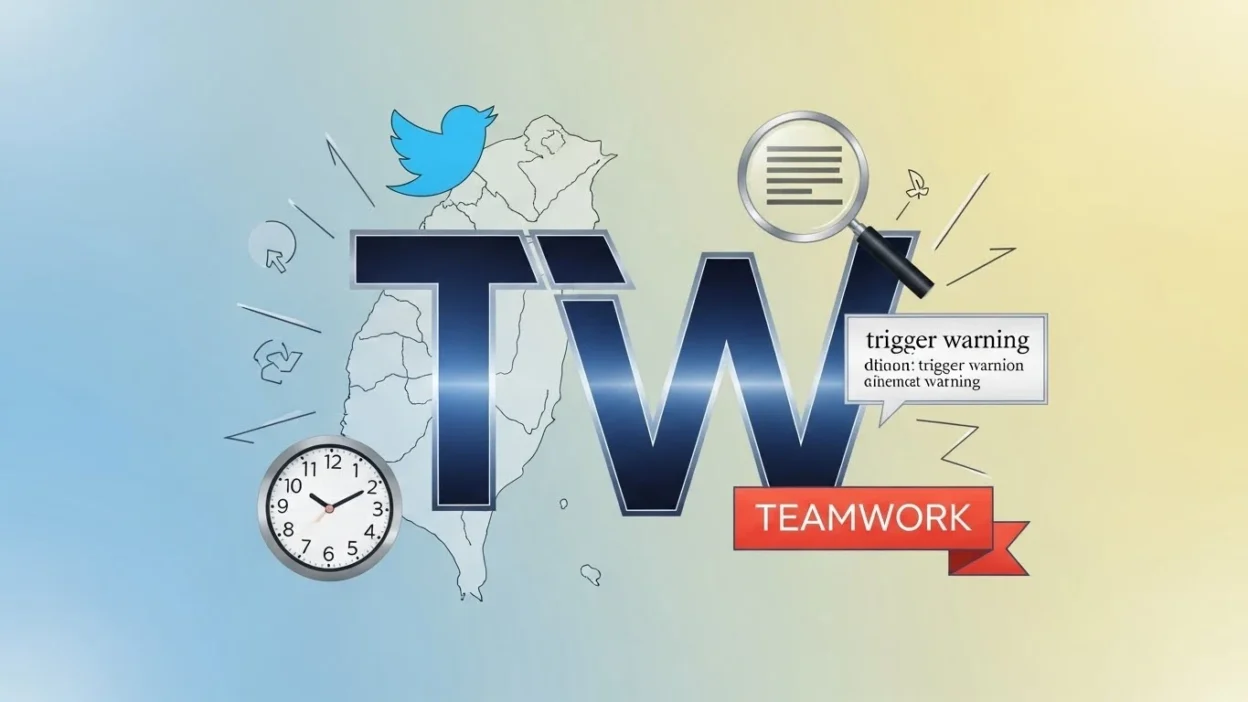
In today’s fast-paced digital world, abbreviations and acronyms have become a part of everyday communication. One such term that often confuses people is “TW.”
You might see it in texts, social media posts, online forums, or even in gaming chats, and its meaning can vary depending on the context. Some might think it only refers to Twitter, while others use it as a warning for sensitive content.
With multiple interpretations, it’s easy to misread messages or miss important cues. This article will break down what TW means, its origins, and the different ways it’s used across platforms.
From texting slang to social media shorthand, gaming lingo, and content warnings, you’ll learn everything you need to understand TW correctly.
By the end, you’ll never be puzzled when you see this popular abbreviation again, and you’ll know how to use it appropriately in your own messages.
TW Quick Answer
The abbreviation “Trigger Warning ” is widely used online, but its meaning depends entirely on the context. In general, Trigger Warning can stand for “Trigger Warning,” “Twitter,” “Team Win,” or “Teamwork.” Each meaning has its own place in digital communication, so understanding the situation is key to interpreting it correctly.
- Trigger Warning (Trigger Warning): This is one of the most common uses today. People add Trigger Warning at the beginning of posts, articles, or videos to alert others about potentially distressing or sensitive content. For example, a social media post might start with “Trigger Warning : discussion about mental health” to give readers a heads-up.
- Twitter (Trigger Warning): Sometimes, Trigger Warning is simply shorthand for the social media platform Twitter. You might see it in posts like “Check my latest Trigger Warning post”, meaning the user is referring to their tweet on Twitter.
- Gaming (Team Win/Teamwork): In online games, Trigger Warning often means Team Win or Teamwork, used to celebrate success or coordinate strategies. For instance, a gamer might type “Great job, Trigger Warning !” after a victory.
- Other Professional Uses: In certain professional or technical contexts, Trigger Warning can mean Time Window or Total Weight, though these are less common in casual texting.
The Origin of TW
The abbreviation “Trigger Warning W” has a relatively recent history, emerging alongside the rise of digital communication and social media. Like many internet acronyms, it was created to save time while typing and to quickly convey a message without using long sentences. Its origins are tied to different contexts, which explains why it has multiple meanings today.
The use of Trigger Warning as “Trigger Warning” became popular in online communities during the 2010s, especially on platforms like Tumblr, Twitter, and Reddit. Content creators began adding Trigger Warning at the start of posts, videos, or discussions to warn readers about potentially distressing material, such as discussions about mental health, trauma, or sensitive social issues. This practice aimed to create a safer and more considerate online environment.
Meanwhile, Trigger Warning as “Twitter” likely appeared naturally as users sought a quick shorthand for the platform’s name in conversations and posts. It is especially common in casual messages, tweets, and social media bios.
In gaming communities, Trigger Warning evolved as a shorthand for Team Win or Teamwork, reflecting the collaborative nature of online multiplayer games. Players adopted it to celebrate victories or emphasize coordination during matches.
Over time, TW’s multiple meanings spread across texting, social media, gaming, and even professional contexts. Today, understanding TW requires paying attention to the platform, audience, and content type. Its versatility is what makes it both useful and potentially confusing.
Common Meanings of TW
The abbreviation TW has several meanings, and understanding each depends on the context. Here are the most common uses you’ll encounter online:
- Trigger Warning (TW): This is perhaps the most widely recognized meaning today. People use TW to alert others about content that may be emotionally triggering or sensitive. For example, a post about mental health might start with “TW: discussion about anxiety”, giving readers a heads-up so they can choose whether to engage. Trigger warnings have become essential in online communities for promoting awareness and empathy.
- Twitter (TW): Sometimes, TW is simply shorthand for the social media platform Twitter. For instance, someone might say, “Check my latest TW”, meaning they want you to see their recent tweet. This use is most common in casual online conversations, especially on Instagram, TikTok, or text messages.
- Gaming (Team Win or Teamwork): In online gaming communities, Trigger Warning often stands for Team Win or Teamwork. Players use it to celebrate a victory or highlight cooperation in multiplayer games. For example, after completing a challenging mission, a player might type, “Great job, Trigger Warning !”, praising the team’s effort.
- Professional or Technical Contexts: Less commonly, Trigger Warning can stand for Time Window, Total Weight, or Technical Work, depending on the industry. These uses are generally seen in logistics, engineering, or project planning.
TW in Texting
In texting, Trigger Warning is a versatile abbreviation that can mean different things depending on the conversation. The two most common texting meanings are Trigger Warning and Twitter, but context is everything.
When used as Trigger Warning, people add Trigger Warning at the beginning of a message to alert the recipient about sensitive topics. For example, someone might text: “Trigger Warning: I need to talk about a stressful situation at work”. This gives the reader a chance to prepare emotionally or skip the message if it may be upsetting. Texting TW in this way is especially common among friends, online support groups, or communities discussing mental health, trauma, or other sensitive topics.
On the other hand, Trigger Warning can be shorthand for Twitter in casual texting. For instance, a friend might say: “Did you see my Trigger Warning?”, meaning they want you to check their latest tweet. This usage is informal and often appears when discussing social media posts quickly.
It’s important to note that texting is less formal than professional emails, so Trigger Warning can also carry other informal meanings, such as Team Win or Teamwork among gamers or sports enthusiasts who chat via messaging apps.
To use TW correctly in texting, always consider the relationship with the recipient and the topic. Misinterpreting it can lead to confusion—for example, assuming TW always means Twitter could make a serious message seem trivial. Context clues in the conversation usually reveal the intended meaning.
What Does TW Mean in Jewelry?
When shopping for fine jewelry, you may come across the term “TW” written next to the carat weight of a piece. Many buyers wonder what it means and whether it affects the value of the jewelry. In simple terms, TW stands for “Total Weight,” and it is most commonly used to describe the combined weight of all diamonds or gemstones in a piece. Understanding this term is important because it helps you compare jewelry items accurately and make informed purchasing decisions.
In diamond jewelry, TW usually refers to the total carat weight of all the diamonds combined. For example, if a ring contains several small diamonds, their individual weights are added together to calculate the total weight. This means a ring labeled as 1.00 TW may include multiple smaller stones rather than one single 1-carat diamond. The overall sparkle can be impressive, but the value may differ compared to a single large diamond of the same weight.
TW is commonly seen in engagement rings, wedding bands, earrings, and tennis bracelets. Retailers use this measurement to give buyers a clear understanding of how much gemstone material is included in the design. However, carat weight alone does not determine quality. Factors such as cut, clarity, color, and setting also play a major role in the beauty and price of the jewelry.
It is also important to note that TW can apply to gemstones other than diamonds. For example, sapphire or ruby jewelry may also list total weight to show the combined carat value of all stones. Always read product descriptions carefully to understand what stones are included and how the weight is distributed.
Overall, TW in jewelry simply means total carat weight of all gemstones combined. Knowing this term helps buyers compare pieces more accurately and make smarter purchasing decisions, ensuring they choose jewelry that matches both their style and budget.
TW in Social Media
On social media platforms, Trigger Warning is a common abbreviation, but its meaning varies depending on the context and platform. The two most frequent uses are Trigger Warning and Twitter, although gaming and community-specific meanings also appear occasionally.
When used as a Trigger Warning, Trigger Warning appears at the start of posts, captions, or threads to alert viewers about sensitive content. For example, a Twitter or Instagram post might begin with “Trigger Warning: discussion about eating disorders”. This practice allows users to engage with content safely, giving them the option to skip posts that may be emotionally challenging. Social media communities, especially those focusing on mental health, social justice, or trauma awareness, widely use this abbreviation.
As shorthand for Twitter, Trigger Warning is often used in casual conversations and posts. Users may write: “Check out my latest Trigger Warning ”, meaning they want followers or friends to see their recent tweet. It can also appear in captions like “Link in Trigger Warning ” to direct people to a tweet for more information.
In niche online communities, Trigger Warning can also refer to Team Win or Teamwork, particularly in gaming groups on platforms like Discord or Reddit. For instance, a gamer might post “Trigger Warning on last night’s match!” to celebrate a team victory.
Understanding Trigger Warning on social media requires paying attention to the platform, the audience, and the topic. Misreading it can lead to confusion, especially when the abbreviation has both casual and serious uses. Context is always the key to decoding TW correctly.
What Does TW Mean in Diamonds?
When shopping for diamond jewelry, you may notice the abbreviation “TW” listed alongside the carat weight. Many buyers wonder what this term actually means and whether it affects the value of the piece. In the diamond industry, clarity and accurate measurements are essential, so understanding these small details can make a big difference. TW is a common term used by jewelers, especially for rings, earrings, and bracelets that feature multiple stones. Knowing what it represents helps buyers make informed decisions and compare jewelry pieces more confidently.
In diamonds, TW stands for “Total Weight” or “Total Carat Weight.” This means the combined weight of all the diamonds in a piece of jewelry rather than the weight of a single stone. For example, if a ring has several small diamonds that together weigh one carat, it will be described as 1.00 TW. This does not necessarily mean there is one large one-carat diamond; instead, it indicates the total weight of all diamonds included.
Understanding TW is important when evaluating value and appearance. A piece with 1.00 TW made up of many small diamonds may look different from a ring featuring a single one-carat diamond. Larger individual diamonds are usually rarer and more expensive per carat compared to multiple smaller stones of the same combined weight. Therefore, buyers should always check whether the listing refers to total weight or a single center stone.
Retailers commonly use TW in product descriptions for engagement rings, wedding bands, and fashion jewelry. It helps standardize measurements and ensures transparency when comparing options. However, price is not determined by weight alone. Other factors such as cut, color, clarity, and overall craftsmanship also play a significant role in determining the final cost and brilliance of the jewelry.
Additionally, some listings may use “CTW,” which stands for “Carat Total Weight.” This term has the same meaning as TW and is often used interchangeably. Being familiar with both abbreviations can prevent confusion while shopping online or in stores. Understanding these details empowers buyers to ask the right questions and choose pieces that truly match their expectations and budget.
Overall, TW in diamonds simply refers to the total combined weight of all diamonds in a jewelry piece. While it is an important measurement, it should be considered alongside other quality factors. By understanding what TW means, buyers can shop smarter, compare jewelry accurately, and feel more confident in their purchasing decisions.
TW in Gaming and Online Communities
In gaming and online communities, TW takes on entirely different meanings from social media or texting. The most common uses in these contexts are Team Win and Teamwork, which reflect collaboration and achievements in multiplayer games.
Team Win (TW): Gamers often type TW after a victory to celebrate the success of their team. For example, after winning a match in an online game like Fortnite or League of Legends, a player might write: “TW! We finally beat the boss!”. This use highlights the team’s accomplishment and fosters a sense of camaraderie among players.
Teamwork (TW): Sometimes, TW is used to emphasize good collaboration. In competitive or cooperative games, players may say: “Great TW, everyone!”, acknowledging effective coordination and strategy. This encourages positive communication and motivates team members for future matches.
Beyond gaming, TW can also appear in online forums and community chats as shorthand for quick communication. For instance, Discord servers often use TW when discussing achievements or coordinating events. In these cases, the meaning is generally understood by regular community members, so context is critical.
It’s important to note that TW in gaming is very different from its use as a Trigger Warning or Twitter abbreviation. Misinterpreting it can lead to confusion—imagine seeing TW in a serious discussion and assuming it’s about sensitive content rather than celebrating a victory!
What Does TW Mean in Crochet?
Crochet patterns often include abbreviations that can be confusing for beginners and even intermediate crafters. One common abbreviation you might come across is “TW.” Understanding what TW means in crochet is important because using the correct stitch or technique ensures your project turns out as expected. Like many crochet terms, its meaning depends on the pattern and designer, so context plays a key role.
In most crochet patterns, TW stands for “Turning Work.” This instruction tells you to flip or rotate your project so you can begin working on the next row. After completing a row of stitches, patterns often say something like “Ch 1, TW,” meaning you should chain one stitch and then turn your work before continuing. Turning the work keeps your rows even and maintains the correct shape of your piece.
In some cases, TW can also refer to “Twist” or “Tweed,” especially in specialty or decorative patterns. For example, a designer may use TW to indicate a twisted stitch technique that adds texture to the fabric. However, this usage is less common than “Turning Work.” Always check the abbreviation key provided at the beginning of a pattern to confirm the intended meaning.
Understanding TW helps improve your confidence when reading crochet instructions. Clear knowledge of abbreviations prevents mistakes and saves time spent undoing rows. As you continue crocheting, becoming familiar with common shorthand terms like TW will make patterns easier to follow and projects more enjoyable.
Overall, TW in crochet most commonly means “Turning Work,” guiding you to rotate your piece and begin a new row. By learning pattern abbreviations and checking the designer’s notes, you can crochet more smoothly and complete projects with greater accuracy and satisfaction.
What Does TW Mean in Dandy’s World?
If you’ve been playing or watching content about Dandy’s World, you may have come across the term “TW” and wondered what it means. In online gaming communities, abbreviations are commonly used to communicate quickly, and understanding them helps players stay connected and informed. In Dandy’s World, “TW” usually stands for “Trigger Warning.” It is used to alert players about content that may be sensitive, intense, or emotionally disturbing.
In the context of Dandy’s World, a Trigger Warning is often shared before discussions, videos, or gameplay segments that include darker themes, loud sounds, flashing visuals, or emotionally heavy scenes. Since the game can include surprising or unsettling moments, players use “TW” to prepare others in advance. This creates a safer and more respectful gaming environment.
Content creators and streamers who focus on Dandy’s World also use “TW” in captions, descriptions, or live chats. For example, before showing a dramatic scene or intense gameplay moment, they might add “TW” so viewers are aware of what is coming. This practice helps build trust between creators and their audience.
In online communities such as Discord servers, forums, or social media groups dedicated to Dandy’s World, “TW” may appear before posts discussing sensitive topics related to the game. It acts as a courtesy, allowing members to decide whether they want to continue reading or watching.
Overall, in Dandy’s World, “TW” most commonly means Trigger Warning. Understanding this abbreviation helps players navigate conversations more confidently and ensures a more thoughtful and inclusive gaming experience for everyone involved.
TW as Trigger Warning
One of the most important and widely recognized uses of TW today is Trigger Warning. This meaning is especially common in online communities, social media, blogs, and mental health discussions. A Trigger Warning signals that the content ahead may cause emotional distress or remind someone of past trauma.
For example, a social media post might start with: “TW: discussion about domestic abuse” or “TW: graphic content ahead”. This simple abbreviation helps viewers decide whether they are emotionally prepared to read or engage with the content. It has become a vital tool for promoting sensitivity, awareness, and respect in digital spaces.
Trigger Warning as a Trigger Warning is used in many contexts, including:
- Articles and blog posts about mental health, trauma, or abuse.
- Videos and livestreams with graphic or sensitive content.
- Social media threads discussing emotionally heavy topics.
Using Trigger Warning appropriately is crucial. Always place it at the start of a post, message, or video, so readers see it before encountering sensitive material. Misusing Trigger Warning can lead to confusion or reduce its effectiveness. For instance, using it casually in a gaming context could mislead people into thinking the content is sensitive rather than celebratory.
In short, Trigger Warning as Trigger Warning demonstrates how digital abbreviations can carry serious, thoughtful meanings. It shows the importance of context in online communication, helping communities foster empathy, respect, and awareness for sensitive topics.
How to Use TW Correctly
Using Trigger Warning correctly is essential to avoid confusion, as the abbreviation has multiple meanings depending on the context. Whether you’re texting, posting on social media, or chatting in gaming communities, the key is clarity and appropriateness.
- Trigger Warning (Trigger Warning):
If you are posting content that may be emotionally sensitive, place TW at the beginning of the post or message. For example:
- “Trigger Warning: discussion about depression”
- “Trigger Warning: graphic content ahead”
This alerts your audience and shows respect for their emotional well-being. Avoid using it casually or jokingly in this context, as it may diminish its importance.
- Twitter (Trigger Warning):
When using Trigger Warningas shorthand for Twitter, make sure your audience understands you’re referring to the platform. Examples include:
- “Check my latest TW”
- “Link in TW for details”
This use is informal and works best in casual conversations or social media discussions.
- Gaming (Team Win/Teamwork):
In gaming chats, TW can celebrate victories or teamwork. For instance:
- “Great TW on that mission!”
- “TW! We nailed it!”
Always ensure your teammates or audience are familiar with this usage to prevent misinterpretation.
- Professional or Technical Use:
If TW refers to Time Window, Total Weight, or other professional abbreviations, provide context so it’s clear. Example:
Common Misunderstandings of TW
Because TW has multiple meanings, it’s easy for people to misinterpret it. Misunderstanding TW can cause confusion, miscommunication, or even unintended offense. Here are some of the most common mistakes:
- Assuming TW Always Means Trigger Warning:
Many people first encounter TW as a Trigger Warning and automatically apply this meaning everywhere. For example, seeing “TW!” in a gaming chat might confuse someone who thinks it’s a warning, when in fact the player is celebrating a Team Win. - Confusing TW with Twitter:
In casual texting or social media posts, TW may refer to Twitter. Misreading this meaning could lead someone to ignore a message or think the post is sensitive content. For example, “Check my TW” simply directs you to a tweet, not a warning. - Overlooking Context in Gaming:
Gamers often use TW for Team Win or Teamwork, which is very different from Trigger Warning. Misinterpreting this could make celebratory messages seem serious or inappropriate. Example: “TW on that match!” is positive, not alarming. - Assuming a Single Meaning in Professional Use:
In business or technical communication, TW can mean Time Window, Total Weight, or Technical Work. Ignoring context may result in logistical or operational mistakes. Example: “TW for shipment is 48 hours” is unrelated to social media or gaming.
Tip:
Always consider the platform, audience, and surrounding text to understand TW correctly. If unsure, ask or look for clarification. Paying attention to context ensures accurate interpretation and prevents misunderstandings.
Other Possible Meanings of TW
While most people encounter TW as Trigger Warning, Twitter, or gaming shorthand, it also has several less common meanings in professional, technical, and niche contexts. Understanding these can help prevent confusion when you see TW in different settings.
- Time Window (TW):
In logistics, project management, or scheduling, TW often refers to a Time Window. For example:
- “The TW for this delivery is 48 hours”
- “Ensure tasks are completed within the TW”
Here, TW sets the timeframe for tasks or events, helping teams coordinate efficiently.
- Total Weight (TW):
In shipping, fitness, or industrial contexts, TW can stand for Total Weight. For instance:
- “TW of this package is 120 kg”
- “Calculate the TW before shipment”
This usage is practical and important in technical communication.
- Technical Work (TW):
Some professional or engineering environments use TW to mean Technical Work, referring to specialized tasks or assignments. Example:
- “Complete the TW report by Friday”
- “The TW includes system diagnostics and testing”
- Other Niche Uses:
Depending on the community, TW can have unique meanings. For example, in fan communities, TW may appear in roleplay or story contexts, while in specialized software, it could refer to specific commands or settings.
Even though these meanings are less common than Trigger Warning or Twitter, they show how versatile TW is. Always consider the audience, platform, and context to decode the abbreviation correctly. When in doubt, clarification is better than assumption, especially in professional or technical scenarios.
FAQs:
1. What does TW mean in texting?
In texting, TW commonly stands for Trigger Warning or Twitter, depending on the conversation. It can also mean Team Win in gaming messages. Context is key to interpreting it correctly.
2. Is TW only used online?
While TW is most common in digital communication, it can appear in professional emails, reports, or technical documents, where it might mean Time Window, Total Weight, or Technical Work.
3. How do I know which meaning of TW is correct?
Look at the platform, audience, and surrounding text. For example, on a mental health blog, TW likely means Trigger Warning, whereas in a gaming chat, it usually means Team Win or Teamwork.
4. Can TW have multiple meanings in one sentence?
Yes, although it’s rare. Usually, context will clarify which meaning is intended. When ambiguity exists, writers often define TW the first time they use it.
5. Why do people use abbreviations like TW?
Abbreviations save time, make communication faster, and are part of internet and texting culture. They allow users to convey complex ideas in just a few characters.
Conclusion
The abbreviation TW is a versatile and widely used term in digital communication, but its meaning can vary significantly depending on context.
From Trigger Warning in sensitive content discussions, to Twitter shorthand, and even Team Win or Teamwork in gaming communities, TW demonstrates how one simple abbreviation can carry multiple interpretations.
Additionally, in professional and technical settings, TW can mean Time Window, Total Weight, or Technical Work, highlighting its adaptability across different fields.
Understanding TW correctly requires careful attention to the platform, audience, and surrounding context.
Misreading it can lead to confusion, miscommunication, or unintended offense, especially in sensitive topics or collaborative environments.
For example, a message labeled TW in a mental health forum is vastly different from a celebratory TW in a gaming chat.
To use TW effectively, always consider its meaning before posting, texting, or commenting. For clarity, especially in professional or mixed audience scenarios, it’s helpful to define TW the first time it appears.
This ensures your message is understood and avoids potential misunderstandings.
In conclusion, TW is more than just an abbreviation it’s a reflection of modern digital communication, showing how context, culture, and audience shape the way we share information online.
Discover More Articale
- What Does ChatGPT Stand For : A Complete Explanation 2026
- What Does ACH Stand for in Banking for 2026
- What Does CGI Stand for and Why It Matters for 2026

I’m the author of Jokesattack.com, where humor meets creativity! Bringing you nonstop laughter with the best jokes, memes, and funny moments every day.