
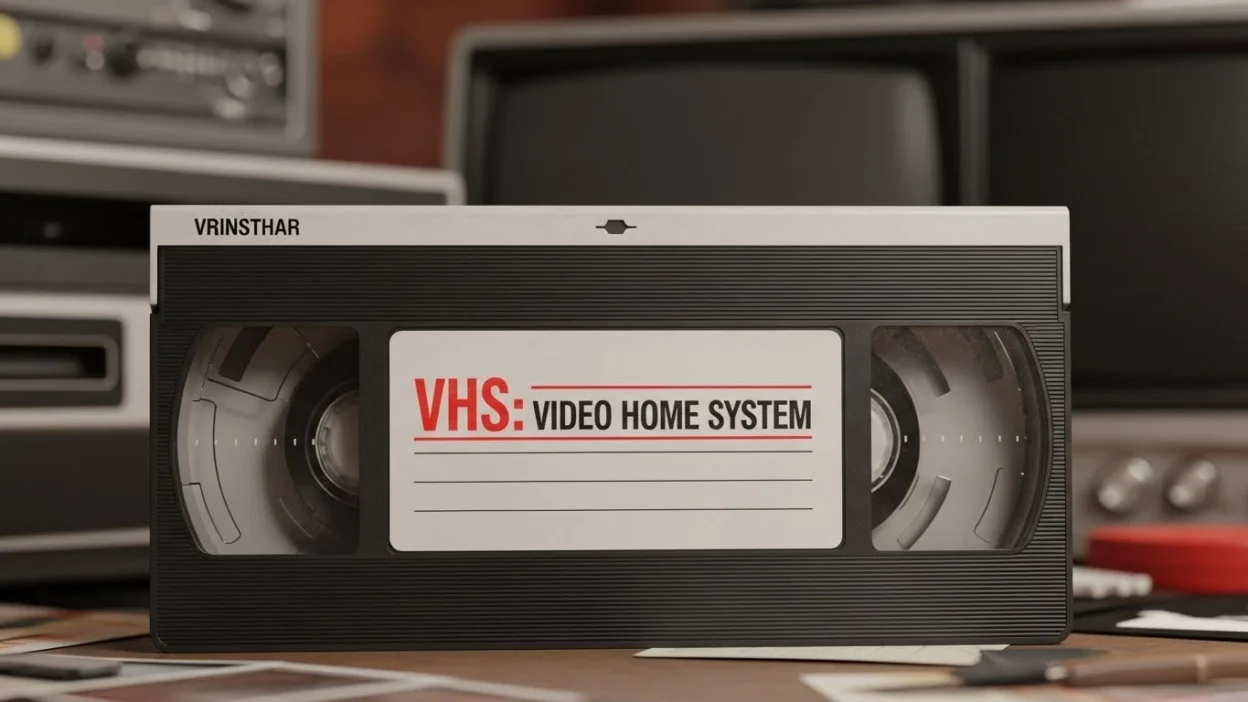
If you grew up in the ’80s or ’90s, chances are you’ve handled a VHS tape or rented one from your local video store. But have you ever wondered what does VHS stand for and why it became such a household name?
VHS, which stands for Video Home System, revolutionized the way people watched movies and recorded television at home. Before DVDs and streaming services, VHS tapes were the go-to format for home entertainment, allowing families to watch films, record TV shows, and preserve memories on magnetic tapes.
Today, while digital media dominates, VHS holds a special place in pop culture and nostalgia.
People search for VHS meaning not just out of curiosity, but also to understand its historical significance and influence on modern media. In this article, we’ll explore the VHS definition, its origin, how it works, and why it became a cultural phenomenon.
VHS Quick Answer
VHS stands for Video Home System, a standard format for consumer video recording and playback that became widely popular in the late 1970s and 1980s. Developed by JVC (Japan Victor Company), VHS allowed people to record television shows, watch movies at home, and create personal video collections, all using magnetic tape cassettes. Unlike earlier formats that were mostly professional or studio-oriented, VHS made video entertainment accessible to everyday households.
A typical VHS tape is a rectangular cassette containing a magnetic tape that stores video and audio signals. These tapes are played or recorded using a VCR (Video Cassette Recorder), which became a common household appliance during the VHS boom. VHS tapes came in different lengths, such as T-60, T-120, and T-160, indicating the number of minutes they could record. The format allowed fast-forwarding, rewinding, and pausing, which was revolutionary for its time.
VHS quickly became a cultural icon because it gave viewers control over how and when they watched content. From blockbuster movies to home-recorded family events, VHS tapes transformed entertainment habits worldwide. Even today, when someone searches for “VHS meaning” or “what does VHS stand for,” they are often looking for both its technical definition and its nostalgic significance in home entertainment history.
The Origin of VHS
The VHS (Video Home System) was developed in the mid-1970s by JVC (Japan Victor Company) as a new standard for home video recording. At the time, the home entertainment market was dominated by competing formats like Sony’s Betamax, which had superior picture quality but shorter recording times. JVC aimed to create a format that would be affordable, easy to use, and capable of recording full-length movies or television shows without interruption.
VHS was officially introduced to the public in 1976 in Japan and quickly expanded to international markets by the late 1970s. One of the key innovations of VHS was its longer recording capacity compared to Betamax, which allowed tapes to record up to two hours or more on a single cassette. This feature made VHS more appealing to consumers who wanted to record movies or extended TV programs.
The format gained popularity not only because of its recording time but also due to JVC’s open licensing strategy, which allowed multiple manufacturers to produce VHS-compatible players and tapes. This approach encouraged widespread adoption, creating a thriving market for home video. By the early 1980s, VHS had become the dominant video format, outpacing Betamax and securing its place in households around the world.
Understanding the origin of VHS highlights how innovation, consumer-friendly features, and smart business strategies combined to make VHS a household name. It wasn’t just a piece of technology—it was a cultural shift that transformed how people watched and recorded videos at home.
How VHS Works
VHS, or Video Home System, relies on magnetic tape technology to record and play video and audio signals. Each VHS cassette contains a long strip of magnetic tape coated with tiny iron oxide particles. These particles can store information based on the magnetic patterns created by the VCR (Video Cassette Recorder). When you insert a VHS tape into a VCR, the machine reads these magnetic patterns and converts them into the video and audio you see and hear on your TV.
The VCR operates using spinning video heads that trace diagonal paths across the tape, allowing the device to read or record complex signals with good resolution for the time. VHS tapes come in different lengths, such as T-60, T-120, and T-160, which indicate the number of minutes that can be recorded. The most common tape, the T-120, can hold up to two hours of video in Standard Play (SP) mode, while extended modes like Long Play (LP) and Extended Play (EP) could stretch recording time even further, though with slightly reduced picture quality.
VHS tapes also allow for simple user controls like rewind, fast-forward, pause, and stop, giving viewers flexibility that was unprecedented in home entertainment during the 1970s and 1980s. Recording was as simple as pressing “Record” while a program was playing on TV.
Understanding how VHS works highlights the clever engineering behind what might seem like a simple tape. Despite being analog and bulky by today’s standards, VHS brought cinema-quality entertainment into homes, giving viewers control over what, when, and how they watched content.
VHS Stands for Computer
Understanding VHS in the context of computing is important for those interested in computer history, multimedia technology, and data storage methods. Its influence can still be traced in digital recording techniques today.
In computing and electronics, VHS technology was applied to magnetic tape recorders for storing analog video signals. Engineers and developers used the vertical helical scan method to efficiently read and write video data onto tapes. This technique allowed for longer recording times and better video quality compared to previous linear recording methods. The method’s principles are foundational in understanding how data storage evolved over time.
VHS also played a role in multimedia and entertainment computing. Computers with video input/output capabilities used VHS systems to interface with external devices like VCRs. This made it possible to digitize analog video, create multimedia presentations, and archive recordings. Students and researchers in media technology often study VHS as a stepping stone to modern digital video formats.
Businesses leveraged VHS in training and archival systems. Many companies stored tutorials, lectures, and product demonstrations on VHS tapes, which could then be interfaced with computer systems for playback or conversion to digital formats. This integration improved workflow efficiency and preserved valuable audiovisual content for future use.
Even in creative projects, understanding VHS technology remains relevant. Video editors, digital artists, and archivists often experiment with VHS effects or restore old recordings. Knowledge of how VHS systems work helps professionals recreate vintage aesthetics or preserve historical footage in digital formats.
Overall, VHS’s application in computing demonstrates how analog techniques laid the groundwork for modern digital video and storage technologies. Its principles continue to influence multimedia development, data storage solutions, and creative projects, highlighting the lasting impact of this pioneering technology.
VHS vs Betamax The Format War
When VHS was introduced in the late 1970s, it faced stiff competition from Sony’s Betamax, another home video format. Betamax offered slightly better picture quality and was initially favored by some professionals, but it had a major drawback: shorter recording time. Most Betamax tapes could only record about one hour, whereas VHS tapes could easily record two hours or more, making them more convenient for recording movies or TV shows.
The battle between these two formats is famously known as the “videotape format war.” VHS eventually gained the upper hand for several reasons. One key factor was JVC’s open licensing strategy, which allowed multiple electronics manufacturers to produce VHS-compatible players and tapes. In contrast, Sony restricted Betamax production to a few companies, limiting its availability and driving up costs.
Another factor was consumer preference for longer recording times. Families wanted to record full-length movies or entire TV shows, and VHS offered that flexibility. The larger tape size of VHS was also easier to handle for casual users, making it more practical for home use.
By the mid-1980s, VHS had become the dominant home video format, outselling Betamax worldwide. The format war demonstrated how consumer convenience, licensing strategies, and practical features often outweigh technical superiority. VHS’s victory not only shaped home entertainment but also cemented its place in pop culture and nostalgia, making it an icon of retro technology.
Popular Uses of VHS
VHS tapes became a cornerstone of home entertainment in the 1980s and 1990s, offering unprecedented convenience for watching and recording video content. One of the most common uses was watching movies at home. Video rental stores flourished, allowing families to borrow films on VHS for a few days—a practice that became a cultural ritual. Titles ranging from blockbuster hits to niche genres were available, making VHS the ultimate home cinema solution.
Another popular use was recording television shows. Before the era of DVRs and on-demand streaming, viewers could set their VCRs to record programs while they were away, ensuring they didn’t miss their favorite series. VHS allowed flexibility in watching content at any time, which was a major advantage over live TV schedules.
VHS also played a significant role in personal recording. Families could capture important moments such as birthdays, holidays, and school events, preserving memories on magnetic tapes. These home videos became treasured keepsakes for generations.
Beyond entertainment, VHS was widely used in education and professional settings. Schools and training centers relied on VHS tapes to distribute instructional content, documentaries, and corporate training materials.
Even today, VHS remains a nostalgic symbol of a simpler media era. Collectors, retro enthusiasts, and vintage movie fans continue to value VHS tapes for their charm and historical significance. From blockbuster movies to family memories, VHS truly transformed the way people experienced video, leaving a lasting impact on popular culture.
VHS Stand for in School
VHS is a term often heard in school settings, but many students may wonder what it actually stands for. Understanding this abbreviation helps clarify conversations about schools, academics, and local communities. The term VHS is commonly used as a shorthand for a specific high school, making it a quick and convenient way to refer to the institution.
In the context of academics, VHS is often used to denote “Valley High School” or another local high school with the same initials. Students, teachers, and parents frequently use VHS when discussing schedules, events, or school-related activities. Using such abbreviations saves time and allows for easier communication within the school community.
Beyond casual conversations, VHS can also appear in official communications. Notices, emails, or announcements from the school may use the initials VHS as a formal reference to the school’s name. This practice is especially helpful in districts where multiple schools exist, reducing confusion while keeping communications concise.
Students also use VHS in social settings, such as on sports teams, clubs, or student organizations. Wearing merchandise or using VHS as a tag in social media posts fosters school spirit and a sense of belonging. It becomes more than just an abbreviation—it represents identity and community.
Overall, VHS serves as a convenient and widely recognized shorthand for high schools, facilitating communication, promoting school pride, and simplifying day-to-day interactions for students, staff, and parents alike. Its role in education shows how simple abbreviations can have a lasting impact on school culture.
Decline of VHS
Despite its decades of dominance, VHS eventually faced a steep decline with the emergence of newer, more advanced technologies. The introduction of DVDs in the late 1990s marked the beginning of the end for VHS. DVDs offered superior video and audio quality, smaller size, and easier navigation, making them a far more convenient option for home entertainment. Unlike VHS tapes, which required rewinding and careful storage, DVDs could skip directly to specific scenes, a feature that quickly won over consumers.
Another factor contributing to VHS’s decline was digital media and streaming services. As the 2000s progressed, platforms like Netflix and online video players offered instant access to thousands of titles without the need for physical media. The bulkiness of VHS tapes, susceptibility to wear and tear, and decreasing availability of VCRs made VHS less practical for modern users.
Additionally, VHS tapes were prone to magnetic degradation, which caused video and audio quality to deteriorate over time. This made long-term preservation challenging, whereas DVDs and digital files offered greater longevity.
By the mid-2000s, major retailers began phasing out VHS tapes, and production ceased in most countries. However, despite its decline, VHS still holds a special place in pop culture and nostalgia. Collectors and retro enthusiasts continue to seek out tapes, and the format’s influence on home entertainment and media consumption remains undeniable.
Fun Facts About VHS
VHS is not just a home video format—it’s a cultural icon with plenty of interesting trivia. For starters, the first feature film released on VHS was “The Young Teacher” in Japan in 1976. This marked the beginning of the home video revolution, which allowed viewers to watch movies outside cinemas for the very first time.
Another fun fact is that the largest VHS collection belongs to a dedicated collector named Ramesh Dhakal, who reportedly owns over 11,000 tapes. Collectors like him highlight how VHS has transformed from a practical medium into a nostalgic and collectible item.
VHS also played a role in pop culture and media history. For example, many iconic 1980s and 1990s films were primarily distributed on VHS before DVDs existed. Movie rental chains like Blockbuster grew into cultural institutions largely because of VHS’s popularity.
Some VHS tapes have even become rare collectibles, with certain limited-release titles or promotional tapes fetching high prices online. VHS also influenced filmmaking, with directors sometimes shooting experimental videos or short films on VHS for its unique aesthetic and grainy visual style.
Interestingly, the VHS tape’s design and size were partially influenced by practical home use. Its compact rectangular shape and easy-to-handle reels made it more consumer-friendly than previous video formats. Even today, VHS’s retro aesthetic inspires art, music videos, and digital filters, keeping the format alive in creative communities.
VHS may be largely obsolete, but its legacy in home entertainment, nostalgia, and pop culture continues to captivate collectors, filmmakers, and retro enthusiasts alike.
How to Preserve VHS Tapes Today
Even though VHS tapes are considered outdated technology, many people still want to preserve their old tapes for nostalgia, historical value, or personal memories. Proper storage is essential because VHS tapes are vulnerable to magnetic degradation, mold, heat, and humidity, all of which can damage the video and audio quality over time. The best way to store tapes is upright on a shelf in a cool, dry, and dark environment, away from direct sunlight and strong magnets.
Cleaning VHS tapes before storage is also important. Dust and debris can accumulate on the tape surface, causing playback issues or damage to the VCR. A soft, lint-free cloth can gently clean the exterior, but the tape itself should only be handled carefully to avoid creasing or scratching.
Many people now choose to convert VHS tapes to digital formats for long-term preservation. This involves using a VCR connected to a computer with a capture device or sending tapes to professional digitization services. Digital files are easier to store, copy, and share while maintaining quality, and they protect the content from the physical wear that VHS tapes experience.
Finally, it’s wise to label and catalog tapes if you have a large collection. This makes it easier to find specific videos and ensures that valuable recordings, such as family events or rare movies, are not lost. With the right care and digitization, VHS tapes can continue to preserve memories and entertainment long after their heyday.
Modern Relevance of VHS
Even decades after its decline, VHS continues to hold cultural and nostalgic significance. Retro enthusiasts, collectors, and filmmakers often seek out VHS tapes not just as a format, but as a symbol of a simpler era in home entertainment. The distinctive grainy picture and analog sound of VHS have even inspired creative projects, giving videos a “vintage” aesthetic that digital media cannot replicate.
VHS has also made a comeback in collectible markets. Rare or limited-edition tapes, such as certain movie releases or promotional VHS copies, can fetch high prices online. Some collectors enjoy hunting for old rental tapes from stores like Blockbuster, turning VHS collecting into a hobby and preserving media history.
In addition, VHS remains relevant in art and pop culture. Independent filmmakers and musicians sometimes release content on VHS to appeal to nostalgia-driven audiences. Music videos, experimental films, and retro-themed art projects use the VHS aesthetic for its authentic analog charm.
VHS also reminds people of the evolution of technology. It’s a tangible representation of how home entertainment has transformed—from bulky cassettes and VCRs to streaming platforms and digital libraries. For younger generations, it offers insight into the past, while older generations cherish the memories of recording TV shows, renting movies, or watching family videos.
Ultimately, VHS is more than just an outdated format—it is a cultural icon, a nostalgic symbol, and a creative tool. Its legacy continues to influence media, art, and entertainment in unique ways, proving that even obsolete technology can remain meaningful.
FAQs:
1. What does VHS stand for?
VHS stands for Video Home System, a standard format for recording and playing video at home. It was introduced by JVC in the 1970s and became the dominant home video format worldwide.
2. Is VHS still in use today?
While VHS is largely obsolete, some collectors, retro enthusiasts, and small niche markets still use it. Certain films or recordings may only exist on VHS, and some hobbyists enjoy the vintage experience of watching tapes.
3. How long does a VHS tape last?
A well-stored VHS tape can last 10 to 25 years, but quality deteriorates over time due to magnetic degradation, heat, and humidity. Proper storage in a cool, dry, and dark environment can extend its lifespan.
4. Can VHS tapes be converted to digital formats?
VHS tapes can be converted using a VCR connected to a computer with a video capture device, or through professional digitization services. This preserves the content and allows easier sharing and storage.
5. Why did VHS win over Betamax?
VHS succeeded because of longer recording times, lower costs, and open licensing, which allowed multiple manufacturers to produce VHS-compatible devices. Betamax had better picture quality but shorter recording time, making VHS more practical for home use.
6. Are there rare or collectible VHS tapes?
Limited editions, promotional releases, and early movie copies are highly sought after by collectors and can fetch significant prices online.
7. What made VHS culturally significant?
VHS revolutionized home entertainment, enabling families to watch movies, record TV shows, and capture personal memories—changing how people interacted with media forever.
Conclusion
VHS, or Video Home System, was more than just a video format it was a revolutionary technology that transformed how people experienced entertainment at home.
From its invention by JVC in the 1970s to its dominance over competitors like Betamax, VHS provided longer recording times, user-friendly design, and widespread accessibility, making it the go-to format for movies, TV shows, and home recordings.
Its impact went beyond convenience; it shaped pop culture, family memories, and media consumption habits for decades.
While VHS eventually declined with the rise of DVDs, digital media, and streaming platforms, its nostalgic charm and cultural significance remain strong.
Collectors still seek rare tapes, retro enthusiasts enjoy its analog aesthetic, and some creative projects even embrace VHS for its unique visual style.
Ultimately, understanding what VHS stands for and its history offers a glimpse into a pivotal moment in technology and entertainment.
VHS may no longer dominate the living room, but its legacy endures as a symbol of innovation, nostalgia, and the timeless appeal of watching videos on your own schedule.
Discover More Articale
- What Does P.s Mean Explained Clearly in 2026
- What Does Encrypted Mean: Easy Explanation for Everyone 2026
- What Does SB Mean in Text? Understanding Its Meaning 2026

I’m the mind behind Jokesattack.com, your go-to place for daily laughs, clever puns, and hilarious memes. Spreading smiles one joke at a time!