The first time I saw someone say, “Don’t worry, it’s a clean title,” I honestly thought they meant the car had been freshly washed.
😅 I was scrolling through a marketplace ad trying to buy a used car, and every other listing kept saying clean title, clean title, clean title.
For a second, I wondered if this was some car-community slang I’d somehow missed for years.
But nope — it actually means something much more important than a car wash.
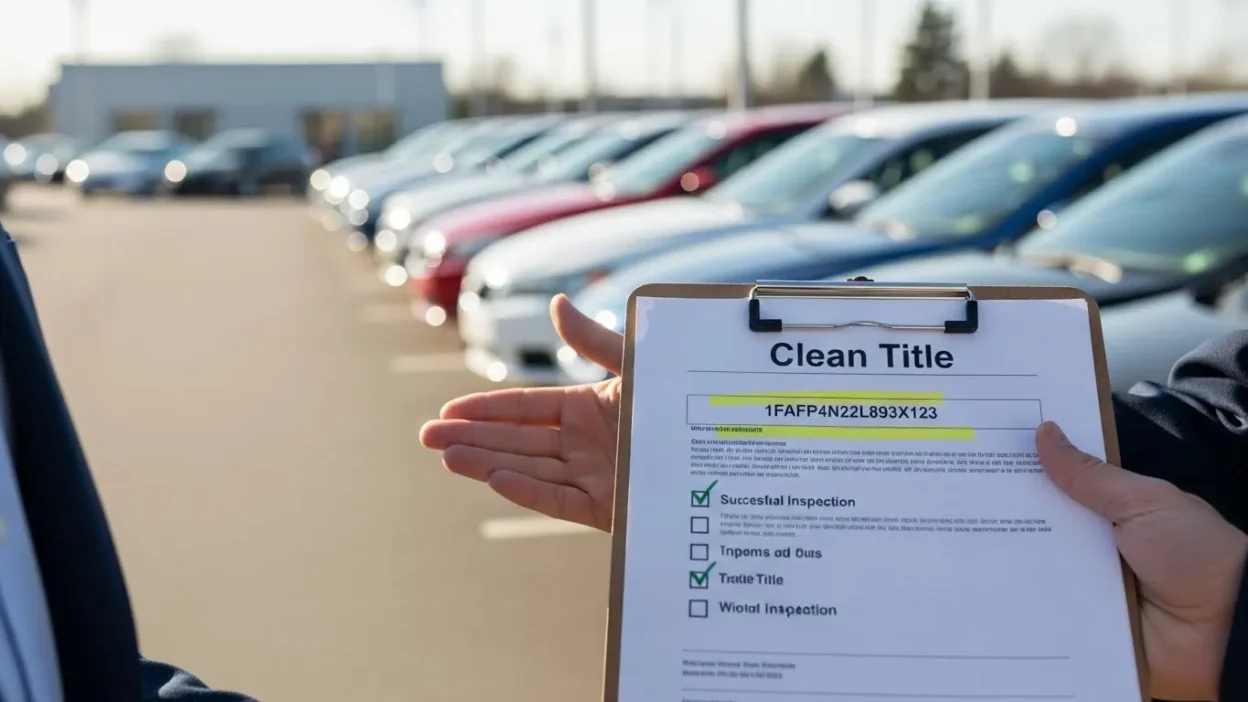
Quick Answer: Clean title means the vehicle has never been declared stolen, damaged beyond repair, or involved in major insurance claims.
It’s basically a safe, trustworthy, problem-free title when buying or selling a vehicle.
🧠 What Does Clean Title Mean in Text?
When someone says a car (or bike) has a clean title, it means:
✔ It has no record of major accidents
✔ It has never been declared a total loss by insurance
✔ It has no salvage or rebuilt history
✔ Its ownership history is clear and legitimate
Think of it as the “all-clear” stamp on a vehicle’s legal paperwork.
Example:
“Don’t worry, the car has a clean title. No accidents, no issues.”
Bold Summary:
In short: Clean Title = No major damage + No insurance total-loss history + Safe to buy.
📱 Where Is “Clean Title” Commonly Used?
You’ll most often see clean title in places where cars, bikes, and other vehicles are bought or discussed. It’s not casual slang — more of a vehicle-market term.
Here’s where it appears the most:
- 🚗 Car selling websites (OLX, Facebook Marketplace, Craigslist)
- 💬 Texting between buyers and sellers
- 📸 Social media listings on Instagram & Snapchat
- 🧑🔧 Mechanic or dealership conversations
- 🚘 Car forums & groups
💡 Formality Level:
- It’s not flirty or casual
- It’s professional and informative
- Perfect for buying/selling chats but not general everyday conversation.
💬 Examples of “Clean Title” in Conversation
Here are real, natural, texting-style examples:
1.
A: is the car still available?
B: yes! clean title, no accidents.
2.
A: why is the price a bit high?
B: bc it’s a clean title car, original paint too.
3.
A: any issues i should know about?
B: nothing major. engine good & clean title.
4.
A: can I see the paperwork tomorrow?
B: sure, i’ll bring the clean title and documents.
5.
A: is it salvage or clean?
B: clean title! never been in a major crash.
6.
A: km low? maintenance ok?
B: yep. clean title + full service record.
7.
A: shipping possible?
B: yeah, clean title in hand.
🕓 When to Use and When Not to Use “Clean Title”
✅ When to Use
- When selling a car, bike, or any vehicle
- When asking about vehicle history
- In negotiation chats
- To highlight trust, transparency, and safety
- When comparing vehicles (clean title vs salvage)
❌ When NOT to Use
- In professional emails not related to cars
- When talking about people, emotions, or general topics
- In flirty or casual conversations
- When discussing non-vehicle items
- In urgent safety situations
Comparison Table
| Context | Example Phrase | Why It Works |
|---|---|---|
| Friend Chat | “don’t worry bro, it’s a clean title 👍” | Casual yet informative |
| Work Chat | “The car we inspected has a clean title.” | Clear and professional |
| “Please confirm if the vehicle includes a clean title.” | Formal & precise | |
| Marketplace | “Selling Honda Civic — clean title, excellent condition.” | Attracts buyers |
| Negotiation | “Price is firm because it’s a clean title car.” | Adds value justification |
🔄 Similar Terms or Alternatives
Here are related vehicle-title terms you might see:
| Slang / Term | Meaning | When to Use |
|---|---|---|
| Salvage Title | Car declared total loss by insurance | When car had major damage |
| Rebuilt Title | Salvage car repaired & certified | Budget buyers / repaired cars |
| Clear Title | Same as clean title — problem-free | Alternative phrasing |
| Branded Title | Any title with insurance markers | When discussing history |
| Lien Title | Car still has unpaid loan | When dealing with financing |
| Title in Hand | Seller physically has the title | When selling privately |
FAQs:
1. Does “clean title” mean the car is perfect?
Not necessarily. It just means no major insurance or legal issues. It can still have minor repairs.
2. Is “clean title” the same as “clear title”?
Yes — people use both terms interchangeably.
3. Does a clean title guarantee no accidents?
Not always. It guarantees no total-loss accidents, but minor repairs might not appear.
4. Is a clean title more expensive?
Yes. Clean title vehicles usually cost more than salvage or rebuilt ones.
5. Can a clean title still have mechanical issues?
Absolutely. Clean title refers to legal status, not mechanical condition.
6. Do bikes and scooters also have clean titles?
Yes — any registered vehicle can have a clean, salvage, or rebuilt title.
Conclusion:
A clean title is one of the most important things to check before buying any vehicle.
It tells you the car hasn’t been totaled, badly damaged, or involved in major insurance claims.
Whether you’re browsing listings, negotiating with a seller, or trying to understand vehicle terms, clean title helps you trust the deal.
Always ask for proof, confirm documents, and compare with alternatives like salvage or rebuilt titles.
Knowing this simple term can save you money, stress, and even prevent scams.
If you’re shopping for a used vehicle, the phrase “clean title” should be one of the first things you look for — every time. 🚗✨

I’m the author of Jokesattack.com, where humor meets creativity! Bringing you nonstop laughter with the best jokes, memes, and funny moments every day.