Have you ever opened a message and seen someone reply with “re”, and your brain instantly went, “Wait… what does that even mean?”
You’re not alone. The first time I saw it in a group chat, I thought it was a typo or someone accidentally hit send too early.
But nope people were using it confidently, like it had a very obvious meaning that I somehow missed.
If you’re confused too, here’s the quick breakdown:
Quick Answer: “RE” means “regarding” or “about.
It’s a short, simple, semi-formal way of pointing to a topic, usually in texts, emails, or message replies.
🧠 What Does RE Mean in Text?
In texting, RE stands for “regarding”, “about”, or “in reference to.”
People use it when they want to respond to a specific message or show what their reply is about.
Simple Example:
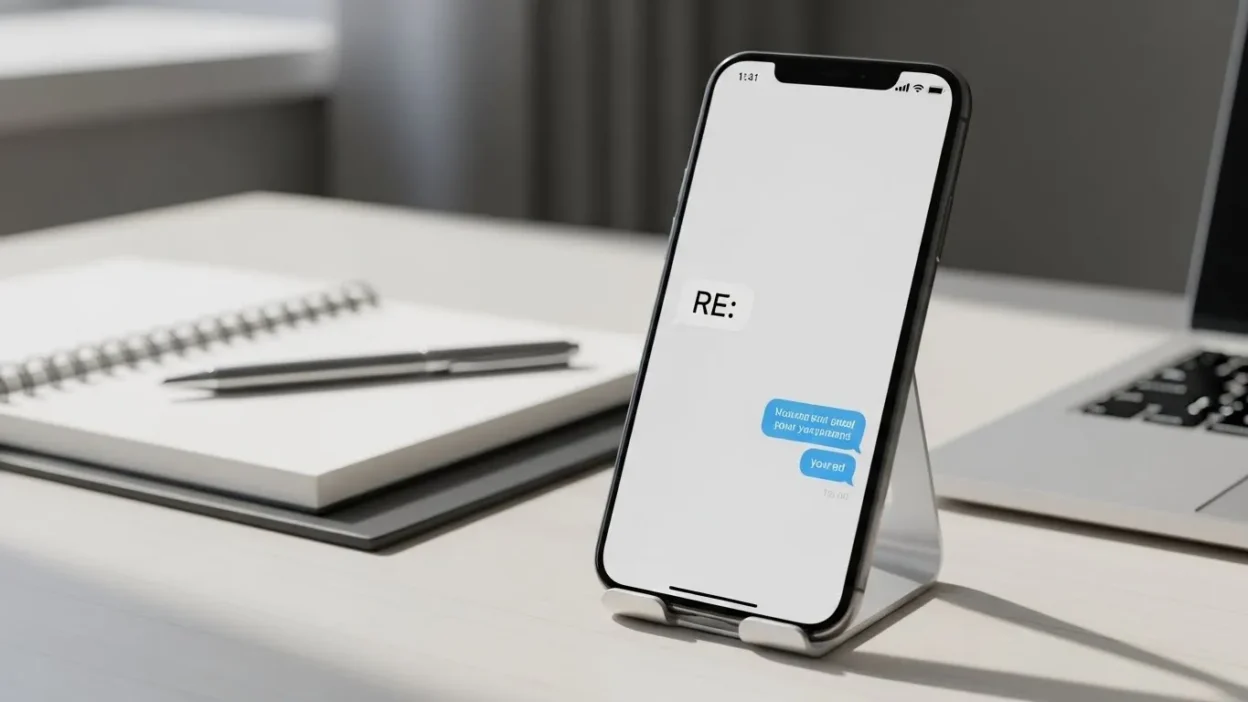
“RE your message earlier yes, I’m free tomorrow.”
It’s short, clean, and gets straight to the point.
In short: RE = regarding = about a specific topic.
📱 Where Is RE Commonly Used?
You’ll see RE used in places where people want to keep messages short but still clear:
- 📧 Emails (most common)
- 💬 Professional chats like Slack or Teams
- 📱 Normal texting
- 💼 Work-related DMs
- 📝 Replies to earlier messages
It works in both casual and formal settings, depending on how you phrase the message.
💬 Examples of RE in Conversation
Here are real, natural chat examples:
1.
A: did you check my last message?
B: yeah re that i’m fixing it rn
2.
A: what’s the plan for tonight?
B: re dinner, let’s do 8pm 👍
3.
A: i sent the files
B: thx! re the logo, can we make it darker?
4.
A: did u talk to sara?
B: re her question, i’m waiting for the update
5.
A: thoughts on the design?
B: re layout, i love it but re colors, maybe lighter?
6.
A: i’ll be late
B: re meeting, no worries we can start slow
7.
A: when’s the deadline??
B: re your task, friday evening
🕓 When to Use and When Not to Use RE
✅ When to Use RE
- When referring to a previous message
- When you want your reply to be organized
- When you’re answering multiple points
- When you want a professional tone
- When explaining what your message is about
❌ When Not to Use RE
- In flirty or playful chats (sounds too formal)
- In emotional conversations (feels cold/distant)
- When you need a warm, personal tone
- In very casual chats unless your friends use it too
🔍 Comparison Table
| Context | Example Phrase | Why It Works |
| Friend Chat | “re last night, that was fun 😂” | Casual but clear |
| Work Chat | “re your update, here’s my part” | Professional & organized |
| “RE: Meeting Schedule” | Standard business format | |
| Formal Message | “Re your concern, here is a solution.” | Clear & respectful |
| Casual Text | “re plans i’m down” | Short & understandable |
🔄 Similar Slang Words or Alternatives
| Slang / Term | Meaning | When to Use |
| FYI | For your information | Sharing quick updates |
| BTW | By the way | Casual additional info |
| TBH | To be honest | Honest opinions |
| Re: | Regarding (email subject format) | Emails, documents |
| Ref | Reference / referring to | Professional messages |
| BTW re | By the way, regarding… | Mixed casual + clarifying tone |
❓ FAQs:
1. Is RE slang or formal?
Both. It works in texting AND in professional communication, depending on context.
2. Does RE mean “reply”?
In email subjects, “RE:” can mean “in regard to”, not “reply.”
So no it does not mean reply.
3. Is RE old-fashioned?
Not at all. It’s still widely used in emails and increasingly in chats to stay organized.
4. Can I use RE in casual texting?
Yes, but it may sound slightly formal unless your friends also use it.
5. Is RE the same as “about”?
Exactly. You can usually replace “RE” with “about” without changing the meaning.
Conclusion:
RE is one of the simplest and most widely used short forms in texting, messaging, and email communication.
It helps you clearly show what your message is referring to without typing long sentences.
Whether you’re replying to a friend, coworker, or client, RE keeps your messages organized, concise, and easy to understand.
Use it when you want clarity, especially when responding to specific points or previous messages.

I’m the author of Jokesattack.com, where humor meets creativity! Bringing you nonstop laughter with the best jokes, memes, and funny moments every day.